Occupational Therapy for Sensory Issues in Gurgaon Kids: Helping Children Who Are ‘Too Hyper’ or ‘Too Sensitive’
This article explains common sensory processing signs in children—like covering ears, avoiding swings, or constant movement—and how sensory integration–based occupational therapy can help calm behavior, improve focus, and make daily routines at home and school easier for families in Gurugram.

Why sensory issues matter
Some children react strongly to everyday sights, sounds, and touch; others seem constantly on the move or oblivious to danger. These patterns are often linked to how the brain processes sensory information. When sensory processing is out of balance, it can show up as meltdowns, avoidance, distractibility, or restless behaviour — and that affects learning, play, sleep, and family life. Understanding the signs is the first step toward helpful support.
Common signs you might see at home
Sensory over-responsiveness (often called 'too sensitive') can look like covering ears at ordinary noises, refusing certain clothes or tags, or strong reactions to light and crowds. Sensory under-responsiveness may show as slow responses, seeming 'in their own world', or high pain tolerance. Sensory seeking (often read as 'too hyper') shows up as constant running, climbing, crashing into furniture, or repeating movement. Many children show a mix of these behaviours across different situations.
How sensory differences affect school and routines
At school, a child who is overwhelmed by noise may avoid group activities or struggle to follow instructions. A sensory‑seeking child might find it hard to sit through lessons, which can look like poor attention rather than a sensory need. Morning routines, mealtimes, and transitions at home can become stressful when sensory needs aren’t addressed, making predictability and simple strategies especially valuable.
What sensory integration–based occupational therapy does
Sensory integration–based occupational therapy (OT) helps children process sensory input more comfortably and use their bodies more effectively. Therapists assess how a child responds to touch, movement, sights, sounds, and body awareness, then design play-based, developmentally appropriate activities to gradually build tolerance, regulation, and motor skills. The goal is better self-regulation so the child can participate more easily at home, school, and play.
Examples of OT activities you might see
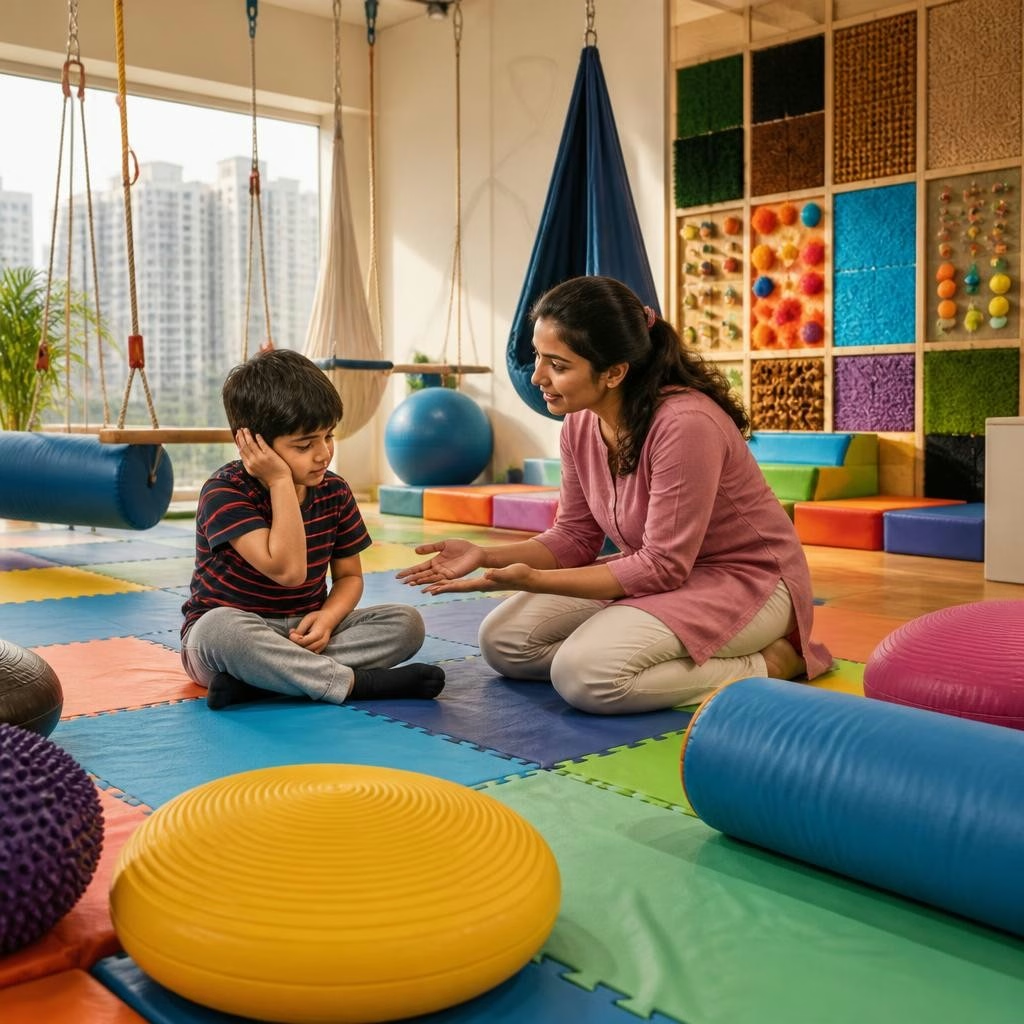
Therapists use engaging activities rather than drills. These can include controlled movement like swings and balance work to provide calming proprioceptive and vestibular input; obstacle courses to build coordination and planning; fine motor games to improve hand strength and handwriting readiness; tactile play with varied textures to reduce touch sensitivity; and structured oral-motor activities for picky eaters or drooling. Each activity is chosen to match the child’s needs and done with clear goals.
Assessment and a personalised plan
A good OT starts with an assessment: observing the child, gathering parent and teacher reports, and sometimes using standardised tools to identify strengths and challenges. From this, the therapist crafts an individualised plan with measurable goals — for example, tolerating louder environments for short periods, improving seated attention, or reducing morning meltdowns. Progress is typically tracked and plans are adjusted as the child develops.
Practical strategies families can use day‑to‑day
You don’t need special training to try simple, sensory‑informed strategies at home: build predictable morning and bedtime routines, include short movement breaks between tasks, offer calming heavy work (carrying laundry, pushing a chair), and allow safe sensory outlets like supervised jumping or swinging. For children bothered by noise, brief use of quiet corners or noise‑reducing headphones during busy times can help. Therapists at multidisciplinary centres can show you which strategies match your child’s pattern.
What to expect from therapy at a Gurugram clinic
At clinics offering sensory integration OT in Gurugram, families regularly report therapists who are patient, child‑friendly, and collaborative. Therapy sessions are often play-based and include parent coaching so techniques can be practised at home and at school. Many centres also coordinate with speech therapists, special educators, and behaviour teams when a child has mixed needs — something parents frequently say makes a real difference in overall progress.
Working with schools and teachers
Small school-based adjustments can have big effects: planned sensory breaks, a designated quiet spot, visual schedules, or simple seating changes help children stay regulated and focused. Sharing a therapist’s assessment and practical recommendations with teachers supports consistent strategies across settings. Occupational therapists can provide brief, actionable suggestions that classroom staff can follow without disrupting the day.
Taking the next step in Gurugram
If sensory issues are affecting your child’s daily life, start with an occupational therapy assessment to identify the specific sensory pattern and practical goals. Centres in Gurugram often offer assessments, in‑clinic and in‑home therapy options, parental counselling, and coordinated care with speech and special education services. Parents who have shared their experiences note steady improvements when therapy is consistent, play‑based, and paired with home strategies — a reminder that small, targeted steps can make routines and relationships easier for the whole family.
Customer review


Article by
Rainbow Child Development Center | Occupational Therapy in Gurugram | Speech Therapy | ABA Therapy | Special Educator
Rainbow Child Development Centre in Gurgaon, Haryana, provides specialized care for children through occupational therapy, speech and hearing therapy, ABA, special education, and child psychiatry. As a leading occupational therapy centre in Gurgaon, we enhance motor skills, sensory processing, and independence. We also offer expert speech therapy in Gurgaon to improve communication and language. Renowned for effective autism treatment in Gurgaon, we deliver personalized programs, making us a trusted autism centre in Gurgaon. Our skilled special educators in Gurgaon provide tailored learning plans, positioning us among the top special schools in Gurgaon, special education schools in Gurgaon, and centers for comprehensive therapy in Gurgaon.