Reading and Comprehension Difficulties: When Your Gurgaon Child Needs More Than Tuition
Learn how to tell ordinary practice gaps from real reading or comprehension difficulties, why specialised phonological and reading‑support programs differ from regular tuition, and practical next steps for parents in Gurgaon.
Why this topic matters now
Many parents in Gurgaon worry when their child falls behind in reading or seems to understand less than classmates. Sometimes extra practice or tuition helps, but other times the struggle points to underlying language, phonological or processing difficulties that need specialist input. This article explains how to tell the difference and what a targeted reading‑support plan looks like compared with ordinary coaching.
Tuition vs specialist support: what’s the real difference?
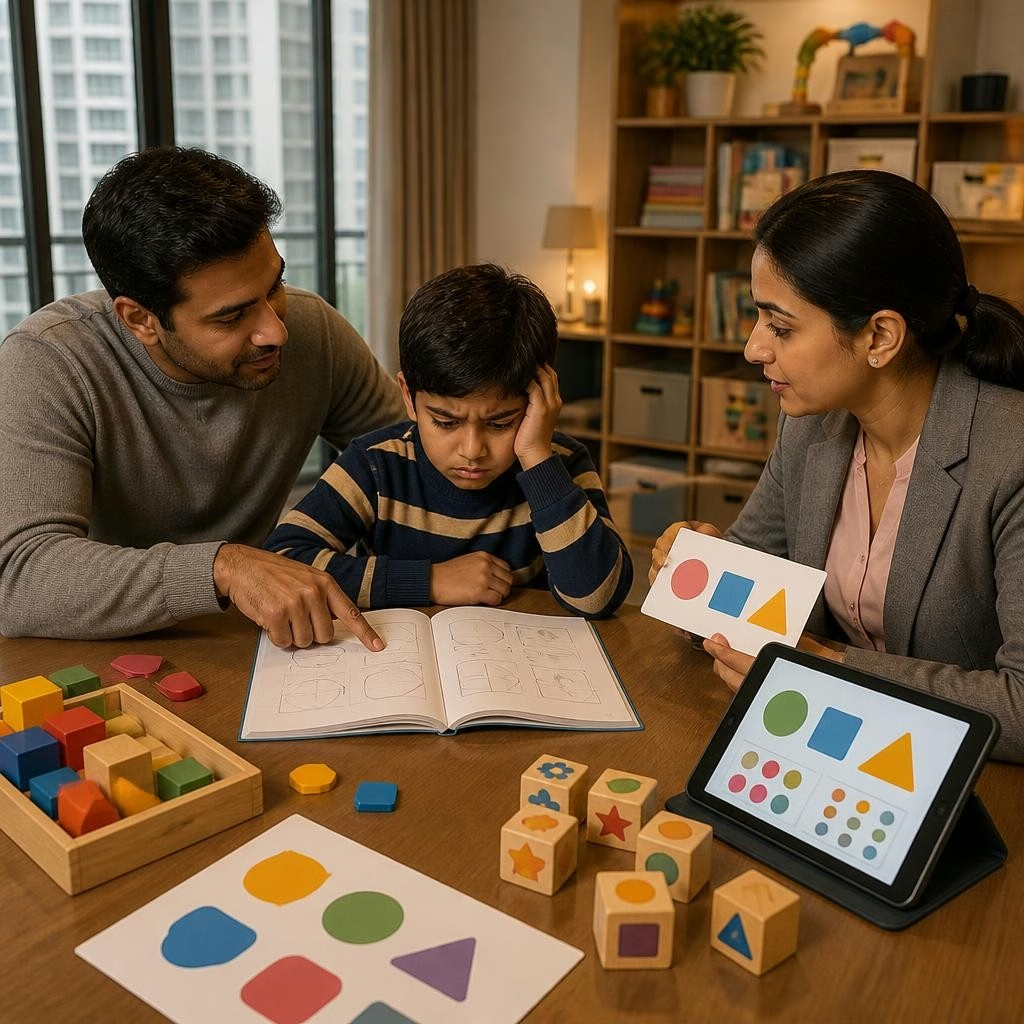
Tuition typically focuses on curriculum catch‑up: decoding words, reading assigned texts, and practising comprehension questions. Specialist reading support instead targets the foundational skills that make reading possible — sound awareness, spoken language skills, vocabulary, working memory and the specific strategies a child uses to make meaning. When those foundations are weak, repeating the same schoolwork can feel like running in place.
Signs your child may need more than extra practice
Look beyond low scores. Warning signs include persistent letter‑sound confusion, slow or effortful decoding despite practice, poor phonological memory (difficulty remembering sequences of sounds), trouble following multi‑step instructions, and comprehension that falls apart once texts get longer or more abstract. If problems persist across contexts (school and home) and over months despite extra practice, it’s time to consider assessment.
What phonological awareness means — in plain English
Phonological awareness is the ability to hear and manipulate the sounds in spoken language — for example, recognising that 'cat' and 'cap' differ by one sound, or being able to break 'stop' into /s/ /t/ /o/ /p/. It’s a key predictor of early reading success: children who struggle with these sound skills often find spelling and decoding much harder. Phonological awareness training is structured, sequential and uses lots of listening, segmenting and blending activities, not just worksheets.
Specialised reading‑support programs: what they do differently
A good reading‑support program starts with assessment, then builds a sequence of skill‑based goals (sound awareness, decoding, fluency, vocabulary, comprehension strategies). Interventions are explicit, multi‑sensory and progress is measured regularly. Therapists adapt tasks to a child’s pace and add language work where needed. Unlike a typical coaching centre, the specialist approach treats reading as a set of cognitive and language skills to be taught and practised systematically.
The role of speech and language assessment
Before designing a plan, a speech and language assessment identifies which areas are affected: articulation, receptive language (understanding), expressive language (putting ideas into words), or phonological skills. A careful assessment helps avoid misdirected tuition — for example, giving more reading worksheets to a child whose main issue is spoken language comprehension will usually have limited benefit. Our centre offers speech and language assessments that guide targeted therapy and school recommendations.
Why a multidisciplinary approach helps
Reading and comprehension draw on attention, motor planning (for writing), auditory processing and language. That’s why combining speech therapy, phonological awareness training, special education strategies and occupational therapy can be more effective than a single type of support. Reviews from local parents emphasise that centres where therapists coordinate and involve parents regularly produce clearer, sustained progress — because children get consistent goals across home, therapy and school.
Simple, practical steps parents can try at home
You don’t need specialist equipment to begin. Read aloud together daily, pause to ask simple questions, practise rhymes and sound games, and break unfamiliar words into smaller parts when decoding. Keep sessions short and playful to avoid frustration. Importantly, ask the therapist or educator for specific, doable home activities tied to your child’s goals — parents at our centre often say these practical home strategies made a noticeable difference.
How to choose the right support in Gurgaon
Look for a centre that offers assessment‑led plans, phonological awareness or phonics‑based reading support, speech and language therapy, and parent guidance. Ask about how progress is tracked, whether recommendations include home practice, and how therapists coordinate with school. Local parents positively note clear communication, transparent strategies and dedicated departmental leadership as helpful signs when choosing a service provider.
Next steps: getting started without delay
If you’re worried, arrange an assessment that covers speech, phonological skills and reading comprehension rather than booking tuition first. If assessment indicates targeted needs, choose a program that combines phonological awareness training, speech therapy and tailored reading support. For parents in Gurugram, our centre provides assessments, phonological awareness training, reading & comprehension support, speech therapy and parental counselling — plus practical home integration advice to keep progress steady. If you’d like an assessment or a conversation about your child’s profile, contacting a local specialist is the best next step.
Customer review


Article by
Rainbow Child Development Center | Occupational Therapy in Gurugram | Speech Therapy | ABA Therapy | Special Educator
Rainbow Child Development Centre in Gurgaon, Haryana, provides specialized care for children through occupational therapy, speech and hearing therapy, ABA, special education, and child psychiatry. As a leading occupational therapy centre in Gurgaon, we enhance motor skills, sensory processing, and independence. We also offer expert speech therapy in Gurgaon to improve communication and language. Renowned for effective autism treatment in Gurgaon, we deliver personalized programs, making us a trusted autism centre in Gurgaon. Our skilled special educators in Gurgaon provide tailored learning plans, positioning us among the top special schools in Gurgaon, special education schools in Gurgaon, and centers for comprehensive therapy in Gurgaon.