Special Education vs Regular Tuition: A Gurgaon Parent’s Guide to Supporting Children with Learning Difficulties
Clear, practical guidance for Gurgaon parents on how special education differs from regular tuition, common signs of learning difficulties, and how structured programs and home strategies can improve reading, writing and classroom participation.
Why this matters for Gurgaon families
When a child struggles with reading, writing or attention, parents often wonder whether extra tuition is enough — or if they should look for a special education program. In Gurgaon, options range from regular tuition and school remedial classes to multidisciplinary centres that combine special education with speech therapy, occupational therapy, ABA and parental counselling. This article explains the practical differences, signs to watch for, and how a structured special education approach can support everyday school participation and learning.
Regular tuition: what it does (and what it doesn’t)
Regular tuition typically focuses on academic catch-up: revising classroom lessons, drilling problem areas, and practising homework-related skills. It helps many children who need more practice or clearer explanations. However, tuition is not designed to assess or treat underlying issues such as speech-language delays, fine motor difficulties, sensory processing challenges, or attention differences. If a child’s difficulties come from those root causes, academic practice alone may give only limited results.
Special education: a broader, child-centered approach
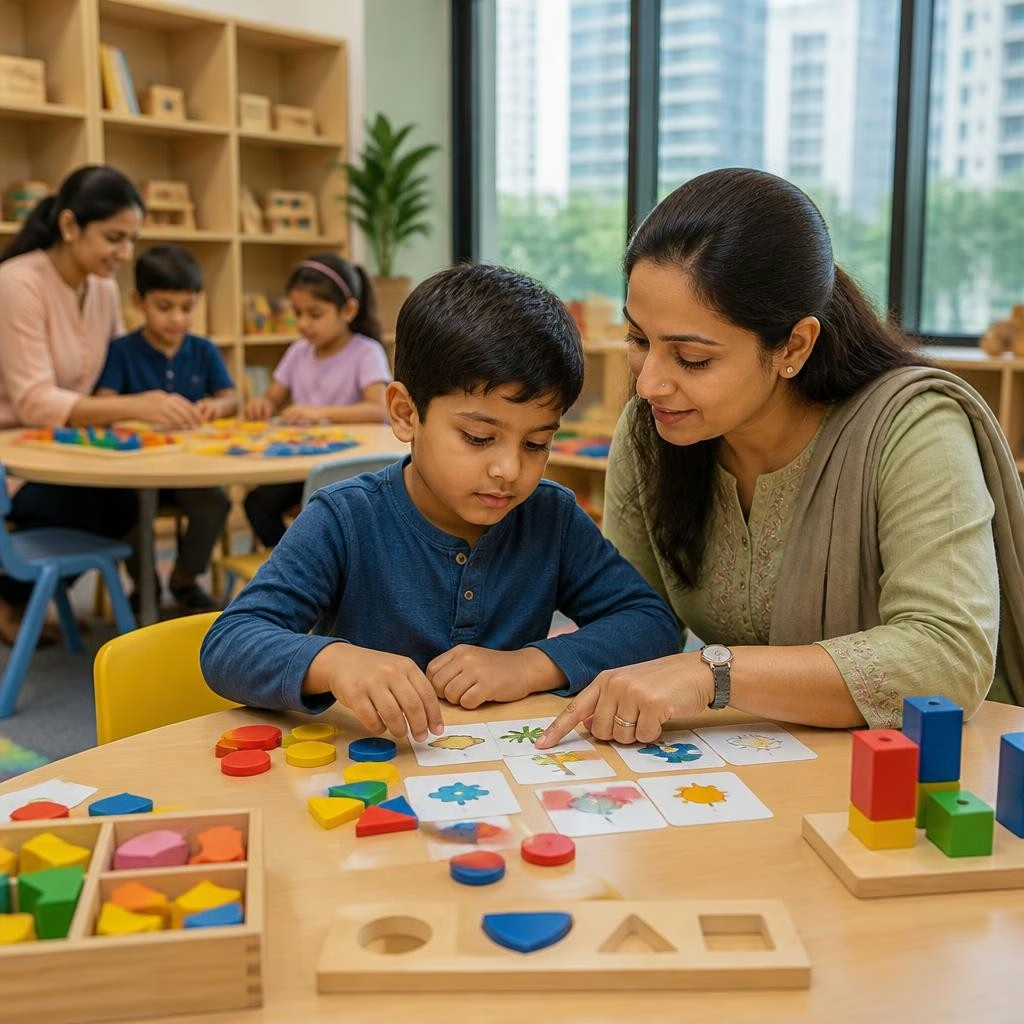
Special education programs take a wider view. They start with assessments to identify strengths and specific learning barriers, then build individualized learning plans that include targeted teaching methods, multisensory activities, and goals for classroom skills (reading, handwriting, comprehension and participation). In practice this often means coordinated input from special educators plus allied therapies — for example, speech therapy to improve language, occupational therapy to strengthen fine motor skills and handwriting, or behaviour support to improve focus and classroom routines.
Common signs that suggest a deeper learning difficulty
Watch for signs beyond low test scores: persistent difficulty decoding words or understanding text, messy or painful handwriting, trouble following multi-step instructions, slow processing despite regular tuition, ongoing speech or language delays, poor coordination affecting writing, or attention and behaviour that get in the way of learning. Several parents in Gurgaon have reported that when assessments revealed underlying issues (for example speech delay or attention differences), a combined therapy and special education plan produced clearer, lasting progress.
When to choose special education over more tuition
Consider special education when assessments or teachers point to underlying barriers, when progress stalls despite regular tutoring, or when the child shows speech, motor or sensory needs alongside learning gaps. Special education is also appropriate when a child needs structured strategies for classroom participation and independent learning, not just extra practice. It’s designed to teach how to learn, not only what to learn.
What a structured special education program looks like in Gurgaon
A good program begins with formal assessments (learning profile, speech-language, motor skills and behaviour), then sets clear, achievable goals. Typical components include individualized instruction, speech and language therapy, occupational therapy for fine motor and handwriting, social skills or group sessions, and parent training. In Gurgaon, families report that centres offering coordinated plans — with regular progress reports and practical home strategies — tend to produce steady improvements in reading, writing and classroom confidence.
How parents can support progress at home
Consistent home support makes a big difference. Simple routines, short daily practice sessions (5–15 minutes), multisensory reading and writing activities, and following therapist-recommended drills help transfer skills to the classroom. Many parents find it helpful when therapists provide specific do’s and don’ts and home integration tips so that practice is consistent and enjoyable. Small, consistent wins — not long hours of homework — are often most effective.
Working with schools and tutors for better outcomes
Communicate assessment findings and learning goals with your child’s school and any tutors. Share practical strategies teachers can use in class (break tasks into steps, allow extra time for written work, use visual supports). Ask for periodic updates on classroom participation and set simple measurable targets (e.g., write one sentence legibly, read aloud a short paragraph). A cooperative approach between parents, therapists and teachers helps skills generalise across environments.
Picking the right program or centre in Gurgaon
Look for a centre that uses assessments to create individual plans, includes allied therapies (speech, OT, ABA) when needed, trains parents, and shares progress transparently. Families who have chosen local centres often highlight professionalism, patient therapists and a child-friendly environment as key qualities. If possible, visit the centre, ask about examples of target goals, and confirm how they involve parents in home practice and school coordination.
What to expect in the first months and next steps
Expect gradual, measurable gains rather than overnight changes. Early months typically focus on assessment, establishing routines and basic skill-building; with regular sessions and home practice you’ll often see small but meaningful improvements in reading fluency, handwriting control and classroom participation. If a centre tailors strategies and provides ongoing guidance to parents, that follow-through is a helpful sign. If you’d like a local assessment or to discuss a personalised plan, Rainbow Child Development Center in Gurugram offers special education alongside speech, occupational therapy and parent counselling at H.No 56, Basement House, Gurugram.
Customer review


Article by
Rainbow Child Development Center | Occupational Therapy in Gurugram | Speech Therapy | ABA Therapy | Special Educator
Rainbow Child Development Centre in Gurgaon, Haryana, provides specialized care for children through occupational therapy, speech and hearing therapy, ABA, special education, and child psychiatry. As a leading occupational therapy centre in Gurgaon, we enhance motor skills, sensory processing, and independence. We also offer expert speech therapy in Gurgaon to improve communication and language. Renowned for effective autism treatment in Gurgaon, we deliver personalized programs, making us a trusted autism centre in Gurgaon. Our skilled special educators in Gurgaon provide tailored learning plans, positioning us among the top special schools in Gurgaon, special education schools in Gurgaon, and centers for comprehensive therapy in Gurgaon.