Speech Therapy for Autism in Gurgaon: Realistic Goals for the First 6–12 Months
Practical, parent-friendly guidance on common starting points and achievable communication goals during the first 6–12 months of speech therapy for autistic children in Gurgaon, plus tips on supporting progress and choosing local services.
Why realistic goals matter
Starting speech therapy can feel overwhelming. Families often worry about comparisons or rapid change. Setting realistic, measurable goals for the first 6–12 months helps keep expectations grounded, reduces stress, and focuses energy on steady, meaningful progress rather than dramatic overnight results.
Common starting points therapists see
Autistic children come to therapy with a wide range of communication skills. Typical starting points include limited or no spoken words, reliance on gestures or pictures, echolalia (repeating words), difficulty initiating interaction, short attention to social cues, and sensory or oral-motor challenges that affect speaking or feeding. Therapists usually begin by assessing these areas to set individualized priorities.
What to expect in the first 1–3 months
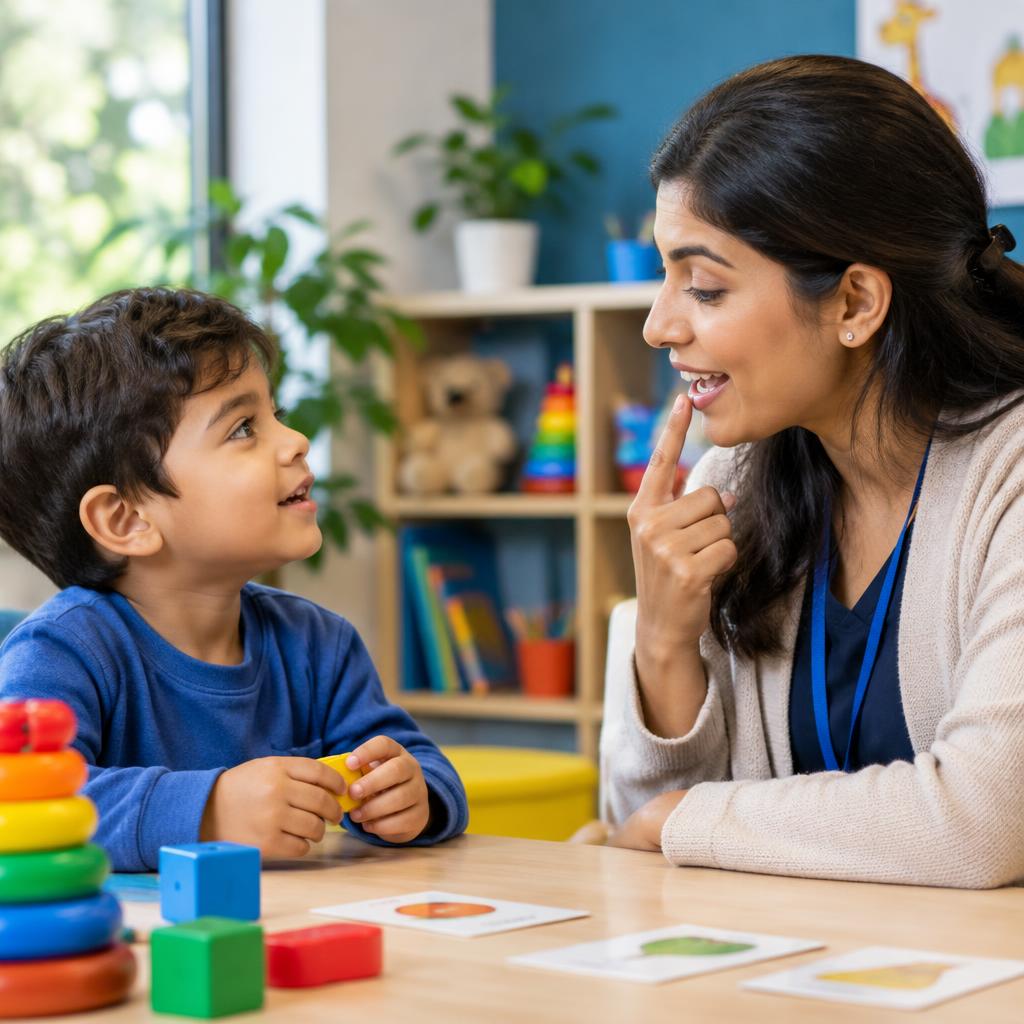
Early sessions tend to focus on building rapport, reducing frustration around communication, and introducing simple, consistent supports. Therapists may model or teach ways to request (using gestures, signs, or picture cards), establish comfortable routines, and work on oral-motor exercises if feeding or clarity is a concern. Many parents notice clearer routines, less meltdowns tied to communication breakdowns, and small increases in intentional attempts to get needs met.
Typical milestones in months 3–6
Between three and six months, therapy often targets expanding intentional communication: children may start reliably using a preferred communication method to request (gesture, picture, or single words), follow simple one-step directions, and show early interest in shared activities. Therapists also introduce short social routines—like turn-taking games—that lay the groundwork for back-and-forth interaction.
Realistic progress by 6–12 months
Over six to twelve months, many children make more noticeable gains: they may use a mix of words, gestures, or devices to communicate needs, begin to respond more to their name and to simple social cues, and show improved tolerance for brief social routines or group activities. Play skills and joint attention (sharing interest in an object or activity) often emerge or strengthen, and speech clarity or feeding skills can improve with targeted oral-motor work. Progress is individual — some areas improve faster than others, and plateaus are common and normal.
How a multidisciplinary approach helps
Speech goals are often linked to sensory, motor, and behavioral needs. Centres that offer speech therapy alongside occupational therapy, ABA, special education, and psychological support can coordinate goals so gains transfer to daily life. Local families frequently report that coordinated care under one roof makes it easier to address overlapping challenges and to receive consistent guidance from professionals working as a team.
Measuring progress without pressure
Good therapy uses specific, measurable short-term objectives that build into longer-term goals. Expect your therapist to break skills down into tiny steps, track them over time, and share updates. Ask for simple ways to document progress at home (a short weekly note or photos of target activities). Celebrating small, functional gains — fewer frustrated episodes, one new way to ask for things, a longer play interaction — is more useful than waiting for dramatic milestones.
Practical tips parents can use right away
You are the single most important influence on progress. Keep communication supports consistent across settings: use the same gestures, picture cards, or simple words at home and in therapy; build short routines around daily activities (mealtimes, dressing, bath); follow therapist-suggested practice for a few minutes several times a day; and focus on functional goals (getting needs met, shared enjoyment). Avoid comparing your child to others — every child moves at their own pace.
When to reassess and adjust expectations
Therapy is dynamic. If a goal isn’t moving after a few months, ask your therapist to review the approach and consider adjustments — different prompts, more repetition, increased opportunities to practice, or input from another discipline. Likewise, if progress is faster than expected, goals should be updated to stay challenging and meaningful. Regular reassessment (often every 3–6 months) keeps the plan relevant.
Finding local support in Gurgaon and next steps
Look for a child-friendly environment, a team that communicates clearly with parents, and multidisciplinary services if your child has overlapping needs. Reviews from local families highlight the value of skilled, patient therapists and regular parent guidance when selecting a centre. If you’d like an initial assessment or to discuss realistic goals for your child, Rainbow Child Development Center in Gurugram offers speech and occupational therapy alongside ABA and special education services; their centre is located at H.No 56, Basement House, Gurugram, Haryana, 122003. Start with a baseline assessment, ask for a written plan with short-term objectives, and request regular progress updates so you know what to expect month to month.
Article by
Rainbow Child Development Center | Occupational Therapy in Gurugram | Speech Therapy | ABA Therapy | Special Educator
Rainbow Child Development Centre in Gurgaon, Haryana, provides specialized care for children through occupational therapy, speech and hearing therapy, ABA, special education, and child psychiatry. As a leading occupational therapy centre in Gurgaon, we enhance motor skills, sensory processing, and independence. We also offer expert speech therapy in Gurgaon to improve communication and language. Renowned for effective autism treatment in Gurgaon, we deliver personalized programs, making us a trusted autism centre in Gurgaon. Our skilled special educators in Gurgaon provide tailored learning plans, positioning us among the top special schools in Gurgaon, special education schools in Gurgaon, and centers for comprehensive therapy in Gurgaon.