Speech Therapy for Children with Down Syndrome in Gurugram: What Parents Can Expect
A practical guide for parents explaining common speech, language, and feeding challenges in children with Down Syndrome and how a structured speech‑therapy program in Gurugram can support clearer speech and everyday communication.
Why this matters for parents
Children with Down Syndrome often face a mix of speech, language and feeding challenges that affect everyday life—things like delayed expressive language, unclear articulation, or difficulty with chewing and swallowing. This article explains those typical issues, how a structured speech‑therapy program in Gurugram works, and what practical steps parents can expect when they seek help at a multidisciplinary centre like Rainbow Child Development Centre.
Common speech and language features
Many children with Down Syndrome show uneven language profiles: receptive language (understanding) is often stronger than expressive language (speaking). You may notice small vocabularies, short sentences, or difficulty combining sounds into clear words. Speech clarity can be affected by low oral motor tone and coordination, making some sounds hard to produce. These are common developmental patterns rather than fixed limits—the goal of therapy is to build skills step by step.
Feeding and swallowing considerations
Low muscle tone and oral‑motor differences can also affect feeding: children might drool, have trouble chewing certain textures, or show slow progress with independent eating. When feeding difficulty is present, speech therapists often work alongside feeding and swallowing specialists to assess safety, recommend strategies for improved chewing and posture, and design gradual practice plans to expand textures and reduce stress at mealtimes.
What a comprehensive speech assessment looks like
A useful first step is a detailed speech and language assessment: clinicians look at sound production, oral motor strength and coordination, receptive and expressive language, play and social communication, and any feeding concerns. That assessment forms the baseline for measurable goals and helps the team choose therapy techniques best suited to the child’s profile.
Therapy approaches you may see
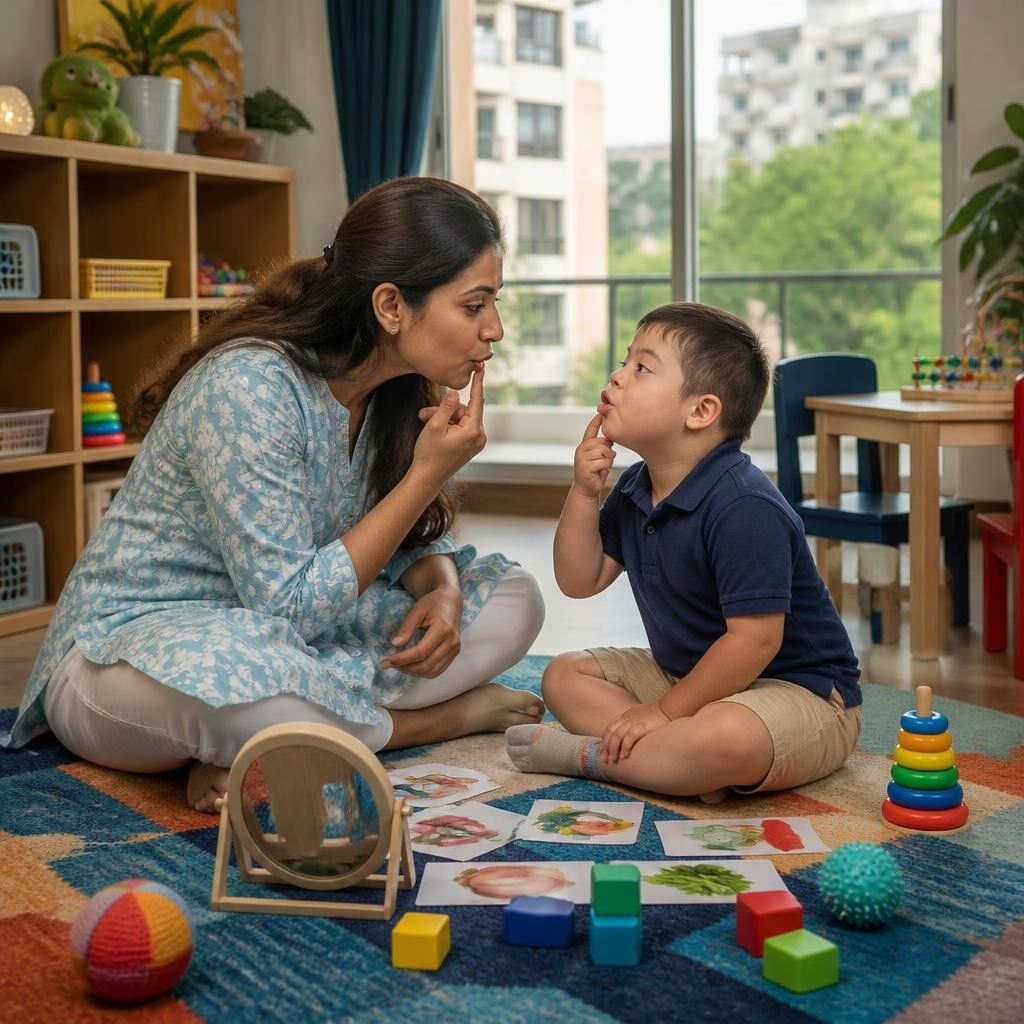
Therapists use a mix of approaches tailored to the child: oral motor exercises and play to improve tone and coordination; phonological and articulation activities to target specific sounds; language stimulation and modeling to increase vocabulary and sentence length; and augmentative and alternative communication (AAC) tools when needed to give the child reliable ways to communicate while speech develops. Sessions are usually playful, structured, and goal‑driven to keep children engaged.
Why multidisciplinary care helps
Speech outcomes improve faster when therapy is coordinated with occupational therapy, special education, and behavior support. For example, occupational therapists help with fine motor and sensory issues that affect feeding and attention, while special educators translate language gains into classroom routines. Centres that offer these services under one roof make communication between professionals easier and ensure consistent goals across settings.
What to expect from therapy at Rainbow Child Development Centre
At centres like Rainbow Child Development Centre in Gurugram, parents can expect individualized plans based on assessment, regular progress updates, and practical guidance for home practice. Reviews from local parents highlight a child‑friendly environment and therapists who explain goals clearly and involve families in the process. One parent, for example, reported noticeable improvement in their child’s speech and communication after regular sessions, reflecting the centre’s focus on measurable progress.
Realistic timelines and signs of progress
Progress varies by child and depends on factors such as age, severity, consistency of therapy, and home practice. Early gains are often seen in responsiveness, imitation and willingness to try new sounds; later gains include clearer speech, longer phrases and more spontaneous communication. Therapists measure small wins—improved mouth coordination, better chewing, or a new word used independently—and build on them. Patience and consistent practice matter more than rapid change.
How parents can support therapy at home
Parents are a child’s most powerful therapy partner. Simple routines—short, frequent practice sessions, modeling language during daily activities, offering choices to encourage communication, and following therapist‑recommended feeding strategies—make a big difference. Teams usually give clear, achievable home activities so progress continues between sessions without overwhelming family life.
How to choose next steps and what to ask
When you contact a centre, ask about the initial assessment process, team composition (speech therapist, OT, special educator), experience with Down Syndrome, how goals are shared with families, and how home programs are supported. Bring any prior assessments or reports to your first visit—these help the team plan. If you’d like to explore services in Gurugram, Rainbow Child Development Centre lists speech therapy, feeding/swallowing support and related services, and many parents report consistent, family‑centred communication from therapists and department leads.
Customer review


Article by
Rainbow Child Development Center | Occupational Therapy in Gurugram | Speech Therapy | ABA Therapy | Special Educator
Rainbow Child Development Centre in Gurgaon, Haryana, provides specialized care for children through occupational therapy, speech and hearing therapy, ABA, special education, and child psychiatry. As a leading occupational therapy centre in Gurgaon, we enhance motor skills, sensory processing, and independence. We also offer expert speech therapy in Gurgaon to improve communication and language. Renowned for effective autism treatment in Gurgaon, we deliver personalized programs, making us a trusted autism centre in Gurgaon. Our skilled special educators in Gurgaon provide tailored learning plans, positioning us among the top special schools in Gurgaon, special education schools in Gurgaon, and centers for comprehensive therapy in Gurgaon.