Speech Therapy vs General Tuition: When a Child at a Gurgaon School Needs More Than Extra Coaching
Practical guidance for Gurgaon parents on how to tell whether reading, spelling or comprehension struggles need targeted speech‑language or special education assessment and therapy — not just extra tuition — and what to expect from multidisciplinary support.
Why this question matters for Gurgaon parents
If your child is falling behind in reading, spelling or understanding classroom instructions, it’s natural to think extra tuition will fix the problem. But sometimes academic gaps come from underlying speech, language or learning differences that extra coaching alone won’t address. This article explains how to recognise when a child needs speech‑language or special education support, how assessments uncover what’s really going on, and how a multidisciplinary therapy approach can work alongside school in Gurugram.
Tuition helps learning strategies — but has limits
General tuition (subject tutoring) is useful when a child needs more practice, clearer explanations or structured revision. Tuition focuses on surface skills — learning spelling rules, practising reading passages, or tackling maths techniques. It does not systematically assess the child’s language processing, auditory memory, speech clarity or sensory and motor skills, all of which can affect classroom performance.
When speech‑language or special education is the right next step
Consider an assessment when difficulties persist despite good tuition and effort, or when you see signs that point beyond classroom gaps. These include limited vocabulary for age, trouble following multi‑step instructions, slow or inaccurate decoding of words, speech that’s hard to understand, frequent sound errors, or significant frustration and avoidance during reading or writing tasks. The centre’s service list includes receptive and expressive language therapy, phonological and articulation support, phonological awareness training and learning‑disability interventions — all aimed at those deeper language and processing issues.
How assessments reveal the underlying cause
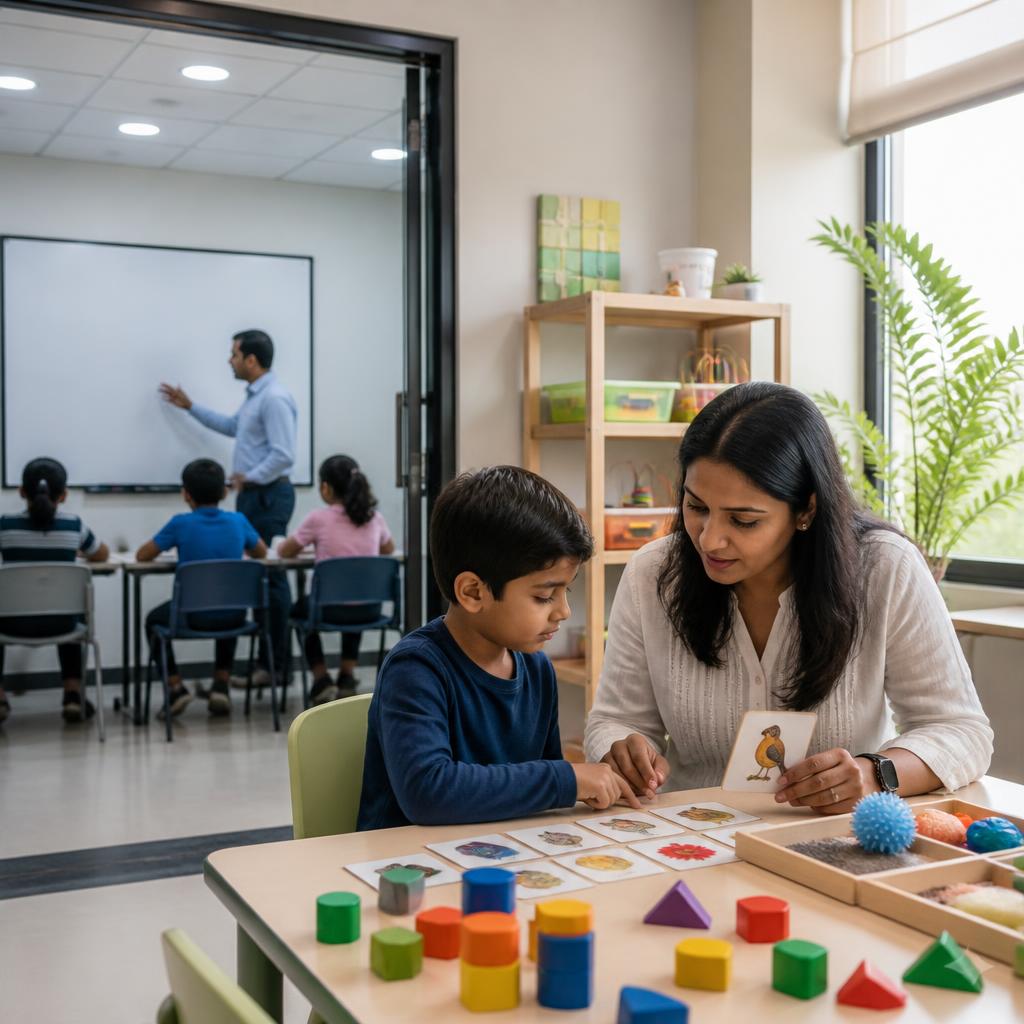
A speech and language assessment looks at how a child understands and uses language, how they produce speech sounds, and whether there are difficulties with phonological awareness (the sound structure of language). An occupational therapy assessment checks fine motor skills, handwriting readiness and sensory processing. Educational or special‑education assessments evaluate reading, spelling and comprehension patterns. Together these evaluations identify whether a child has a language disorder, a specific learning difficulty, a motor‑based writing problem, or a mix — information that guides effective intervention.
Practical scenarios: tuition vs therapy
If a child can read aloud accurately but struggles to understand what they read, reading comprehension or language therapy may help. If they read slowly, confuse similar words or miss small sounds in words, phonological awareness or speech therapy is likely more useful than extra tutoring. If handwriting is illegible or pencil grip and coordination are poor, occupational therapy and handwriting intervention target those mechanical skills. When behaviour, attention or sensory issues interfere with classroom learning, a combined plan involving behaviour intervention, OT and special education can be more effective than tuition alone.
Why multidisciplinary support matters
Many parents appreciate having speech, occupational therapy, ABA and special education available together because children often need coordinated input rather than isolated services. Reviews from local families note that a team approach helps therapists share observations, set aligned goals and give consistent home strategies. That teamwork reduces conflicting advice and makes it easier for parents to carry recommended activities into daily routines at home and school.
What effective therapy looks like in practice
Effective programmes start with assessment, set clear, measurable goals, and use activities that target the child’s underlying difficulties — not just homework drills. Expect regular progress updates, practical home‑based activities (so learning continues between sessions) and guidance on classroom strategies teachers can use. Parents at local centres report seeing steady, visible changes in communication, attention and participation when therapy is combined with home integration and school coordination.
Coordinating with your child’s school in Gurgaon
Share assessment findings and suggested strategies with your child’s teacher. Small classroom adaptations — like simplified instructions, extra processing time, multisensory reading supports or preferential seating — often make a big difference. If formal school accommodations are needed, an assessment from a qualified centre provides the documentation teachers and school counsellors find helpful when planning support.
Choosing the right local support
When looking for help in Gurgaon, prefer centres that offer formal speech and language assessments, occupational therapy evaluations and special‑education input so recommendations are based on testing, not guesswork. Parents in the area value services where therapists explain the approach clearly, demonstrate home activities and provide regular updates. Rainbow Child Development Center lists these assessment and therapy services and works with families to make plans that fit the child’s needs.
How to get started and what to expect first
If you suspect an underlying issue, start by requesting a comprehensive assessment rather than booking tuition right away. An assessment will clarify whether speech‑language therapy, OT or special‑education support is appropriate, or whether tuition focused on skills practice would help alongside therapy. After assessment you should receive a clear plan of recommended services, suggested home activities and a timeline for review. Early identification and a coordinated plan give your child the best chance of catching up and feeling more confident at school.
Final thought: trust the process, not quick fixes
It’s understandable to seek quick solutions when your child is struggling, but persistent reading, spelling or comprehension problems often need more than extra coaching. A targeted assessment followed by tailored speech‑language, occupational or special‑education interventions addresses root causes and helps tuition (if needed) be more effective later. In Gurgaon, families report good results when assessments, multidisciplinary therapy and consistent home practice are combined — a patient, structured approach that builds lasting skills.
Article by
Rainbow Child Development Center | Occupational Therapy in Gurugram | Speech Therapy | ABA Therapy | Special Educator
Rainbow Child Development Centre in Gurgaon, Haryana, provides specialized care for children through occupational therapy, speech and hearing therapy, ABA, special education, and child psychiatry. As a leading occupational therapy centre in Gurgaon, we enhance motor skills, sensory processing, and independence. We also offer expert speech therapy in Gurgaon to improve communication and language. Renowned for effective autism treatment in Gurgaon, we deliver personalized programs, making us a trusted autism centre in Gurgaon. Our skilled special educators in Gurgaon provide tailored learning plans, positioning us among the top special schools in Gurgaon, special education schools in Gurgaon, and centers for comprehensive therapy in Gurgaon.