Drive‑In vs Double‑Deep Racking: Choosing High‑Density Storage for Dubai Cold Stores
A practical guide to choosing between drive‑in and double‑deep pallet racking for chilled and cold storage in Dubai, covering SKU mix, forklift access, FIFO/LIFO needs, layout tips, and relevant racking components.
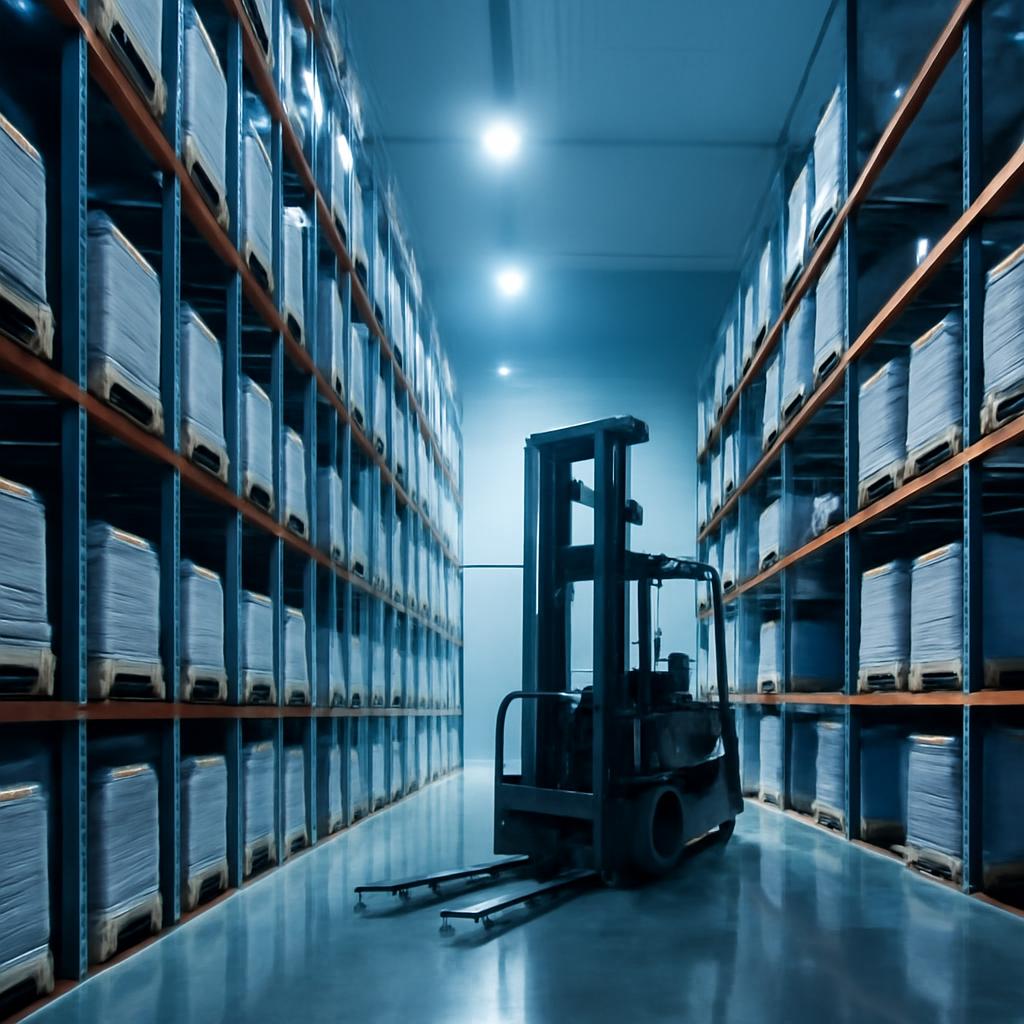
High‑density racking: the basics
Drive‑in and double‑deep racking are both high‑density solutions that reduce aisle space and increase pallet storage per square metre—an attractive option when floor area is limited. Drive‑in creates a deep block of storage where a forklift actually drives into lanes to load and unload pallets. Double‑deep stores two pallets deep at each position, cutting down aisles compared with single‑deep racking but still leaving more selective access than drive‑in.
Why cold stores need special consideration
Cold rooms and chilled warehouses bring extra constraints: insulation and door cycles affect temperature control, condensation can form on pallets and rack components, and forklift performance (especially battery electric trucks) differs in low temperatures. These factors change how you plan aisles, choose materials and protect racking—so what works in ambient warehouses may need tweaks in a chilled environment.
When drive‑in racking makes sense
Drive‑in racking is a good fit when you have large quantities of the same SKU, slow SKU rotation, and you prioritise maximum pallet density. Because it forces a LIFO (last‑in, first‑out) handling pattern, drive‑in suits stores where inventory age is not critical or where products are managed in uniform batches. In cold stores, drive‑in can save valuable conditioned space by eliminating multiple aisles, but remember the tradeoff: limited pallet selectivity and more complex retrievals.
When double‑deep racking is a better choice
Double‑deep gives a density boost without the extreme access limitation of drive‑in. It’s a sensible middle ground when you need higher storage capacity but still want greater pallet accessibility than drive‑in provides. Double‑deep often requires reach trucks or forklifts with extended reach attachments and slightly wider but fewer aisles. This setup works well for facilities with medium SKU variety and moderate turnover where occasional access to the second pallet is acceptable.
Match your SKU variety and turnover to the system
A simple way to decide: if you store many pallets of only a few SKUs, drive‑in gives the best density; if you hold more SKUs with moderate pallet depth, double‑deep usually fits; if you have many SKUs and fast picking, selective single‑deep racking or pallet flow systems may be better. Consider how often operators need to reach older pallets—perishables that must go out first usually require FIFO‑capable systems.
Forklift access and equipment in chilled environments
Equipment choice affects aisle widths and operability. Double‑deep commonly requires reach trucks; drive‑in often uses counterbalance forklifts capable of driving into lanes. In cold stores, battery performance and hydraulics can be impacted, and operators may need additional PPE or cabin heating. Before selecting a system, confirm with your material‑handling supplier which trucks are suitable for your aisle geometry and cold‑room conditions.
FIFO vs LIFO: rotation needs explained
Stock rotation rules are central to the choice. Drive‑in enforces LIFO by design, which is fine for some bulk or non‑perishable goods but not ideal for many cold‑chain products. Double‑deep complicates rotation but can be managed with operational controls or specific handling procedures. If strict FIFO is required, consider alternatives like selective racking, pallet flow (first‑in, first‑out) systems, or using lanes dedicated to rotation needs.
Layout, materials and condensation control
Cold rooms should promote airflow and minimise condensation. G.I. wire mesh decking allows ventilation beneath pallets and is commonly used in chilled racks; stainless steel shelving is a good option where hygiene and corrosion resistance matter. Keep rack surfaces clear of ice build‑up and use protective coatings or appropriate materials in highly corrosive environments. Also plan door positions and buffer areas to limit warm air ingress during load/unload operations.
Safety and practical rack components to consider
High‑density systems need protective measures: rack end‑guards, pallet support bars for stability, and safety barriers to protect columns from collisions. Regular inspections and clear operational procedures reduce damage and downtime. Components like mesh decking and pallet support bars not only improve safety but also help storage performance in cold environments—choose parts rated for the conditions in your chilled warehouse.
How FCSI Racking can help with cold store decisions
FCSI Racking supplies both drive‑in and double‑deep pallet racking along with related components such as G.I. wire mesh decking, pallet support bars and stainless steel shelving suitable for chilled and cold environments in Dubai. Rather than a one‑size‑fits‑all answer, a practical solution depends on your SKU mix, turnover, forklift fleet and rotation rules. If you’re planning a cold store layout, FCSI can discuss options, show compatible components and help design a layout that balances density, access and safety—contact them to start that conversation.
Article by
FCSI Racking
FCSI Racking is Trusted Racking and Shelving Company in Dubai. We provide top Racking and shelving Solutions in Dubai. Our services include heavy-duty racking systems, medium and light-duty racking, specialized racking systems, multi-level storage, adjustable shelving, mobile shelving and secure storage options. We provide dependable and practical Racking and shelving solutions for your commercial and industrial needs. Contact us today for the best racking and shelving solutions in Dubai! Let us help you make the most of your space with practical and reliable storage systems.