Planning Safety Barriers Around Racking and Traffic Aisles in Dubai Warehouses
A practical guide for Dubai warehouse managers on where to place safety barriers, rack protectors and guardrails to reduce damage and keep staff safe around pallet racking and traffic routes.
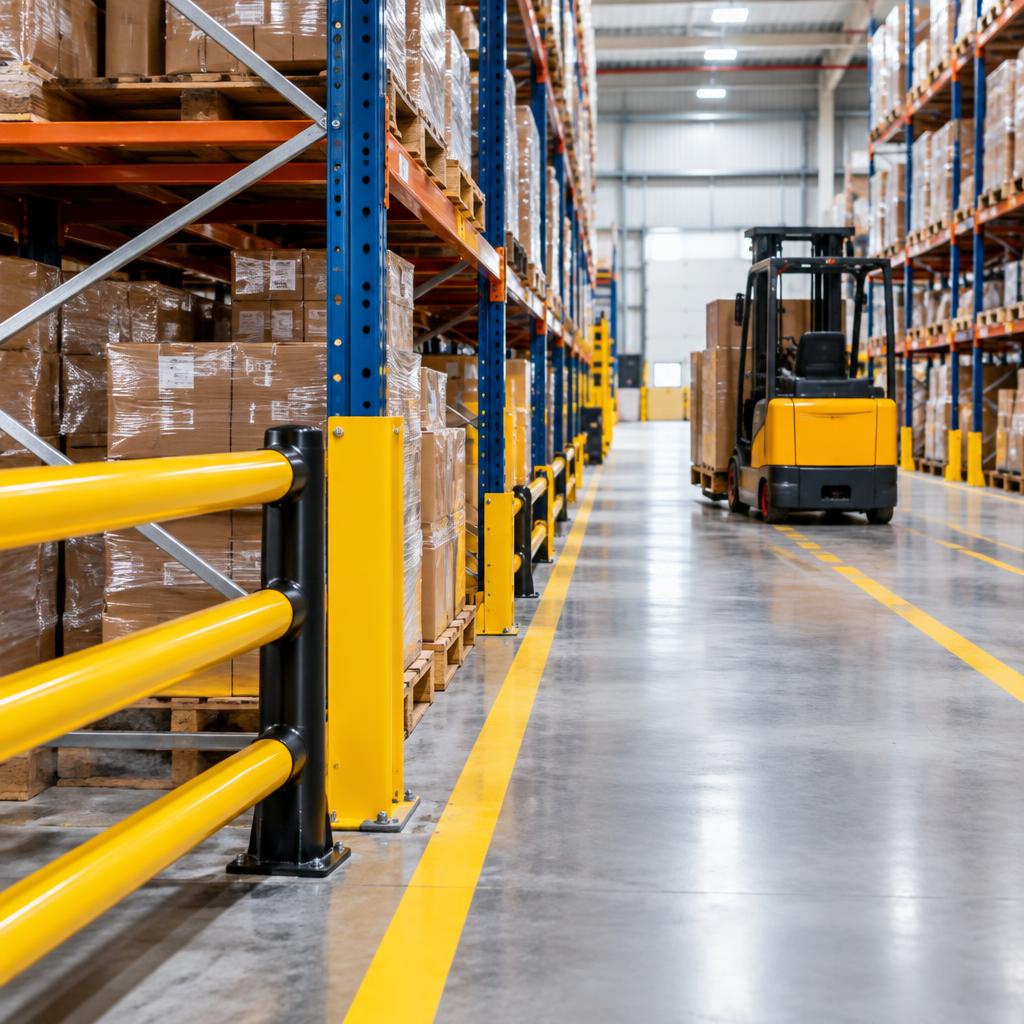
Why barrier planning matters in Dubai warehouses
Warehouses in Dubai face heavy traffic from forklifts, pallet jacks and frequent loading operations — and racking damage or collisions slows operations, creates safety hazards and increases cost. Thoughtful placement of barriers and rack protection reduces the chance of impact to uprights and end frames, keeps pedestrian routes clear, and helps your storage systems last longer. Suppliers like FCSI Racking list safety barriers and rack protectors among common solutions clients consider when planning or upgrading storage areas.
Start with a traffic and risk survey
Before choosing barrier types or locations, map how material moves through the facility. Identify forklift routes, pallet pick and drop zones, loading bays, pedestrian access, and any tight turning points. Note popular shortcuts and places where aisles cross. A short site survey (including observation during peak activity) reveals the high-risk spots where barriers will have the biggest impact.
High-priority locations for barriers
Prioritise protection at aisle ends, racking end-frames, dock approaches, corners where forklifts turn, mezzanine stairways and lift entries. Areas where forklifts reverse into racking or make frequent turns are especially vulnerable. Also consider protecting interactons between conveyors, cargo lifts and pallet handling points — customers who planned for these interfaces found it easier to avoid accidental impacts.
Common types of protection and where to use them
Choose protection that matches the risk: (a) rack end protectors and upright guards for direct frame impacts; (b) bollards or heavy-duty posts to shield pallet pick zones and dock edges; (c) guardrails to separate pedestrian walkways from traffic aisles; (d) wheel stops near loading bays; and (e) mesh partitions or metal storage cages to secure specific stock areas. FCSI Racking’s catalogue of safety barriers, mesh partitions and metal cages shows the range of practical options available for Dubai warehouses.
Protecting racking frames and pallet support areas
Racking uprights and end frames are structural and expensive to repair. Place upright protectors where forks are most likely to strike — aisle entrances, end bays and narrow-turn zones. Use pallet support bars and GI wire mesh decking in high-load areas to reduce risk from shifting loads. When planning barrier placement, account for pallet overhang and the way loads are handled so protectors shield the most vulnerable points.
Mezzanines, staircases and cargo lift interfaces
If you use rack-supported mezzanines, structural mezzanine floors, cargo lifts or mezzanine staircases, add guardrails and toe-boards at open edges and install barriers around stair access to prevent collisions. Gates or controlled access points at lift openings will keep people and goods safer during vertical transfers. These considerations are especially important where staff move between levels or where forklifts operate close to mezzanine columns.
How rack type changes your protection needs
Different racking systems change where and how you should protect them. Drive‑in or drive‑through systems concentrate forklift travel inside the rack and need strong end-of-aisle protection and clear guidance for operators. Double‑deep and multi‑tier racks increase storage density but require careful aisle planning and strong frame protection at shared access points. Cantilever racking for long goods needs protection at the base of columns and along the length where trolleys or forklifts pass.
Make protection visible and intuitive
Barriers work better when they are easy to see and understand. Use high-visibility colours, reflective tape, floor markings and clear signage to mark traffic aisles, pedestrian routes and no-go zones. Painted pedestrian walkways and marked forklift lanes reduce conflicts, and visible protectors help drivers judge distances quickly in busy operations.
Inspection, maintenance and training
Install barriers but keep them effective with regular checks. Inspect protectors and guardrails for damage after any impact and repair or replace them promptly — damaged protection can give a false sense of security. Combine physical protection with operator training: safe driving practices, awareness of turning radii and correct pallet handling reduce collisions. Review barrier performance after layout changes or when you add new equipment.
Next steps: a practical approach for your warehouse
Begin with a brief on-site review to mark high-risk zones, then prioritise barrier installation where it prevents the most damage and reduces safety risk. Consider a phased rollout: protect main aisles and dock areas first, then treat secondary zones. When you consult a racking supplier, discuss compatible accessories such as GI mesh decking, pallet support bars, metal cages and stair/landing protection so the whole system works together. If you’d like help planning, a racking specialist can inspect your layout, recommend guard types and sequence installations to minimise downtime.
Article by
FCSI Racking
FCSI Racking is Trusted Racking and Shelving Company in Dubai. We provide top Racking and shelving Solutions in Dubai. Our services include heavy-duty racking systems, medium and light-duty racking, specialized racking systems, multi-level storage, adjustable shelving, mobile shelving and secure storage options. We provide dependable and practical Racking and shelving solutions for your commercial and industrial needs. Contact us today for the best racking and shelving solutions in Dubai! Let us help you make the most of your space with practical and reliable storage systems.