Stackable Storage Boxes and Small-Parts Organisation for UAE Workshops
Practical, hands-on tips for maintenance teams and workshops across the Emirates on using stackable boxes and light racking to organise small parts, speed up work, and make the most of workshop space.
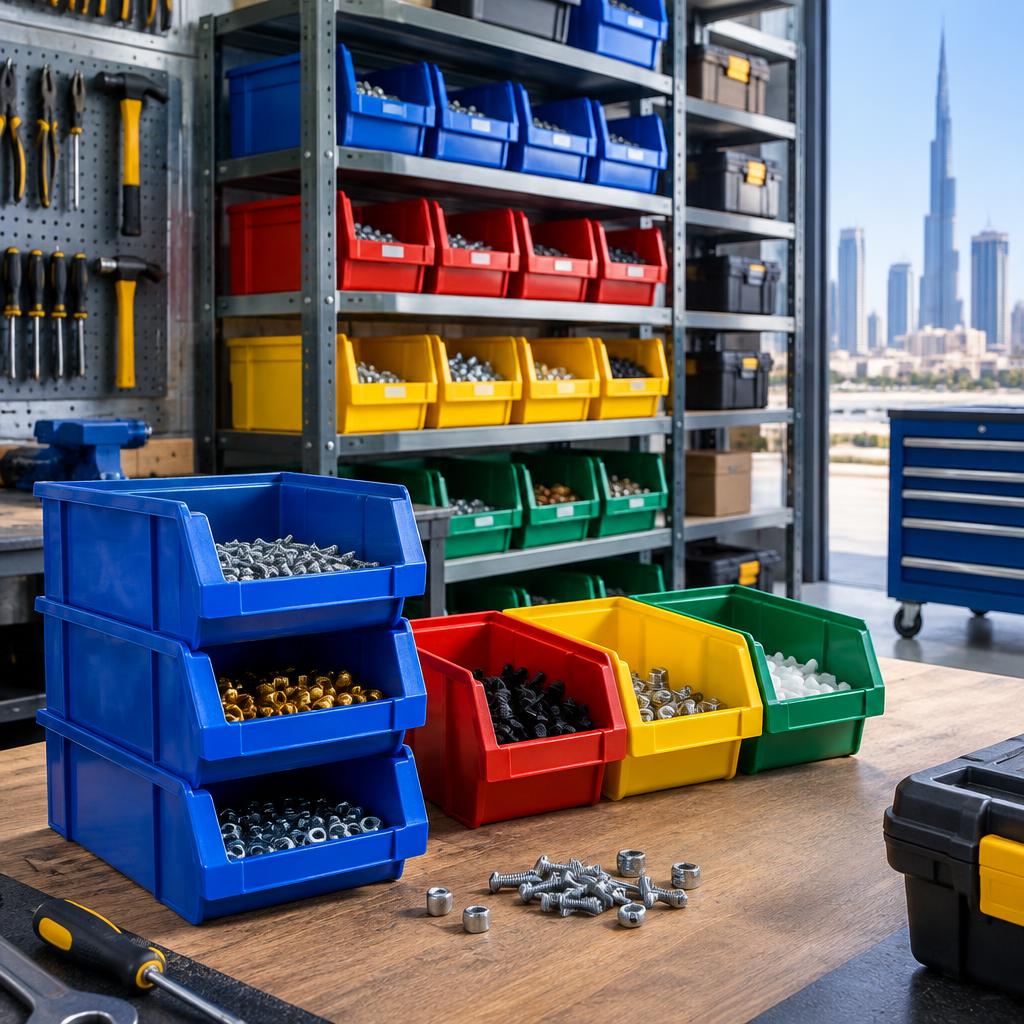
Why small-parts organisation matters
Even small workshops know that loose bolts, fittings and spare parts add up to wasted time, mistakes and frustrated technicians. A simple, repeatable storage approach reduces search time, avoids duplicate ordering and keeps work flowing. For maintenance teams, good small-parts organisation also improves safety and helps accurate inventory counts during busy shifts.
Start with a quick audit
Before buying boxes or shelving, spend an hour mapping what you actually use: common fasteners, the sizes of parts, how often items are consumed, and which parts need protection from dust or moisture. Group parts by function (electrical, plumbing, fasteners) and by frequency of use. This audit gives you the data to pick the right box sizes, quantities and shelf layout rather than guessing.
Choosing stackable boxes that work for workshops
Look for stackable boxes that are sturdy, easy to move and stack safely under the loads you expect. Match box height and width to typical part quantities so you avoid wasted space. Consider boxes with lids or close-fitting tops for parts that need dust protection, and favour designs that allow clear labelling or a transparent front so technicians can identify contents quickly. Since FCSI Racking supplies stackable storage boxes, pairing boxes with compatible shelving sizes makes installation and day-to-day use simpler.
Labeling, colour‑coding and simple inventory rules
A consistent labelling system is low-cost and high-impact. Use durable labels or pre-printed stickers for part numbers and a short description. Colour-code by function or priority (for example, red for urgently needed spares, blue for electrical). Combine labels with a basic restock rule: when a box reaches a set minimum level, it goes on the reorder list. These small habits turn boxes into a reliable, predictable store system.
Pair boxes with light racking and slotted-angle shelving
For workshops and maintenance rooms, light racking and slotted-angle shelving are practical options: they’re adjustable, straightforward to assemble and well suited to boxes and small bins. One customer in an Al Qusais workshop reported that slotted-angle shelving made frequently used materials more accessible — a useful reminder that the right shelf style can speed daily tasks. Slotted-angle shelving also works well where you expect to reconfigure layouts as needs change.
Bolt-free and long-span shelving for flexibility
Bolt-free (boltless) systems are handy when you want quick assembly and easy shelf height changes, while long-span shelving is a good fit if you need to store larger boxes or slightly bulkier items alongside small parts. Both options reduce installation time and let teams rearrange storage without specialist tools — useful in workshops that evolve with new equipment or changing workflows.
Accessories that improve box storage
A few simple accessories can make stackable boxes much more effective. Wire-mesh decking or shelf liners provide even support beneath multiple stacked boxes and improve airflow and visibility. Pallet support bars and sturdy decking help when boxes are stored on heavier-duty racks. Mesh partition walls or metal cages can protect high-value spares or restrict access where needed. Many of these accessories are available from FCSI Racking and are worth considering when planning a layout.
Designing for workflow: picking, kitting and replenishment
Position frequently used boxes at waist height and close to work benches to minimise bending and reaching. Reserve lower shelves for bulk spares and upper shelves for rarely used items. Create a simple kitting area where technicians can pull parts for a job into a single labelled box or tray, reducing trips to the storeroom. Finally, set a regular replenishment rhythm (daily or weekly depending on usage) so popular parts never run out unexpectedly.
Local considerations across the Emirates
Workshops across Dubai, Abu Dhabi, Sharjah and the other Emirates face similar space and climate considerations: compact floor footprints, high ceilings in some warehouses, and a need for durable storage that resists dust. If you operate from locations such as Al Quoz, Jebel Ali or Ras Al Khor, consider mobile shelving or mezzanine options only if your workflow and building layout support them. FCSI Racking serves businesses across the UAE and can help match stackable boxes to the appropriate shelving or rack type for your facility.
Next steps: practical implementation tips
Start small: pick one bench or storeroom, perform the audit, and trial a set of stackable boxes and a single shelving bay. Test your labelling and replenishment routine for a month, then scale what works. If you want guidance on compatible shelving, accessories like mesh decking, or a layout that saves space, speak with a racking supplier familiar with workshop needs. A simple, staged approach gets you organisation wins quickly without disrupting daily operations.
Customer review


Article by
FCSI Racking
FCSI Racking is Trusted Racking and Shelving Company in Dubai. We provide top Racking and shelving Solutions in Dubai. Our services include heavy-duty racking systems, medium and light-duty racking, specialized racking systems, multi-level storage, adjustable shelving, mobile shelving and secure storage options. We provide dependable and practical Racking and shelving solutions for your commercial and industrial needs. Contact us today for the best racking and shelving solutions in Dubai! Let us help you make the most of your space with practical and reliable storage systems.