Fire Tank and Emergency Water Storage Maintenance for High-Rise Facility Managers in Delhi NCR
Practical guidance for facility managers on why fire tanks require specialized cleaning, common contamination risks, inspection and maintenance checkpoints, and how routine mechanized cleaning and AMC programs support emergency readiness in Delhi NCR high-rises.

Why fire tanks need specialized attention
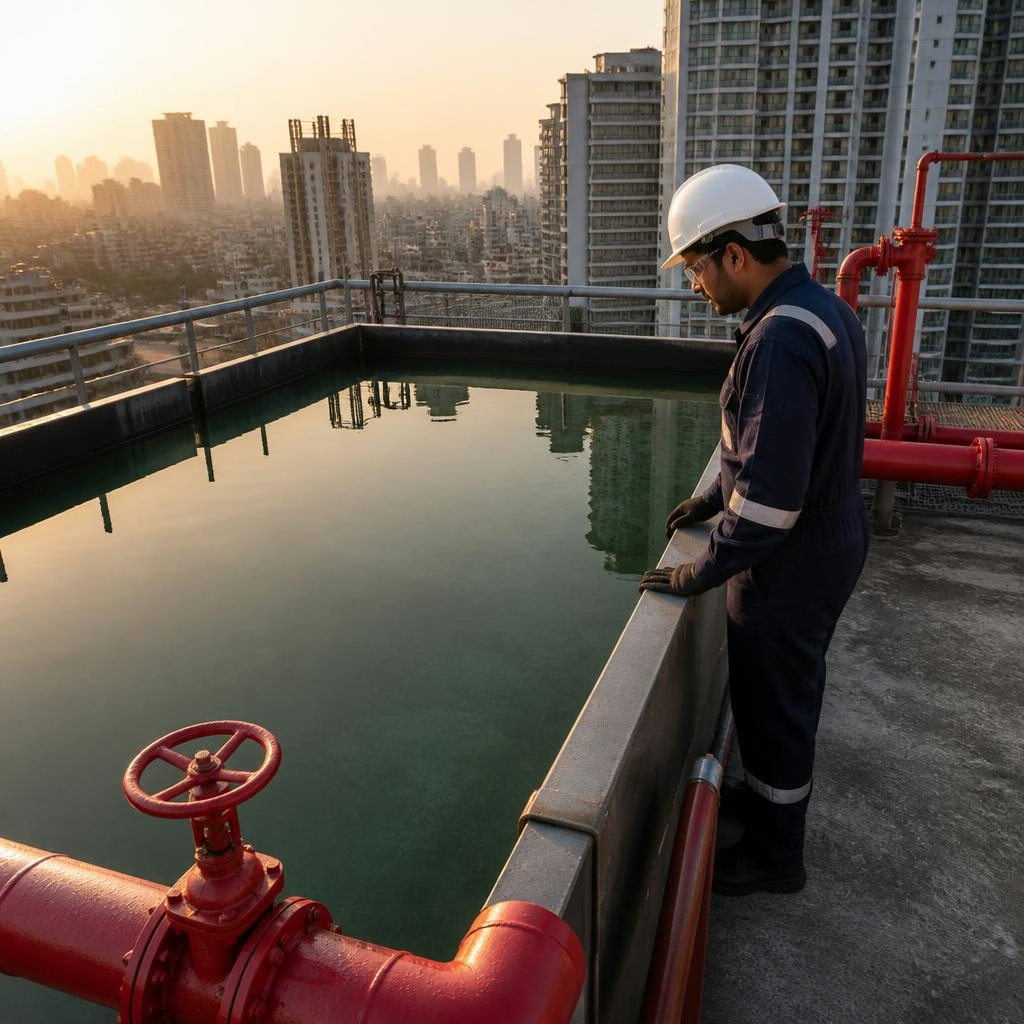
Fire water storage is a building’s last line of defence during an emergency. Unlike domestic potable tanks, fire tanks often sit unused for long periods and are subject to slow sedimentation, corrosion and stagnant water conditions. Left unchecked, these factors can reduce usable capacity, block outlets and suction lines, and impair pump performance—compromising the reliability of the entire fire suppression system. Facility managers should treat fire tanks as critical safety equipment that requires scheduled, specialist maintenance rather than an occasional visual check.
Typical contamination and failure modes to watch for
Common issues in fire tanks include sediment and silt accumulation, algae or microbial growth, rust and corrosion of internal surfaces, foreign debris from construction or roof runoff, and clogged strainers or outlet screens. Mechanical parts—float valves, level sensors and pump suction lines—can also fail or become fouled. These problems may not be obvious from a casual inspection, which is why deeper cleaning and mechanical checks are necessary to maintain dependable emergency performance.
Inspection checklist facility managers can use
Maintain a simple, repeatable inspection routine: monthly visual checks of tank water level, inlet/outlet condition, and access-hatch seals; quarterly checks of valve operation, level sensors and pump priming lines; and a more thorough internal inspection at least annually. During inspections, note sediment depth, signs of corrosion, foreign material, odour or visible growth, and the condition of internal ladders and access points. Record findings in a logbook with dates, photos and corrective actions so you can track trends and present evidence during safety audits.
What a specialized fire-tank cleaning service should provide
For fire tanks in high-rises, look for services that combine mechanical cleaning with careful handling of system components. Key features to expect: non-invasive, mechanized cleaning that avoids human entry into confined spaces; targeted removal of sediment and biofilm; inspection and cleaning of suction strainers, outlet nozzles and valves; and post-service reporting with photos and recommendations. Chemical-free options are preferable for tanks connected to firefighting systems where chemical residues could interfere with equipment.
How routine maintenance supports emergency readiness and compliance
Regular mechanized cleaning and documented inspections reduce the chance of surprises when the system is needed. A maintained tank keeps suction lines clear, ensures correct water levels, and helps pumps operate reliably. Keeping inspection logs, service reports and maintenance schedules makes it easier to demonstrate readiness during internal audits or third‑party inspections and supports the building’s overall fire safety program. While specific regulatory requirements can vary, demonstrable, scheduled maintenance is widely accepted as a best practice for high-rise emergency systems.
Preparing your building and team for a cleaning service visit
Before a specialist team arrives, notify occupants where work access and noise may occur, ensure safe access to roof hatches and pump rooms, and isolate non-essential inlets to avoid contamination from other activities. Ask the service provider for a proposed scope, estimated downtime (if any), and a sample service report template. Retain a copy of the final report and any corrective recommendations so your maintenance team can follow up on items such as valve replacement, sensor calibration or minor repairs.
Choosing a reliable fire-tank maintenance partner in Delhi NCR
When selecting a contractor, prioritise experience with high-rise systems and services that explicitly list fire tank maintenance, non-invasive mechanized cleaning and AMC options. Look for evidence of trained staff and consistent, positive customer feedback about thoroughness and minimal disruption. One recent customer review for a local provider highlights that fire tank maintenance and chemical‑free, non‑invasive cleaning are part of their service offerings, which is the type of capability to confirm during vendor selection. Also consider providers who deliver clear post-service documentation and offer regular maintenance contracts.
Next steps for facility managers
Schedule a formal assessment of your emergency storage—have a specialist inspect sediment levels, suction points and valve operation and provide a written scope for cleaning and repairs. Consider enrolling in an annual maintenance plan (AMC) so cleaning and inspections occur on a predictable schedule, reducing the risk of degraded performance. If you are managing a high-rise in Delhi NCR and would like an assessment or a sample maintenance checklist and reporting format, contact a specialist water-tank service with experience in fire-tank maintenance to arrange a site visit.
Customer review


Article by
GD Water Consult
Best Water tank Cleaning Service Provider in Delhi NCR, South Delhi, Noida & Gurgaon. At GD Water Consult, hygiene is our priority, offered at a fair price. We cater to customers who care about their family's health. Our services involve hygienic, non-invasive, mechanized water tank cleaning that doesn't disrupt the water supply. We differentiate ourselves from other Water Tank Cleaners with advanced machines, trained staff, and compassionate customer service. With our AMC, dirty tanks are a thing of the past. We are recognized as the Best water tank cleaning company in Delhi NCR, South Delhi, Noida & Gurgaon.