Digital 3D Scanning in Dentistry: How It Improves Crowns, Bridges, Aligners and Dentures in Narnaul
A clear, practical guide to how intraoral 3D scanning works, how it differs from traditional impressions, and why patients in Narnaul can expect better‑fitting crowns, bridges, aligners and dentures with fewer remakes.

Why digital scanning matters for modern dental care
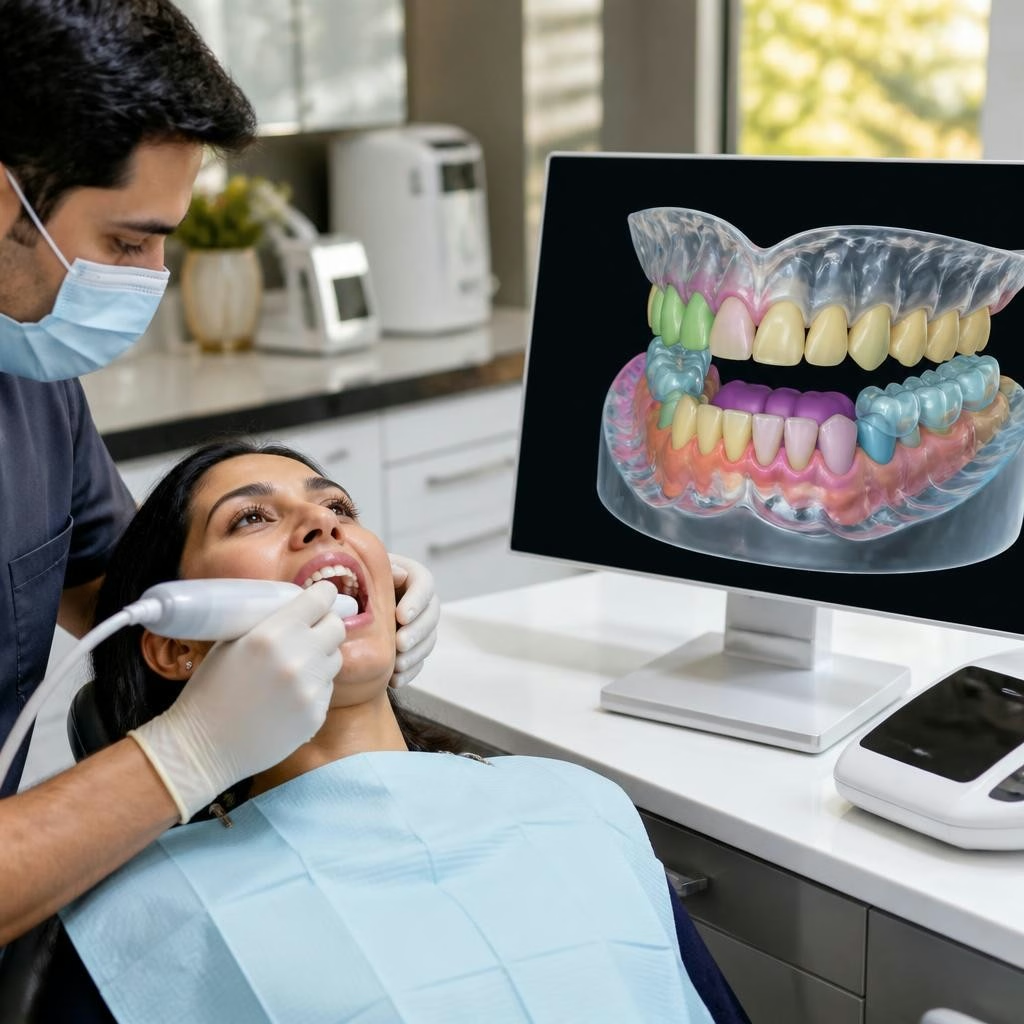
Digital intraoral scanning is changing how dentists plan and deliver restorative and orthodontic treatments. For patients seeking crowns, bridges, aligners or dentures, a high‑quality digital scan can improve fit, reduce the need for repeat visits, and make communication with the dental laboratory faster and more precise. This article explains the basics of the technology, contrasts it with traditional impressions, and highlights practical benefits for patients in Narnaul.
What is intraoral 3D scanning?
An intraoral 3D scanner is a handheld optical device that captures many tiny images of your teeth and gums and stitches them into a detailed three‑dimensional model. The scanner records surface geometry and texture in real time, producing a digital file (a 3D mesh or point cloud) that a dentist or technician can examine immediately on a screen. Because the data is already digital, it can be used directly for CAD/CAM design, treatment planning, and sending instructions to the laboratory.
How it differs from traditional impressions
Traditional impressions use putty‑like materials (alginate or polyvinyl siloxane) placed in trays to capture teeth and soft tissues. These require careful handling, physical shipping to a lab, and can be affected by bubbles, distortions, or dimensional changes as the material sets. A digital scan avoids bulk impression material, shortens the steps between capture and lab work, and lets the dentist immediately check for missing areas or errors. For patients this means less discomfort (no gagging or taste issues) and a lower chance that an impression will need to be retaken.
Improved crowns and bridges: accuracy and fewer remakes
Crowns and bridges benefit directly from the high resolution and repeatable measurements that digital scans provide. A precise digital model helps the dentist design margins and contacts more accurately, and the lab can fabricate restorations that fit better on first try. For clinics that routinely perform crown and bridgework, this often reduces chairside adjustments and the need to remake restorations—leading to fewer appointments and a faster path to a comfortable, natural‑feeling result.
Aligners and orthodontics: predictable tooth movement
Clear aligner treatment is built on sequential digital models that show planned tooth movement over time. Intraoral scans provide the exact starting point for that sequence, allowing the orthodontist to simulate outcomes, design each stage precisely, and monitor progress against the digital plan. For patients, this typically means more predictable results and clearer communication about treatment steps and expected timelines.
Dentures and removable prostheses: comfort and workflow benefits
Digital scans can streamline parts of denture design—capturing tooth positions, ridge anatomy and occlusal relationships in a form that the lab can use for digital setups. While some denture steps (for example, complex jaw relation records or final aesthetic try‑ins) may still require physical records or clinical verification, the digital workflow can reduce errors in the early stages and shorten the back‑and‑forth between clinic and lab, lowering the chance of remakes.
What patients can expect at a modern clinic in Narnaul
At clinics that use intraoral scanning as part of a broader digital workflow, a typical visit for a restorative or orthodontic case includes a scan, a review of the digital model with the dentist, and a clear plan for lab work or appliance fabrication. Gulab Dental Hospital’s published equipment list and patient feedback note the use of modern imaging technologies alongside a focus on minimally invasive care. Many patients appreciate the clinic's cleanliness, professional staff and the clarity of explanations when digital tools are used.
Practical tips before your digital scan
To get the most from a digital scan, arrive with clean teeth and avoid heavy lipstick or thick facial creams that can sometimes affect soft‑tissue capture. Ask the clinic whether digital files will be shared with you, how they coordinate with the laboratory, and whether any additional clinical records (bite registrations or face‑bow transfer) are needed for your particular case. Most patients report greater comfort with scanning than with traditional impressions; however, some clinics experience occasional appointment delays, so confirm your booking time and arrive a few minutes early.
Article by
Gulab Dental Hospital
Gulab dental hospital, located in the heart of the city, is an ultra modern Dental clinic equipped with latest high-end technology including CBCT, OPG, RVG, Surgical operating Microscope etc offering world class dental treatments. Extreme emphasis is given to preventive &least invasive procedures by all consultant doctors.