How Advanced Dental Technology Improves Treatment Results in Narnaul
A clear, practical guide for Narnaul residents showing how tools such as CBCT, OPG, RVG, surgical microscopes and intraoral 3D scanners lead to more accurate diagnoses, safer and less invasive procedures, and more predictable outcomes.

Why technology matters for everyday dental care
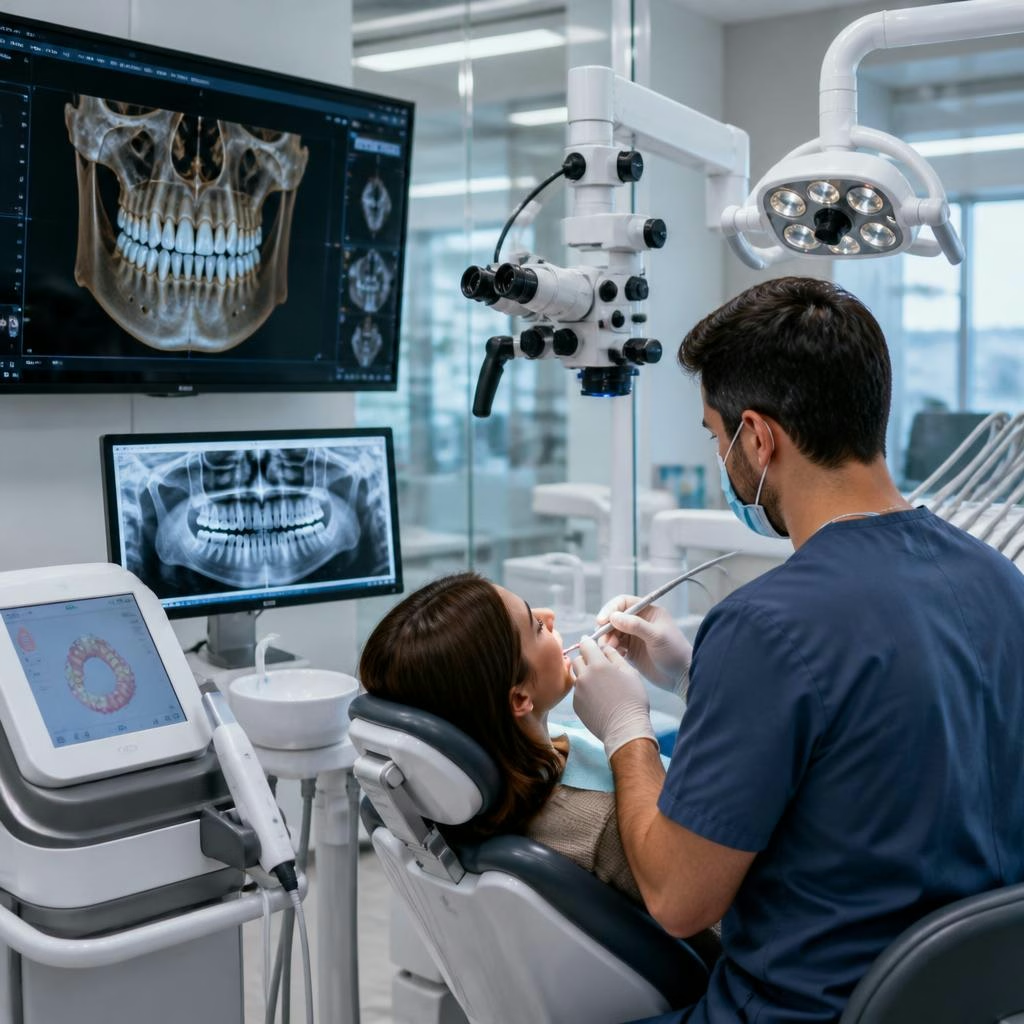
Modern dental tools do more than sound impressive — they change how treatment is planned and delivered. For patients in Narnaul, access to CBCT, OPG, RVG, surgical operating microscopes and intraoral 3D scanners means problems are identified earlier, procedures are more precise, and results are often more comfortable and longer lasting. This article explains, in simple before-and-after terms, what each tool does and what that can mean for common treatments like root canals, crowns, braces and extractions.
CBCT and OPG: clearer, three-dimensional diagnosis
Before: traditional two-dimensional X-rays can miss complex anatomy or the true extent of a problem. After: OPG (panoramic X-ray) gives a broad view of the jaws, while CBCT produces a 3D image of teeth, roots and surrounding bone. For example, CBCT can reveal hidden root curvatures, bone defects, or the relationship between a tooth and nearby nerve channels — information that helps clinicians choose a safer, more conservative treatment plan rather than guessing from flat images.
RVG and the surgical microscope: precision in root canal treatment
Before: root canals performed without magnification or immediate digital feedback can miss tiny canals or misshape canals, which may lead to retreatment. After: RVG (digital intraoral radiography) gives instant high‑resolution images during treatment, and a surgical microscope magnifies the operating field. Together they let the dentist locate complex canal anatomy, confirm cleaning and filling at every stage, and reduce the chance of complications. Many patients report smoother, less painful RCT experiences when these tools are used.
Intraoral 3D scanning and digital workflows for crowns, bridges and veneers
Before: traditional putty impressions can be uncomfortable and occasionally inaccurate, requiring adjustments or remakes. After: intraoral 3D scanners capture a precise digital model of your teeth in minutes. That digital model improves design accuracy for crowns, bridges and veneers, often reducing chair time and improving the fit and appearance of the final restoration. The result is a more natural-looking outcome and fewer follow-up visits for adjustments.
Digital planning for orthodontics and aligners
Before: planning orthodontic movement relied on manual records and physical impressions, making long-range predictions less exact. After: a digital scan plus software-based treatment planning produces a step-by-step simulation of tooth movement for braces or clear aligners. This makes treatment timelines more predictable, helps set realistic expectations, and can reduce unnecessary tooth removal or extended treatment where a conservative approach will work.
Less invasive procedures, better comfort and faster recovery
Advanced imaging and magnification support a preventive, minimally invasive philosophy. When a clinician can see fine details before and during treatment, they can remove less healthy tissue, avoid unnecessary surgical exposure, and take targeted actions that protect adjacent teeth and bone. Patients commonly report less discomfort and quicker return to normal activity when care is guided by these technologies.
What local patients are noticing
Many patients in Narnaul highlight two recurring benefits: treatments that feel less painful and visible improvements after procedures such as root canals, crowns, veneers and braces. Reviews also emphasize a hygienic environment and a supportive team, which matters when you’re undergoing multi-step treatments. These patient observations align with the technical advantages described above — better imaging, magnification and digital workflows tend to produce outcomes people can see and feel.
Questions to ask and what to expect at your appointment
When you consult a dental clinic, ask which imaging and digital tools will be used for your case, how they influence the treatment plan, and whether the clinic will show you the images or scans as part of your explanation. For restorative or endodontic work, ask if RVG and microscope-assisted procedures are available; for crowns, bridges or aligners, ask about intraoral scanning and the digital workflow. Finally, expect staff to discuss steps, follow-up care and hygiene — clear communication is as important as technology for a successful outcome.
Article by
Gulab Dental Hospital
Gulab dental hospital, located in the heart of the city, is an ultra modern Dental clinic equipped with latest high-end technology including CBCT, OPG, RVG, Surgical operating Microscope etc offering world class dental treatments. Extreme emphasis is given to preventive &least invasive procedures by all consultant doctors.