Hygiene and Safety in Narnaul Dental Clinics: A Patient’s Guide
Practical guidance on infection-control steps reputable dental clinics follow—sterilization, disposables, surface disinfection, equipment safety—and a short checklist you can use during a visit in Narnaul.

Why hygiene and safety matter in dental care
Dental treatment involves close contact with the mouth, saliva and sometimes blood, so strict infection control protects both patients and staff. Good hygiene reduces the risk of cross-contamination, prevents post-treatment infections, and supports better clinical outcomes for procedures ranging from routine cleaning to root canals and implants. When choosing a clinic in Narnaul, prioritizing visible, routine infection-control practices is one of the simplest ways to protect your health.
What modern clinics in Narnaul should have
A quality dental clinic will combine trained staff with appropriate equipment and documented processes. Look for clear hand-hygiene routines, staff using gloves and masks correctly, a separate area for instrument cleaning and sterilization, and up-to-date imaging and treatment technology such as CBCT, OPG and RVG that are maintained and used in controlled settings. Patient feedback often highlights whether a clinic maintains a clean, professional environment—several local patients have described GULAB DENTAL HOSPITAL as well equipped and hygienic, which is one sign patients pay attention to.
How instruments are (should be) sterilized
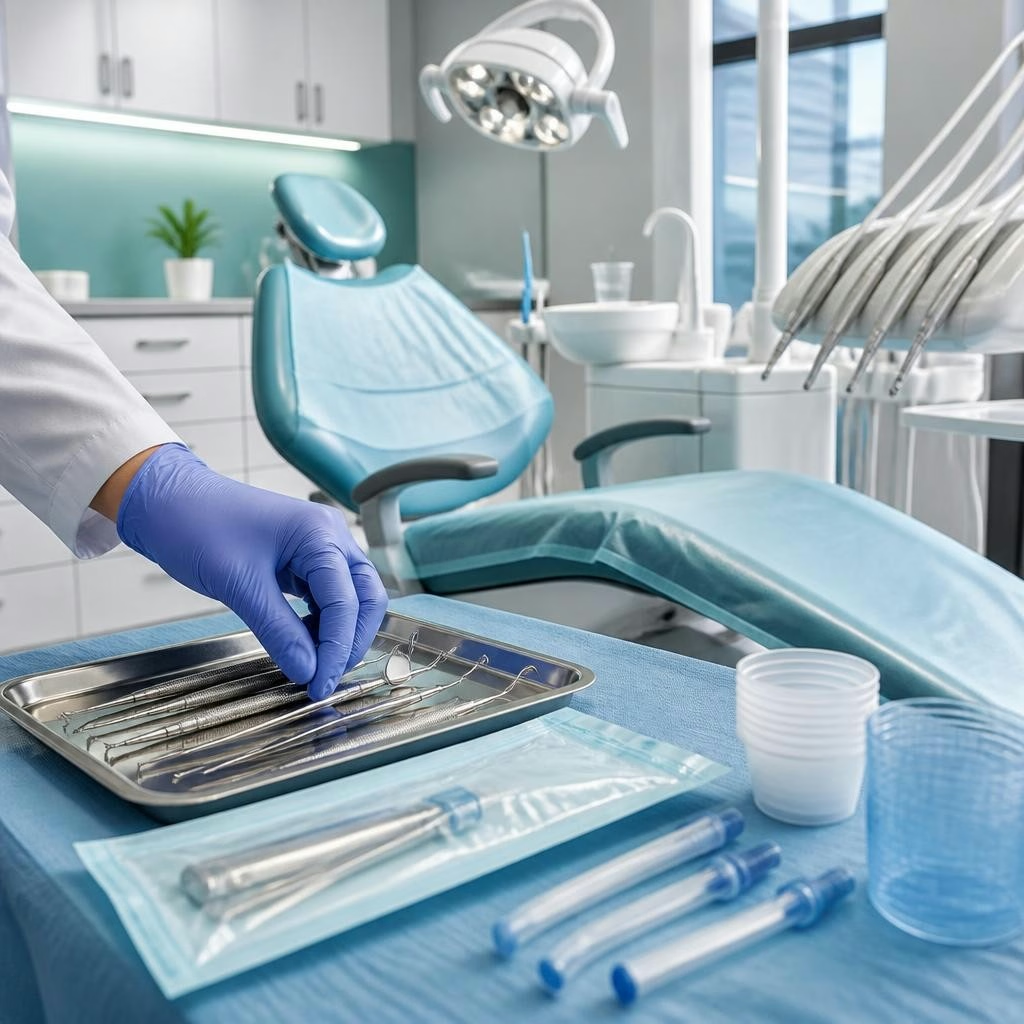
Effective instrument processing generally follows three steps: cleaning, packaging, and sterilization. Mechanical cleaning or ultrasonic baths remove debris before instruments are packaged with sterilization indicators and processed in a validated sterilizer. Autoclaves (steam sterilizers) and chemical sterilants are commonly used depending on the item. When you visit, you can ask whether the clinic shows sterilization records or uses sealed, dated instrument packs; seeing staff open a sterile pack at your chair is a practical reassurance.
Disposable items and protective barriers
Many infection risks are reduced by using single-use items and barrier protection. Consumables such as needles, suction tips, certain trays and patient bibs should be disposable and discarded after each use. Reusable surfaces that are difficult to sterilize—light handles, chair controls and monitor touchpoints—should have disposable plastic barriers changed between patients. Staff should wear fresh gloves for each patient and use masks and eye protection as appropriate; observing this behavior is an easy, immediate check of a clinic’s routine.
Surface disinfection and clean waiting areas
High-touch surfaces in the operatory and waiting area (chairs, door handles, reception counters) should be disinfected frequently with products effective against bacteria and viruses. A tidy, uncluttered reception and treatment area reduces places where contaminants can accumulate and signals an organized infection-control program. Clinics that separate arriving patients from those in treatment, or that provide hand sanitizer at reception, make it easier to maintain overall cleanliness—practical measures patients can look for when they arrive.
Equipment safety: imaging suites and advanced tools
Advanced diagnostic equipment—CBCT, OPG, RVG and surgical microscopes—offers important clinical benefits but requires routine maintenance and safe use. Shielding, clean sensor covers and proper disinfection between patients are essential. If a clinic advertises such equipment, it is reasonable to ask how images are acquired safely and whether protective covers or single-use items are used for intraoral sensors and scanners. Observing staff competence and clear explanations about procedures is a positive sign.
A quick hygiene checklist you can use
Use these simple observations to judge a clinic’s infection-control standards: 1) Do staff wash or sanitize hands before greeting patients and before procedures? 2) Are gloves, masks and eye protection used appropriately and changed between patients? 3) Do you see sealed, dated instrument packs or single-use disposables opened at the chair? 4) Are chair and high-touch surfaces wiped between patients and is sanitizer available in reception? 5) Does the clinic appear organized and uncluttered, with working waste bins and clean waiting seating? 6) Are advanced devices (intraoral scanners, X-ray sensors) covered or disinfected before use? 7) Does staff answer basic hygiene questions clearly and politely? A clinic that satisfies most of these items is likely following routine, effective infection-control practices.
If you have concerns: questions to ask and next steps
If you notice gaps, ask the receptionist or treating dentist polite, specific questions—for example, “How are instruments sterilized?” or “Do you use single-use intraoral items?” Reputable clinics should answer transparently and welcome reasonable questions. Many local patients value both clinical skill and cleanliness; in fact, a recent reviewer specifically highlighted a clinic’s hygienic environment and positive experience, reflecting that cleanliness is an important factor for satisfaction. If answers are vague or you remain uncomfortable, consider rescheduling or seeking a second opinion. Prioritizing clear communication and visible routines will help you find safe, professional dental care in Narnaul.
Customer review


Article by
Gulab Dental Hospital
Gulab dental hospital, located in the heart of the city, is an ultra modern Dental clinic equipped with latest high-end technology including CBCT, OPG, RVG, Surgical operating Microscope etc offering world class dental treatments. Extreme emphasis is given to preventive &least invasive procedures by all consultant doctors.