Tooth-Coloured vs Silver Fillings: A Practical Guide for Narnaul Working Professionals
A concise, practical comparison of tooth-coloured (composite) and traditional metal fillings — covering durability, appearance, cost considerations, and which option suits office-goers and teachers in Narnaul.

Why this matters for working professionals
For office employees, teachers, and other professionals in Narnaul, the choice between a tooth-coloured filling and a metal filling affects appearance, comfort, and how confident you feel when speaking or smiling at work. This article explains the practical differences so you can discuss options efficiently with your dentist and choose what fits your daily routine and priorities.
What is a tooth‑coloured (composite) filling?
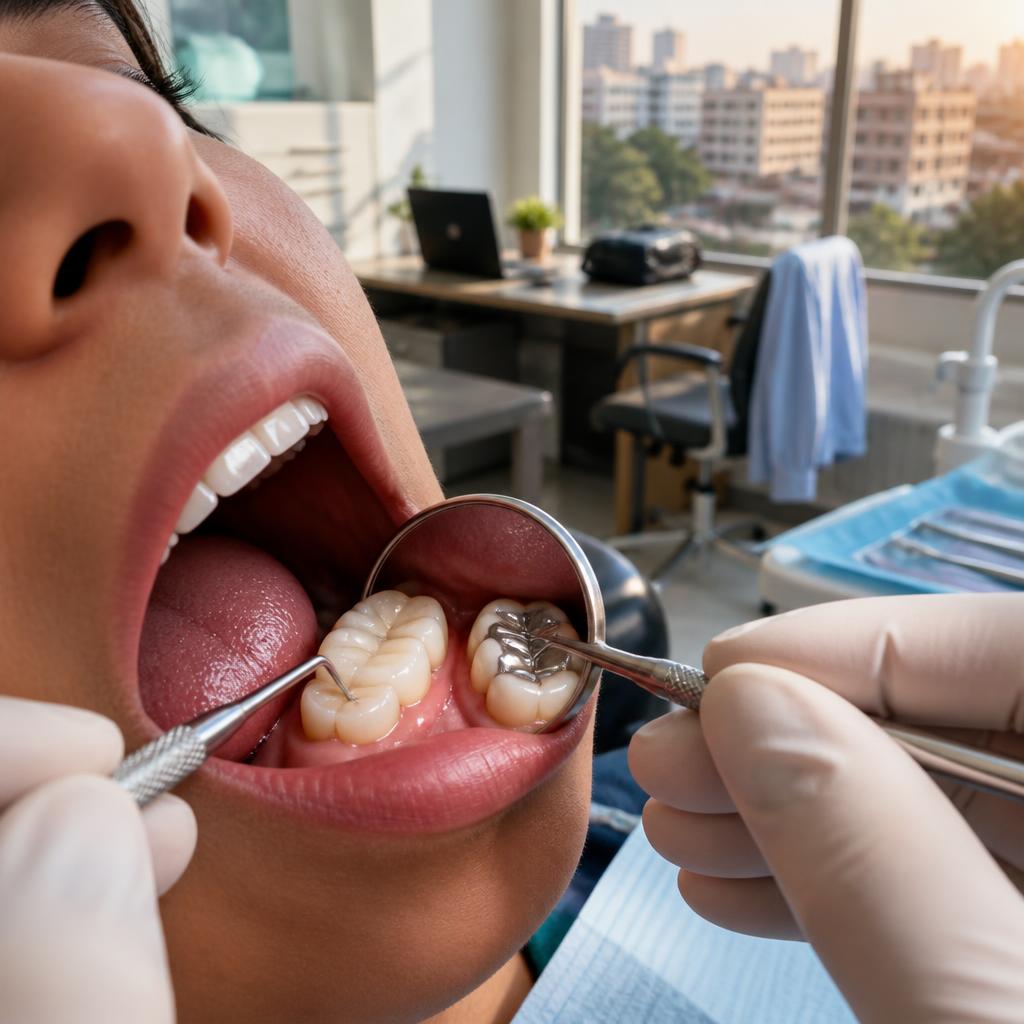
Tooth‑coloured fillings are made from composite resin materials that are matched to your natural tooth shade. They are bonded directly to the tooth and allow dentists to preserve more of the healthy structure during preparation. Composites are often used where appearance matters — front teeth and any area visible when you speak or smile — and modern materials offer good strength for many back‑tooth restorations as well.
What is a silver (metal) filling?
Traditional silver or metal fillings are made from dental alloys and have been used for decades. They are typically chosen for their proven strength in high‑load chewing areas, such as large cavities on molars. Metal fillings are often less costly up front and can be a durable option when aesthetics are not the primary concern.
Durability: what to expect
Longevity depends less on the material alone and more on the size and location of the cavity, your bite forces, oral hygiene, and whether you grind your teeth. Metal fillings have a long track record in high‑load posterior teeth. Modern composite materials and current bonding techniques have narrowed the gap; when placed correctly with good isolation and technique, composites provide satisfactory durability for many posterior restorations. Your dentist will consider the extent of the damage and functional demands when recommending a material.
Aesthetics and professional appearance
For teachers, presenters, and office staff who speak or smile frequently, tooth‑coloured fillings offer a clear advantage: they blend with natural teeth and avoid drawing attention. Composites resist immediate notice and help maintain a uniform appearance in front teeth and premolars. Metal fillings remain visible and may be less desirable for those who regularly interact with students, clients, or colleagues.
Cost, time and appointment considerations
Composite restorations generally require more time in the chair because of the bonding and layering process; they may also carry a higher material and laboratory cost than basic metal fillings. Metal fillings can be placed more quickly and can be a more economical solution for large back‑tooth restorations when budget is a primary constraint. That said, long‑term value depends on how well each restoration performs in your mouth; discuss likely lifespan and maintenance needs with your dentist before deciding.
How to choose: practical decision factors
When deciding, consider: (1) the tooth’s location — visible front teeth usually benefit from composite; (2) the size of the cavity — very large restorations may be better served by stronger restorative options; (3) functional demands — heavy chewers or those who clench may need a more durable restoration or protective measures; (4) aesthetics and professional image; and (5) budget and time available for treatment. A short clinical exam and X‑ray are usually enough for your dentist to recommend the appropriate material.
Next steps and maintenance tips
Book a consultation to review the tooth, discuss pros and cons, and see which option fits your work life. At clinics that use modern equipment and conservative techniques, you can expect clear explanations and attention to detail — one recent patient report noted a highly natural result and careful material selection. After placement, maintain good oral hygiene, avoid very hard foods on the restored tooth for a short period, attend regular check‑ups, and mention any sensitivity or bite changes early so adjustments can be made. If you teach or present regularly, a tooth‑coloured filling is often the simplest way to preserve your professional appearance while restoring function.
Customer review


Article by
Gulab Dental Hospital
Gulab dental hospital, located in the heart of the city, is an ultra modern Dental clinic equipped with latest high-end technology including CBCT, OPG, RVG, Surgical operating Microscope etc offering world class dental treatments. Extreme emphasis is given to preventive &least invasive procedures by all consultant doctors.