How to Use a Balewadi Gym Safely If You Have Desk‑Job Aches or Mild Pain
Practical, safety-focused guidance for office and IT professionals around Baner–Balewadi on warming up, choosing and modifying machines, and working with trainers at Nitrro Zone 360 to manage back, neck or knee discomfort while getting stronger.

Understanding desk‑job aches and how the gym helps
Prolonged sitting and static postures common in office and IT work often lead to stiffness, reduced mobility and mild discomfort in the neck, upper back, lower back and knees. A well‑structured gym program can relieve these symptoms by restoring mobility, strengthening supporting muscles and improving posture — but safety and gradual progression are essential. At a facility with varied equipment and trainers who tailor programs, like Nitrro Zone 360 in Balewadi, you can focus on corrective movements first and performance work later.
Start with a focused warm‑up and mobility routine
Begin every session with a short dynamic warm‑up and mobility sequence to increase blood flow and prepare joints. Useful elements include gentle neck and shoulder mobility, thoracic rotations, hip hinges or glute bridges to wake the posterior chain, and ankle and knee mobility drills. Low‑intensity cardio on a bike, rower or treadmill for a few minutes helps transition the body into exercise. These steps reduce the chance of aggravating existing aches and make strength work safer and more effective.
Choose low‑impact machines and controlled resistance
For desk‑related knee or back sensitivity, prefer low‑impact cardio (stationary bike, rowing machine, elliptical) and machines that provide guided, stable movement such as cable stations and selectorized weight machines. These options let you control range of motion and tempo, keeping tension where you want it. Functional training tools — kettlebells, resistance bands and TRX — are also useful for progressive, joint‑friendly strength work because they encourage control rather than maximal loading.
Which exercises to modify or avoid initially
Avoid or carefully modify high‑impact activities and heavy, uncontrolled lifts until mobility and basic strength improve. Examples to approach with caution include maximal deadlifts, deep loaded squats with poor hip mobility, high‑intensity plyometrics and any movement that causes sharp pain. Modifications include reducing range of motion, using lighter loads with slower tempo, substituting leg press or split squats for heavy bilateral squats, and performing hinge patterns with bodyweight or kettlebell before adding barbell load.
How trainers at Nitrro Zone 360 typically adapt programs
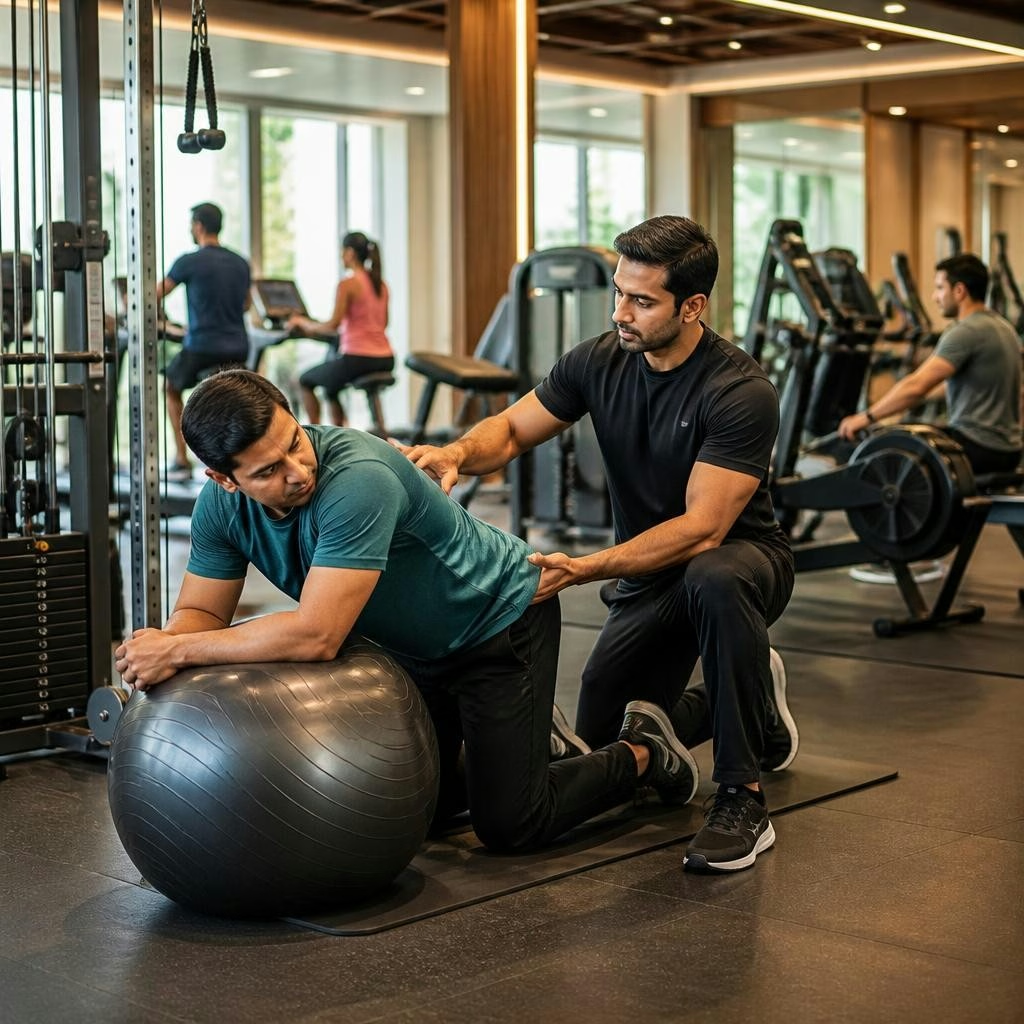
Members consistently note attentive, knowledgeable trainers at Nitrro Zone 360 who monitor form and personalise plans. Expect your trainer to begin with a movement assessment, correct technique (posture, breathing, core bracing) and prescribe scaled exercises that match your current capacity. Trainers commonly progress clients by improving movement quality first, then gradually increasing intensity. If you have mild aches, request specific form cues, alternative exercises and a planned progression that prioritises safety.
Practical gym‑day tips: posture, breathing and cleanliness
During sessions, maintain a neutral spine and prioritize diaphragmatic breathing: inhale to prepare, exhale through exertion. Use mirrors or trainer feedback to ensure joint alignment. Take advantage of orientation sessions and supervised classes — reviewers mention that orientation, clean locker and shower facilities, and supportive trainers make it easy to integrate workouts into a workday routine. Wipe equipment before and after use and communicate any discomfort to staff so they can recommend immediate adjustments.
Simple desk‑side habits and recovery to complement gym work
Small daily habits reduce recurrence of aches: incorporate standing micro‑breaks, gentle hamstring and hip flexor stretches, and posture checks during the workday. Prioritise sleep, hydration and recovery sessions at the gym such as guided cool‑downs, mobility classes or yoga to maintain gains. If an exercise produces sharp or worsening pain, stop and reassess rather than pushing through.
When to pause and how to get started safely
If pain is persistent, severe or associated with neurological symptoms, seek medical or physiotherapy advice before continuing an exercise programme. For mild, mechanical discomfort, enrol in an initial assessment or orientation at the gym and ask for a personalised beginner plan focused on mobility, core stability and progressive strength. Trainers at Nitrro Zone 360 — praised by members for personalised attention — can help you build a safe, sustainable routine that reduces desk‑job aches while improving fitness.
Article by
Nitrro Zone 360 Fitness
Step into Nitrro Zone 360 Fitness, a premier health club that redefines your fitness journey. Since its opening in 2022, this dynamic space has offered a comprehensive range of fitness solutions under one roof. With state-of-the-art equipment for strength training and functional workouts, the facility caters to all fitness levels. Certified trainers lead a variety of classes, including yoga, Zumba, and Bollywood HIIT, ensuring every member finds their path to wellness. The energetic atmosphere, coupled with modern and clean interiors, provides the perfect motivation to achieve your goals in this dedicated fitness hub in Pune.