Ayurvedic vs. Regular Indian Restaurants in Ubud: What to Expect at Panchamrit
A practical comparison of a typical Indian restaurant experience and Panchamrit’s Ayurvedic, health-focused approach—covering spice, oil, grains, portioning, and how diners commonly feel afterward to help you choose the right meal in Ubud.

Why this comparison matters
Dining choices in Ubud range from classic, richly spiced Indian restaurants to places that follow Ayurvedic principles. Understanding the differences can help you choose a meal that suits your palate and wellbeing. This article outlines how Panchamrit’s Ayurvedic, vegetarian approach typically differs from a regular Indian restaurant in areas guests ask about most: spices, oil, ingredients, portioning, and the after-meal experience.
Philosophy and menu focus
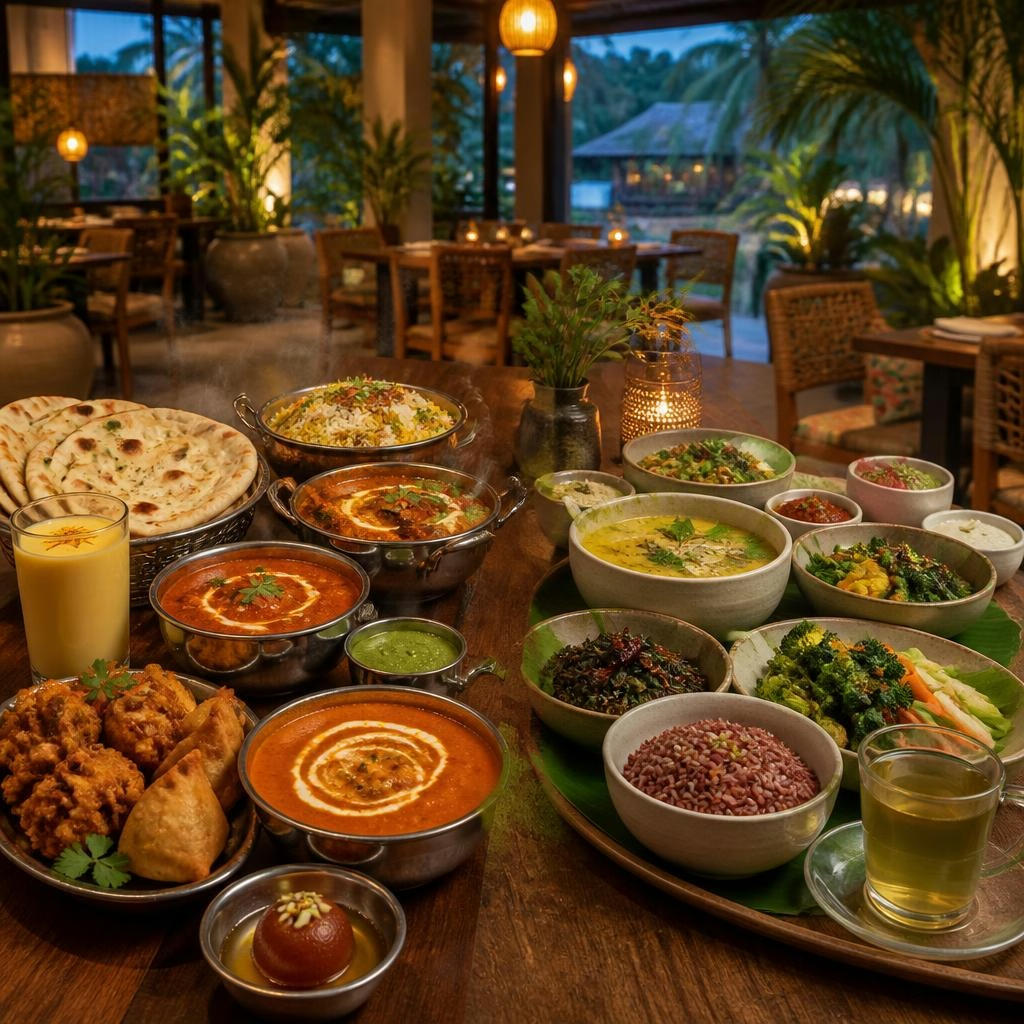
A regular Indian restaurant often prioritizes regional specialties, bold spice blends, and a broad non-vegetarian and vegetarian menu. Panchamrit, by contrast, follows an Ayurvedic philosophy—guided by the idea of the "Five Nectars" and balancing the six tastes (Shad Rasas). Its menu emphasizes pure vegetarian fare, fresh produce, whole grains, and ethically sourced dairy, with dishes designed to nourish both body and mind rather than simply deliver intensity of flavor.
Spice levels and flavor balance
Expect a difference in how heat and spice are used. While many Indian restaurants showcase fiery curries and punchy masalas, an Ayurvedic kitchen uses spices more deliberately to balance digestion and sensory experience. At Panchamrit this typically means milder heat, an emphasis on harmonious seasonings, and a focus on sweet, sour, salty, pungent, bitter and astringent notes that work together rather than only on chilli heat. Several guests have observed this gentler approach to spice when dining there.
Oil, cooking methods and perceived heaviness
A common distinction is oil usage. Traditional restaurant fare can be richer and more oil-forward, especially in deep-fried or heavily sautéed dishes. Panchamrit’s Ayurvedic-influenced preparation tends to keep oil moderate and uses cooking techniques aimed at producing light, nourishing outcomes. As one guest noted after dining there, the food felt less oily and left them feeling balanced and comfortable—an observation echoed by others who described the meals as healthy and not greasy.
Grains, ingredients and dietary suitability
Ingredient choices also differ. Panchamrit highlights whole and ancient grains, sattvic preparations, and options that accommodate vegan, gluten-free or Jain dietary preferences—when available—while presenting food with an emphasis on freshness and simple, natural flavors. Regular Indian restaurants may offer a wider variety of breads and grain-based dishes, sometimes with a focus on regional techniques rather than the Ayurvedic selection of ingredients intended to support digestion and vitality.
Portion sizes, presentation and ambience
Portions at an Ayurvedic-focused restaurant are often designed to be satisfying without being overly heavy; presentation tends to be mindful and restorative. Guests at Panchamrit frequently mention a calm, retreat-like setting and thoughtful plating that complements the nourishing menu. In contrast, standard Indian restaurants may present heartier portions and a livelier dining atmosphere suited to bold, communal meals.
How you may feel afterward—and how to choose
If you prefer meals that leave you feeling light, clear-headed and energized—particularly after a day of yoga, walking, or sightseeing—an Ayurvedic menu like Panchamrit’s is likely a good fit. If you seek robust, spicy flavors and larger, indulgent portions, a conventional Indian restaurant may better meet those expectations. Practical tips: ask about spice levels and oil when ordering, request whole-grain or sattvic options if available, and consider the dining context (a relaxed, restorative meal versus a lively, flavour-forward experience) when making your choice.
Customer review


Article by
Panchamrit
"Panchamrit" Meaning the "Five Nectars" is the guiding principle used to prepare Nectar like Ayurveda Inspired Indian Cuisine. At Pachamrit, we strive to serve a wholesome nourshing diet that enhances mental clarity and promotes emotions like compassion, kindness, love, forgiveness, empathy. Our Pure Vegetarian menu features fresh fruits, vegetables, whole grains, and ethically sourced dairy. Embracing Ayurvedic principles, we balance all six essential tastes - ''Shad Rasas'' - sweet, sour, salty, pungent, bitter, and astringent - to rejuvenate both body and mind. "Because we cannot scrub our inner body we need to learn a few skills to help cleanse our tissues, organs, and mind. This is the art of Ayurveda."