Dubai Apartment vs Villa: How AC Maintenance Needs Differ and How Tenants Should Plan
A practical guide for Dubai residents explaining how AC care in high‑rise apartments differs from villas, what to look for in maintenance visits, sample annual‑style service plans (described qualitatively), and budgeting tips tenants and owners can use to plan realistic AC care.
Why AC maintenance matters in Dubai
Dubai’s climate puts heavy demand on cooling systems year‑round, so regular AC care affects comfort, system life, and indoor air quality. Proper maintenance reduces the chance of breakdowns during hot periods and helps control issues such as dust, mold, and reduced cooling efficiency that are common in local buildings. For tenants and owners, understanding how maintenance needs vary by property type helps set realistic expectations and avoid surprise costs.
Fundamental differences between apartments and villas
High‑rise apartments and villas typically have different AC system layouts and service access. Apartment systems are often part of a central plant or individual split or fan coil units with shorter ductwork and service access through corridors and service shafts. Villas more commonly use multiple split units, packaged rooftop units, or longer ducted layouts with external casing and extended duct runs. These physical differences drive how technicians reach components, the types of checks that matter, and the likelihood of certain problems such as duct dust buildup or rooftop unit exposure.
Access, logistics and permissions
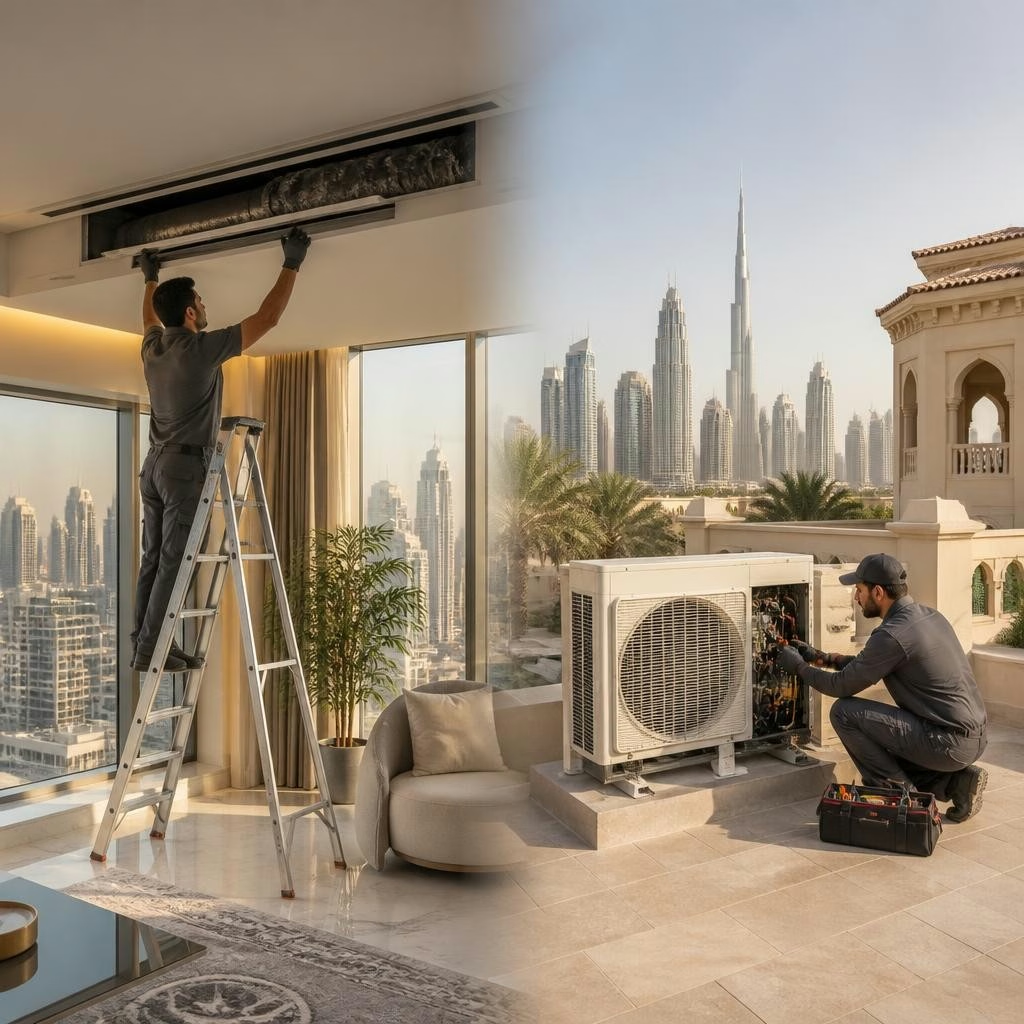
Access constraints differ strongly by property. In apartments, technicians usually coordinate with building management for lift access, service keys, and central plant permissions; gaining access to a single apartment is generally straightforward but rooftop or plant access follows building rules. In villas, technicians often work at ground level or on rooftops and may need ladders or low‑rise scaffolding for external units. Tenants should confirm who is responsible for arranging building permissions and ensure technicians can safely reach outdoor or rooftop equipment to avoid delays and extra site‑work costs.
Duct length, airflow and performance concerns
Longer duct runs and multiple branchings — more common in villa ducted systems — can reduce airflow and create uneven cooling if not inspected and balanced. Apartments with shorter ducts or single room splits often have fewer airflow losses but can be affected by shared plant conditions or confined vents. Key maintenance priorities are checking for blockages, ensuring registers and return paths are unobstructed, and verifying that fans and motors are delivering consistent airflow for the space served.
Mold, dust and indoor air quality risks
Mold and dust accumulation are common concerns in ducted and coil systems exposed to humidity and airborne particles. Reviews from local customers frequently highlight the value of professional mold treatment, duct cleaning and coil cleaning to restore healthy airflow and remove odors. Villas with more greenery or outdoor exposure and apartments with older ductwork both benefit from targeted cleaning and moisture control measures. Tenants should flag any musty smells, visible dust around vents, or increased allergy symptoms so technicians can include air quality checks as part of routine service.
Typical maintenance content for apartments (qualitative sample plan)
A practical maintenance approach for an apartment focuses on keeping indoor units and accessible components clean and functioning. Routine service typically covers filter checks and cleaning, inspection of indoor coils and condensate drains, basic electrical and thermostat checks, verification of airflow and fan operation, and a brief overall performance test. For apartments connected to a building plant, the plan should also note any building‑level checks and confirm responsibilities with management. Keep records of each visit so any recurring issues are tracked.
Typical maintenance content for villas (qualitative sample plan)
Villas usually require a broader scope because of multiple outdoor units, longer ducts, and rooftop equipment. A comprehensive villa maintenance approach includes cleaning or replacing filters, inspecting and cleaning coils, checking refrigerant and system pressures where accessible, clearing condensate lines, examining and cleaning duct runs and vent grills as needed, and inspecting rooftop or external housings for debris and corrosion. Given the exposure of outdoor components, periodic cleaning of coils and outdoor casings and attention to condensate and drainage routing help prevent premature failures and mold growth.
Practical budgeting tips for tenants and owners
Rather than rely on ad hoc fixes, plan maintenance proactively. Ask for a clear, itemised scope of work so you know which tasks are included in routine service and which are extra. Compare a periodic maintenance agreement with pay‑as‑needed visits to decide what fits your situation: bundled services can reduce administrative hassle and provide predictable scheduling, while on‑demand work may suit short‑term tenants. Prioritise preventive tasks that prevent costly repairs later — for example, cleaning coils or clearing condensate lines — and keep documentation of all services to support lease discussions with landlords or future negotiations when moving out.
Tenant vs landlord responsibilities
Who pays for what often depends on lease terms and local building rules. Tenants should review their lease to confirm responsibilities for filters, minor servicing and emergency callouts versus landlord obligations for major equipment or building plant. When arranging service, get written confirmation of who will handle building permissions, roof access or central plant coordination. Keeping a record of authorised maintenance helps resolve disputes and demonstrates care in case of move‑out inspections.
Choosing a maintenance provider in Dubai
Look for a provider with experience across both high‑rise and villa environments, a clear scope for AC cleaning and coil/duct work, and a track record of punctual, professional service. Local customer feedback consistently values responsiveness, clean workmanship and clear communication — qualities that reduce disruption during service visits. When contacting a contractor, ask about their process for mold treatment, duct and coil cleaning, handling of rooftop work, and whether they provide a checklist or condition report after service. This helps you compare offers and choose a provider who will protect comfort and indoor air quality over time.
Next steps and practical checklist
Start by checking your lease and noting the type and location of your AC units. Schedule a seasonal service before the hottest months and ask for an inspection report that highlights any immediate fixes and recommended periodic tasks. Keep records of every visit, request itemised quotes for additional works, and prioritise preventive cleaning for coils and ducts if you notice odors or dust. For residents in Dubai and Sharjah, choose a maintenance team experienced with local conditions and building access considerations to make service smooth and effective.
Article by
PPK Contracting - Commercial and Residential Maintenance Services in Dubai, UAE
PPK Contracting is a home & building maintenance services in Dubai, UAE. We specialise in complete home and building maintenance, facilities management, and professional fit-out solutions for residential, commercial, and industrial properties. Our services include electrical and plumbing works, carpentry, painting and finishing, kitchen services, HVAC coil cleaning, pest control, landscaping, pressure washing, swimming pool maintenance, and more. With a skilled team and a focus on quality, safety, and timely delivery, PPK Contracting provides reliable maintenance and contracting solutions across Dubai.