Dubai Tenant's Guide: Handling Sudden Plumbing Leaks Without Damaging Your Apartment
Practical, step‑by‑step advice for tenants in Dubai who discover kitchen, bathroom or ceiling leaks: immediate safety actions, how to isolate water, document damage for your landlord, when to call an emergency plumber, and common building causes to watch for.
Why acting fast matters
A small leak can become a major problem within hours in a high‑rise apartment. Acting quickly reduces water damage to floors, walls, ceilings and personal belongings, and helps avoid structural issues and disputes with building management or landlords. Many tenants who call a local maintenance team report that rapid response often prevents more costly repairs and quicker restoration of normal living conditions.
Immediate safety checks
Before doing anything else, check for electrical hazards: if water is near sockets, switches or appliances, do not touch them and switch off power to the affected area if it is safe to do so. If you smell gas or suspect a gas leak, evacuate and contact emergency services immediately. Prioritise personal safety and the safety of neighbours—don’t climb ceilings or use ladders in saturated conditions.
How to stop the water right away
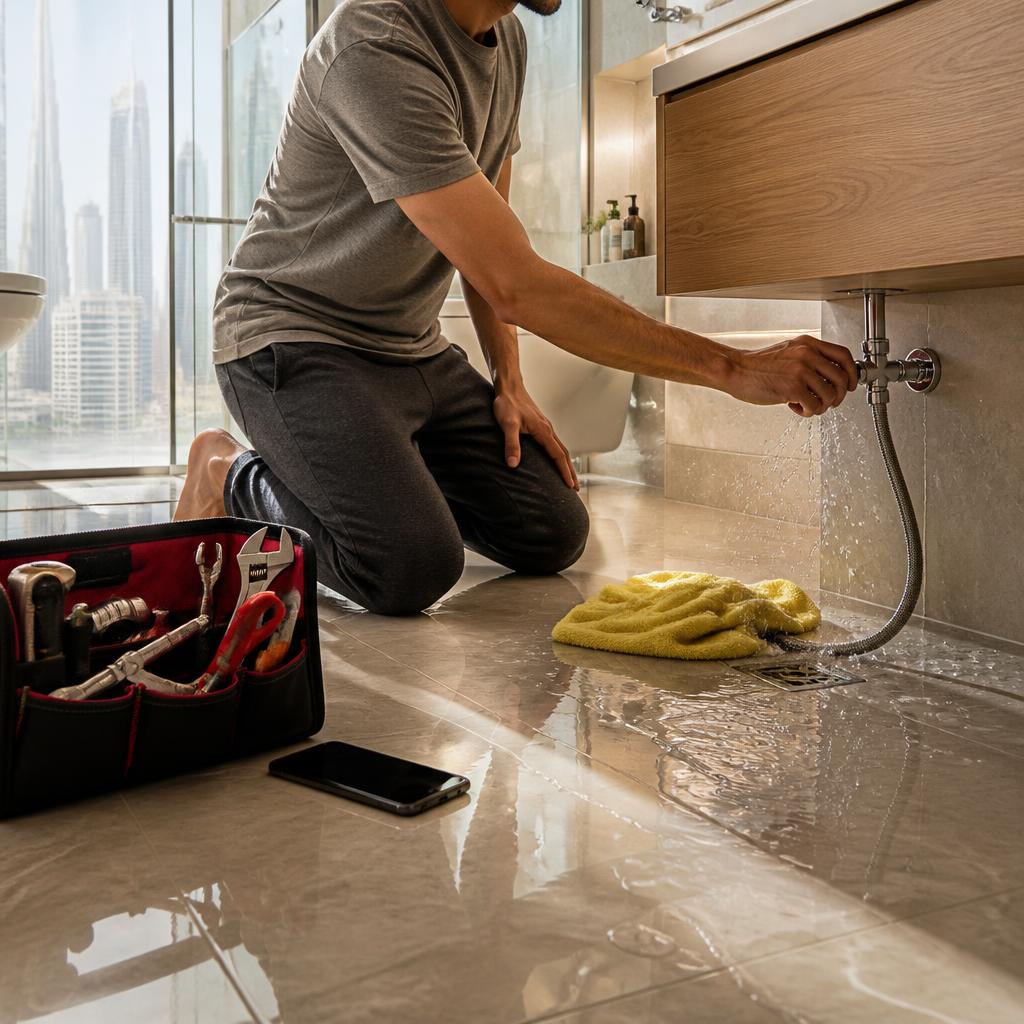
Locate and close the nearest isolation valve: kitchen sink, lavatory cistern, washer tap or the appliance-specific valve. If the leak continues, close the apartment’s main water shut‑off valve. In many Dubai apartments that valve is inside the flat near the kitchen or meter cupboard, or in a service chase—know its location in advance if possible. If you cannot reach any valve or the leak is severe, move to containment and call for professional help.
Containment and temporary fixes
Contain water with towels, buckets and mops to protect floors and stop spread to lower units. For small pinhole leaks on exposed pipes, a temporary clamp, rubber patch with hose clamp, or strong waterproof tape can slow flow until a plumber arrives. Never attempt major repairs on concealed plumbing (under concrete slabs or inside ceilings)—temporary containment is the safest approach for hidden leaks.
Protect valuables and sensible cleanup
Move furniture, electronics and documents away from the wet area. Lift rugs, place items on blocks or plastic sheets, and ventilate the space to help drying. If water reached electrical devices, consult a qualified electrician before using them again. Keep wet items separated and note anything that looks stained or warped—this will help with later documentation and insurance or landlord claims.
Document the problem for your landlord or insurer
Take clear photos and short videos showing the source, spread and timestamps; capture affected belongings and any visible damage to walls, ceilings or floors. Record when you shut valves and any temporary measures you used. A concise written log that lists dates and actions helps building management, the landlord and any contractor understand the timeline and responsibility.
Who to contact first: landlord, building management or a plumber?
Notify your landlord or the building’s facility management right away and share your documentation. If the landlord provides an approved maintenance contractor, follow that route to avoid disputes. If you do not get a timely response and the leak is active or damaging, call an emergency plumber. Local professional teams—those praised by tenants for quick, clean repairs—can often stabilise the situation, provide photo evidence of work done and advise on permanent fixes.
Common causes in Dubai apartments and quick diagnostics
Frequent sources of sudden leaks include failed flexible appliance hoses (washing machines, dishwashers), blocked sink traps that cause overflow, corroded taps and fittings, and concealed pipe failures in ceilings. In older fittings, rubber hoses can split; in kitchens, food debris can clog traps. If the leak is coming from above, suspect a neighbouring unit’s concealed pipework or a rooftop/terrace drain—these usually require building maintenance or a qualified plumber to access and repair.
When an emergency plumber is required
Call an emergency plumber if water continues despite isolation, there is rapid flooding, water is entering electrical cupboards, ceilings are bulging or dripping heavily, or if sewage smell and contamination are present. Expect a professional to assess, isolate the cause, provide a temporary but safe repair (clamps, part replacement) and advise on a permanent fix. Ask for before/after photos and a short report for the landlord or insurer.
After the repair: verification and prevention
Once repairs are complete, keep invoices and the contractor’s report. Check repaired areas over the following days for slow drips or staining. To reduce future risk: inspect and replace flexible hoses every few years, avoid pouring grease down sinks, fit strainers to traps, and consider regular maintenance checks under an annual maintenance contract. Professional providers in Dubai also offer preventive services like drain clearing, waterproofing and water‑tank cleaning that reduce recurrence of leaks when scheduled regularly.
Customer review


Article by
PPK Contracting - Commercial and Residential Maintenance Services in Dubai, UAE
PPK Contracting is a home & building maintenance services in Dubai, UAE. We specialise in complete home and building maintenance, facilities management, and professional fit-out solutions for residential, commercial, and industrial properties. Our services include electrical and plumbing works, carpentry, painting and finishing, kitchen services, HVAC coil cleaning, pest control, landscaping, pressure washing, swimming pool maintenance, and more. With a skilled team and a focus on quality, safety, and timely delivery, PPK Contracting provides reliable maintenance and contracting solutions across Dubai.