Emergency AC Breakdown in Dubai Heat: What to Do in the First 60 Minutes Before the Technician Arrives
Practical, safety-focused steps Dubai residents can take in the first hour after an AC fails: quick checks that won’t void warranties, ways to protect kids and pets from overheating, what photos and information to gather, and clear guidance on when to call a 24/7 repair team.
Why the first hour matters
When an air conditioner stops during Dubai’s extreme heat, the first 60 minutes are crucial for safety, reducing damage, and helping a technician diagnose the problem faster. Acting calmly and following a short checklist can protect vulnerable family members, limit secondary issues (like water leaks or electrical trips), and shorten the time a technician needs on site.
Immediate safety steps (first 0–10 minutes)
Put safety first: check that everyone in the home — especially young children, elderly people, or those with health issues — is comfortable and hydrated. If you smell burning, see smoke, or notice sparking, turn off the AC at the breaker and evacuate the area until an electrician or technician confirms it’s safe. Do not attempt to open the outdoor unit, touch wiring, or reach into fans.
Quick indoor checks that won’t void warranties (0–20 minutes)
There are small, safe checks you can do without tools and that typically won’t affect warranty coverage: confirm the thermostat is set to cooling and a lower temperature than the room; replace or inspect the air filter if it’s visibly clogged; check the thermostat display for error codes; and listen for unusual noises. If your thermostat is battery powered, replacing the battery is a simple step that sometimes restores operation.
Safe exterior checks (5–25 minutes)
From a safe distance, look at the outdoor condenser unit: ensure nothing is blocking airflow (plants, toys or debris) and that the unit is sitting level. If there is heavy dust or obvious debris, gently clear around the unit—do not attempt to remove panels or clean coils yourself. If the outdoor unit is unusually hot to touch, emits a strong smell, or is leaking refrigerant (oil-like residue), power it down at the breaker and wait for a technician.
What not to do: avoid common mistakes
To avoid worsening the situation, don’t open refrigerant lines, tamper with electrical components, or use compressed air on coils. Avoid DIY chemical cleaning or pouring water into the unit. These actions can be dangerous and may void warranties. If an AC safety switch (for example, a condensate overflow switch) has tripped, it’s safer to leave the unit off and report that condition to the technician.
Protecting kids, elderly and pets while you wait (0–60 minutes)
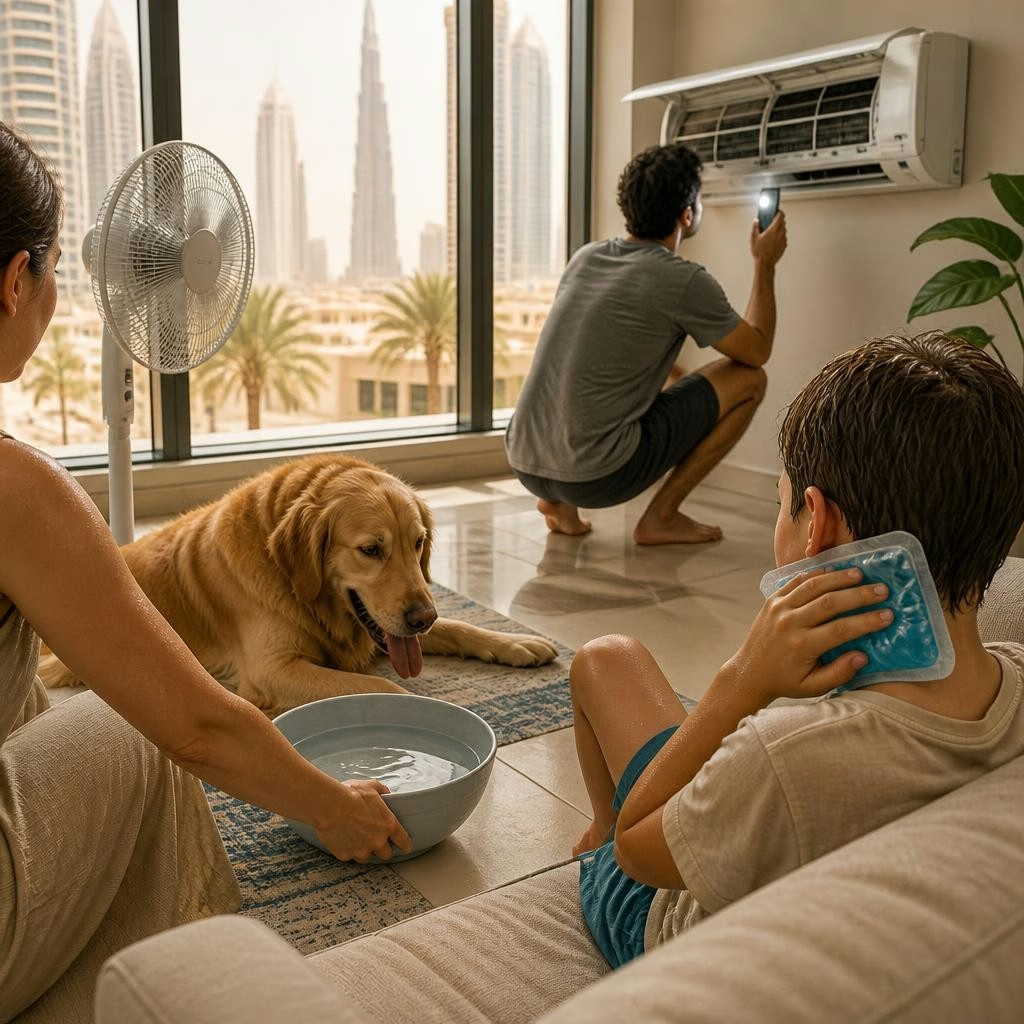
Create temporary relief: move vulnerable people to the coolest available room (lower floors and shaded areas tend to be cooler), use portable fans to circulate air, close curtains or blinds to block direct sun, encourage drinking cool fluids, and apply cool damp cloths to pulse points. For infants or those with medical conditions, consider relocating to an air-conditioned public place (mall, clinic) if heat exposure is a concern.
Photos and information to gather for the technician (10–60 minutes)
Collect clear photos and short videos that document the issue: images of the indoor unit display, any error codes, the outdoor condenser, the unit’s nameplate if visible (model and brand), thermostat settings, and any visible leaks or noises captured on video. Note when the failure started, recent maintenance or unusual events, room temperature, and whether multiple rooms are affected. Having this information ready speeds diagnosis and helps the technician bring the right parts or tools.
When to call a 24/7 emergency AC repair team
Call for immediate emergency attendance if the AC failure creates a safety risk (smoke, burning smell, electrical sparking), there is significant water leaking that could damage property, vulnerable people are at risk from heat, or the unit stopped working in the middle of a prolonged heatwave and no safe cooling alternatives are available. For non-urgent breakdowns, note the details and request the earliest available service slot.
What to expect from a professional response (based on local experience)
Local feedback indicates that fast, professional teams make a big difference in emergencies. Customers frequently mention quick dispatch, clear explanations of the fault, on-the-spot repairs when possible, and clean, respectful workmanship. If you contact a reputable maintenance provider, expect them to ask for the photos/information you prepared and give an ETA; technicians will typically perform a safety check first, then proceed to diagnosis and repair or advise on the next steps.
A short prevention checklist for after the emergency
Once the immediate issue is resolved, reduce future risk by scheduling regular AC maintenance (filters, coil and duct cleaning, refrigerant and electrical checks), keeping outdoor units clear of debris, and noting the service date in a maintenance log. An annual maintenance contract can help catch problems early and often includes coil cleaning and performance tuning—services commonly praised by customers in Dubai for improving reliability and indoor air quality.
Customer review


Article by
PPK Contracting - Commercial and Residential Maintenance Services in Dubai, UAE
PPK Contracting is a home & building maintenance services in Dubai, UAE. We specialise in complete home and building maintenance, facilities management, and professional fit-out solutions for residential, commercial, and industrial properties. Our services include electrical and plumbing works, carpentry, painting and finishing, kitchen services, HVAC coil cleaning, pest control, landscaping, pressure washing, swimming pool maintenance, and more. With a skilled team and a focus on quality, safety, and timely delivery, PPK Contracting provides reliable maintenance and contracting solutions across Dubai.