Advanced Oxidation Processes (AOP) for Treating Difficult Industrial Effluents in India
A practical guide to hydrodynamic cavitation and complementary AOP solutions for color, recalcitrant organics, and high-COD wastewaters in textiles, pharmaceuticals, and chemical industries, with compliance-minded steps for Indian facilities.
Why AOPs are Relevant for Indian Industry
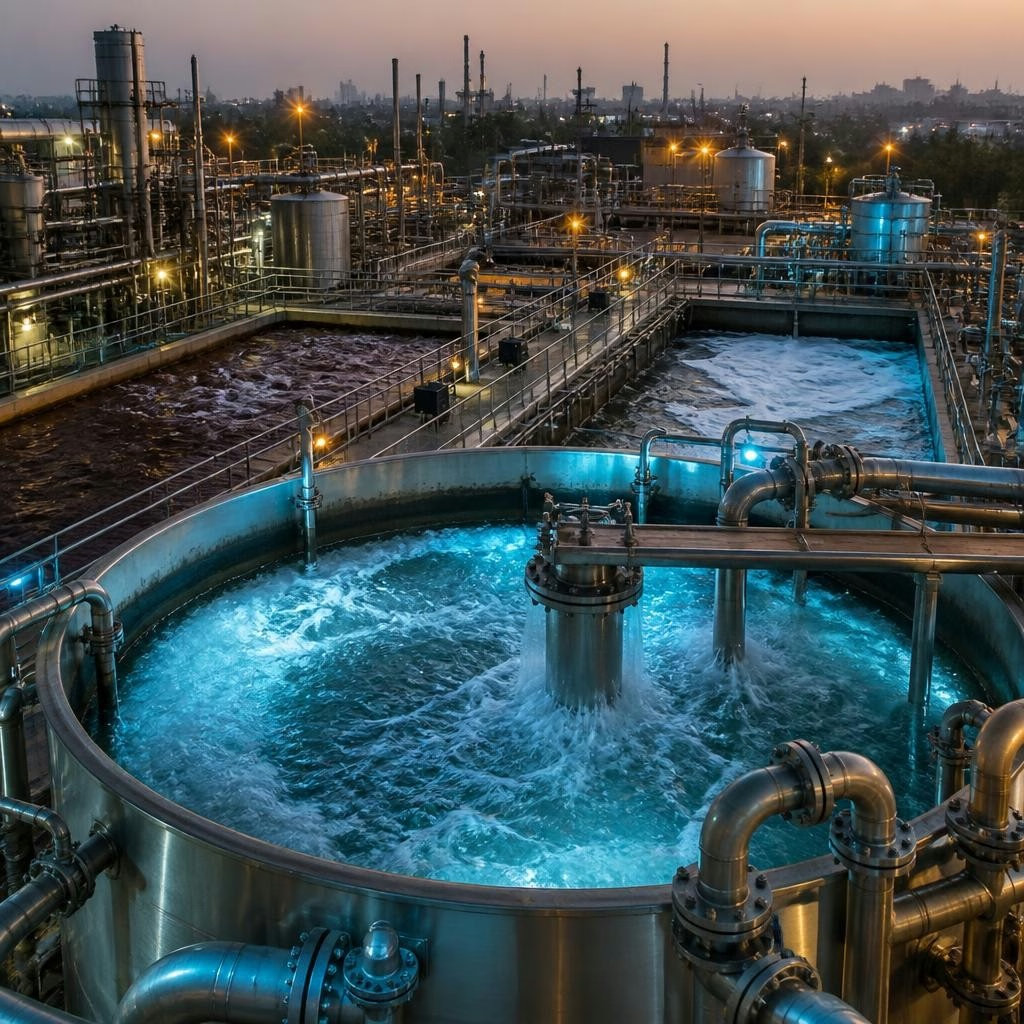
Many industrial sectors in India — notably textiles, pharmaceuticals and specialty chemicals — produce effluents that are colored, contain recalcitrant organic compounds, or have high chemical oxygen demand (COD). Conventional biological treatment alone can struggle with these streams. Advanced Oxidation Processes (AOPs) use highly reactive radical species to break down complex organics into simpler, more biodegradable molecules or mineralize them completely, making AOPs a valuable part of a treatment strategy where regulatory compliance, water reuse, or odor and color control are priorities.
AOP Technologies Offered and When to Consider Them
Prasinos Tech Innovations develops and supplies several relevant technologies that can form part of an AOP-based solution: hydrodynamic cavitation units, ozone generators and associated systems, and integrations that employ nanobubble technology to enhance mass transfer. Hydrodynamic cavitation is practical where mechanical energy can generate localized high-energy conditions for oxidation; ozone systems are often chosen for strong oxidizing power against dyes and pharmaceuticals; nanobubbles can improve gas transfer and contact efficiency in combined processes. Selection depends on effluent characteristics, plant layout and treatment objectives.
How Hydrodynamic Cavitation Helps with Recalcitrant Organics
Hydrodynamic cavitation creates controlled vapor bubbles that collapse and generate localized high temperatures and pressures, producing hydroxyl radicals and other reactive species. These radicals attack complex organic molecules, helping to decolorize wastewater and reduce refractory COD fractions. Hydrodynamic cavitation is attractive for its relatively compact footprint and for integration upstream of biological treatment to improve biodegradability, or as a polishing step for streams that resist standard treatment.
Combining AOPs: Practical Treatment Trains
AOPs are often most effective when combined in a treatment train. Common approaches include pre-treatment with cavitation to break molecules into smaller fragments, followed by ozonation for further oxidation and then biological polishing to remove residual BOD/COD. Nanobubble aeration or gas delivery can be incorporated to enhance ozone or oxygen transfer efficiency. Designing such combinations requires lab or pilot testing on representative effluent samples to determine dose, contact time and sequencing for both performance and operating cost.
Compliance-Focused Guidance for Implementation
Meeting discharge or reuse standards requires a structured approach: characterize the effluent (pH, COD, BOD, color, specific recalcitrant contaminants), define target limits, and run bench- or pilot-scale trials to evaluate AOP options and operating parameters. Monitor by measuring COD/BOD reduction, color removal and any formation of byproducts. Consider permitting and safety for oxidants (e.g., ozone handling and off-gas management). Practical constraints such as available space, power supply and integration with existing STP/ETP systems should guide the final design.
Operational Benefits Often Observed
When applied appropriately, AOPs can deliver several operational advantages: improved biodegradability of otherwise recalcitrant wastewater, visible color reduction, reduction in chemical dosing downstream, and potential decreases in sludge production when biological loads are lowered. These outcomes also support sustainability goals by enabling reuse and reducing environmental impact. Customer feedback for Prasinos Tech emphasizes strong domain expertise, practical demonstrations and energy-conscious, compact solutions—factors that matter when choosing a technology partner.
Next Steps: Evaluation, Pilot Testing and Contact
If your facility faces difficult effluents, begin with a focused effluent characterization and a discussion of treatment objectives (discharge, reuse, or internal process recovery). Pilot testing is the most reliable way to validate an AOP approach and optimize operating conditions. Prasinos Tech Innovations, located in EC Nagar Cherlapalli, Secunderabad, supports evaluations and demonstrations of hydrodynamic cavitation, ozone-based systems and nanobubble integrations for STP/ETP and industrial applications across India. Reach out to arrange sample testing and a tailored feasibility assessment to identify a compliant, cost-conscious treatment train.
Customer review


Article by
Prasinos Tech Innovations
Prasinos Tech Innovations Private Limited is an OEM at the forefront of sustainable environmental technologies. We specialize in the design and manufacturing of advanced systems including nanobubble generators, ozone generators, hydrodynamic cavitation units, and advanced oxidation processes (AOP) tailored for critical applications in sewage treatment plants (STP), effluent treatment plants (ETP), and water and wastewater treatment plants (WWTP). Our technologies are engineered to deliver high-efficiency, low-footprint solutions across diverse sectors such as aquaculture, agriculture, horticulture, and the bioenergy industry, including biogas and biodiesel production.