Choosing Between Nanobubbles, Fine Bubble Diffusers, and Surface Aerators for STP/ETP Retrofits
A practical guide for Indian STP and ETP decision‑makers comparing nanobubble generators, fine bubble diffusers, and surface aerators for retrofits — covering energy use, installation complexity, maintenance, and likely performance impacts to help plan a site‑appropriate upgrade.

Why the right aeration choice matters in retrofits
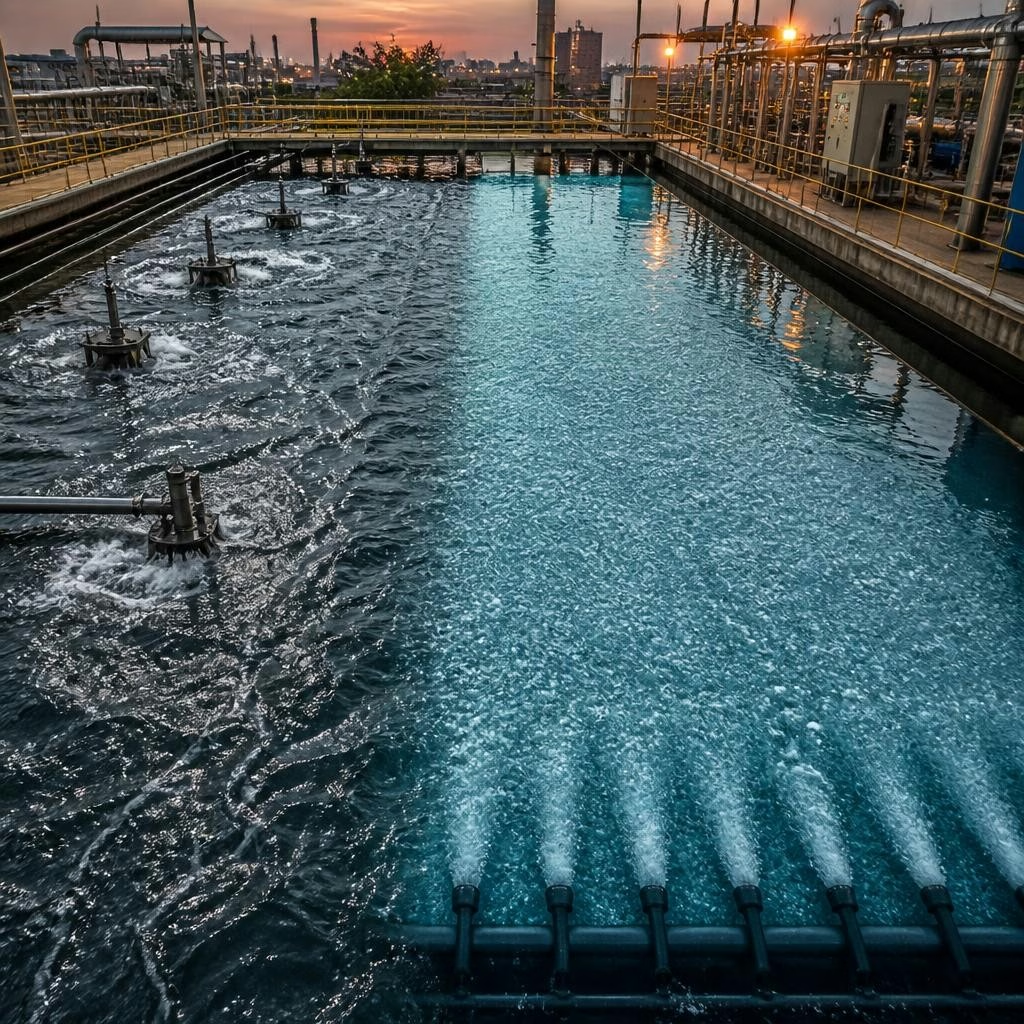
When upgrading an existing sewage or effluent treatment tank, the aeration method affects operational energy, process control, chemical demand, sludge production and maintenance burden. A retrofit must fit available space, electrical capacity and downtime windows while delivering the compliance and reuse targets the plant owner requires. This article compares three common retrofit options — nanobubble generators, fine bubble diffusers and surface aerators — with a focus on practical considerations for Indian STP and ETP operators.
Overview of the three options
Nanobubble systems generate extremely small bubbles that remain suspended longer and improve dissolved oxygen distribution; they are offered as compact, inline or external generator units. Fine bubble diffusers are porous membranes or discs installed on an aeration grid at tank bottom; they provide good oxygen transfer when clean and submerged. Surface aerators are mechanical devices that agitate the surface to transfer oxygen and provide strong mixing. Each approach produces oxygen and mixing in different ways, and the best choice depends on tank geometry, process needs and site constraints.
Energy use and operating cost considerations
Energy is often the largest ongoing cost for aeration. Nanobubble technology is typically positioned as energy‑efficient because improved oxygen transfer and longer bubble residence can achieve target DO levels with lower airflow or power. Fine bubble diffusers can be efficient but only when fouling is controlled; pressure losses and blower sizing affect power draw. Surface aerators can deliver strong mixing but frequently have higher power demand per unit oxygen transferred. Evaluate the full lifecycle cost — energy, spare parts and chemical reductions — not just capital cost.
Installation complexity and footprint for retrofits
Retrofit constraints drive installation choice. Nanobubble generators are often compact and can be integrated without extensive tank modification, making them attractive where access or footprint is limited. Fine bubble diffusers require installation of a diffuser grid, manifolds and blowers and may need tank dewatering or divers to position components. Surface aerators require mechanical mounting and sufficient freeboard and may need structural supports and splash containment. Plan for piping access, electrical routing and any required offline time when scheduling the retrofit.
Maintenance, fouling and operational reliability
Maintenance needs differ: fine bubble membranes can foul or clog in high‑solids or grease‑laden wastewater and require periodic cleaning or replacement. Surface aerators have mechanical bearings and seals that need routine inspection and maintenance. Nanobubble generators have fewer submerged consumables but require attention to air supply, feed pumps and occasional service. Local maintenance capability, spare‑part availability and the plant’s ability to perform routine cleaning should influence the decision.
Performance outcomes: oxygen transfer, sludge and chemical use
Beyond oxygen delivery, aeration choices influence biological performance. Nanobubble implementation has been shown in practical deployments to help with oxygen transfer efficiency, reduce sludge production and lower chemical usage in downstream steps — benefits that can support tighter COD/BOD control and more sustainable operations. Fine bubble diffusers, when operating clean, provide reliable oxygen transfer and are a proven choice in many plants. Surface aerators offer excellent mixing and are useful when mechanical agitation is required in addition to aeration.
A practical retrofit decision checklist
Before choosing a solution, assess: existing tank depth and geometry; current DO control and oxygen demand patterns; sludge characteristics and fouling potential; available electrical capacity and preferred energy profile; maintenance resources and spare‑parts logistics; allowable downtime for installation; and regulatory or reuse targets. Pilot trials or live demos in comparable conditions are particularly valuable for retrofit decisions — they reduce risk and clarify expected performance under local wastewater conditions.
How to proceed and what Prasinos Tech Innovations offers
As an OEM working in India on nanobubble technology and related water‑treatment systems, a practical next step is a site survey and a small pilot or demonstration tailored to your STP/ETP conditions. Many clients report that demonstrations and knowledgeable technical support help clarify retrofit outcomes and timing. If you are evaluating upgrades, consider engaging a supplier who can scope a pilot, outline installation impacts and provide a maintenance plan so you can compare total cost of ownership and process benefits before committing to a full retrofit.
Article by
Prasinos Tech Innovations
Prasinos Tech Innovations Private Limited is an OEM at the forefront of sustainable environmental technologies. We specialize in the design and manufacturing of advanced systems including nanobubble generators, ozone generators, hydrodynamic cavitation units, and advanced oxidation processes (AOP) tailored for critical applications in sewage treatment plants (STP), effluent treatment plants (ETP), and water and wastewater treatment plants (WWTP). Our technologies are engineered to deliver high-efficiency, low-footprint solutions across diverse sectors such as aquaculture, agriculture, horticulture, and the bioenergy industry, including biogas and biodiesel production.