Cutting Sludge Handling Costs in Indian STPs with Hydrodynamic Cavitation and Nanobubbles
Practical guidance for STP owners on using hydrodynamic cavitation and nanobubble pre-treatment to improve sludge breakdown, enhance dewatering, and reduce transport and disposal costs—plus steps to pilot and measure savings.
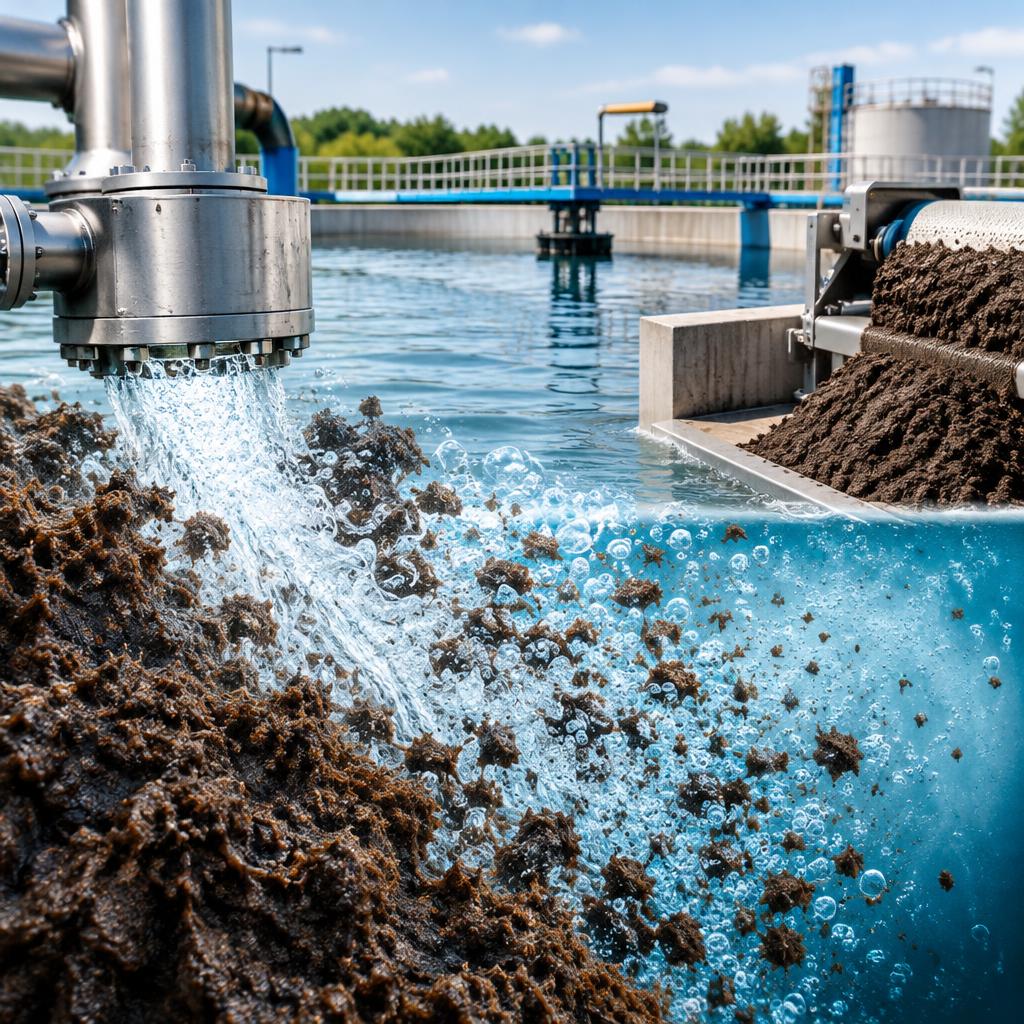
The sludge-handling challenge for Indian STPs
Many sewage treatment plant (STP) operators in India face recurring costs and operational headaches from frequent desludging, high haulage bills, and large volumes of wet sludge that are costly to dewater and dispose of. These costs come from vehicle logistics, disposal fees, chemical conditioners (polymers), and lost operational time. For plants with tight budgets or space limits, reducing sludge volume and improving dewaterability are among the most effective ways to lower ongoing operating expenses.
How hydrodynamic cavitation and nanobubbles help
Hydrodynamic cavitation and nanobubble technologies work through different but complementary mechanisms. Cavitation creates intense local shear and micro-turbulence that helps break down cell walls and solubilize organic material in sludge, making it more accessible to biological or chemical treatment. Nanobubbles provide very small gas bubbles with high surface area that improve oxygen transfer, promote oxidation reactions, and can aid the flocculation and settling behaviour of particles. When applied as a pre-treatment these methods can accelerate biological degradation and change sludge characteristics in ways that improve downstream dewatering.
Expected benefits for sludge breakdown and dewatering
When used appropriately as a pre-treatment step, cavitation and nanobubble systems can lead to clearer liquids, higher solubilization of volatile solids, and sludge that responds better to dewatering equipment. Practically, operators often see reduced sludge volume to be hauled away, lower polymer demand for conditioning, and improved cake dryness from centrifuges or filter presses. These outcomes translate into fewer desludging cycles and lower transport and disposal expenses—outcomes that directly address the cost pressures facing many STPs.
Practical pre-treatment strategies for STP owners
Start with a targeted pre-treatment approach rather than wholesale retrofits. Typical strategies include applying hydrodynamic cavitation to thickened or return sludge in a sidestream, or using controlled cavitation upstream of biological reactors to improve biodegradability. Nanobubble generators can be installed to dose aeration tanks, sludge holding tanks, or pre-aeration basins to boost oxygen transfer and improve mixing. Combining cavitation (to solubilize and break particles) with nanobubbles (to enhance biological activity and flotation) is a commonly effective pattern. The right arrangement depends on your plant layout, sludge characteristics and operational goals.
What to measure to demonstrate savings
A few consistent measurements will show whether a pre-treatment is delivering cost reductions: sludge volume removed per desludging event, frequency of desludging, total solids (TS) and volatile solids (VS) concentrations, cake solids after dewatering, polymer consumption (kg polymer per tonne of dry solids), and haulage/disposal costs. Track these indicators before a pilot, during the trial, and after full implementation to create a clear, data-driven case for savings.
Operational considerations and integration
Operational factors include power and maintenance for cavitation pumps and nanobubble generators, operator training, and ensuring compatibility with existing clarifiers, thickeners and dewatering units. Pilot testing at full or partial flow is essential to optimize dose, placement and run-time. Customer feedback for technology providers is also useful: for example, one recent customer review highlighted a partner who delivered an integrated solution for STP and ETP applications, underscoring the value of working with teams experienced in both equipment and process integration. Prasinos Tech Innovations, based in Secunderabad and serving India, lists hydrodynamic cavitation units and nano-bubble generators among its offerings—useful options to discuss during a site assessment.
How to proceed: pilot, evaluate, scale
If you manage an STP and want to reduce sludge handling costs, start with a short pilot: define baseline metrics, install a small cavitation skid or nanobubble unit on a sidestream, run for a defined period, and collect the measurements described above. Use the pilot data to estimate reduced haulage frequency, polymer savings, and improved cake solids to calculate an expected payback. If results are positive, scale the system in phases to spread capital cost and maintenance learning. Contact a supplier experienced in STP applications to request a site visit, pilot scope, and a data-driven proposal tailored to your plant.
Customer review


Article by
Prasinos Tech Innovations
Prasinos Tech Innovations Private Limited is an OEM at the forefront of sustainable environmental technologies. We specialize in the design and manufacturing of advanced systems including nanobubble generators, ozone generators, hydrodynamic cavitation units, and advanced oxidation processes (AOP) tailored for critical applications in sewage treatment plants (STP), effluent treatment plants (ETP), and water and wastewater treatment plants (WWTP). Our technologies are engineered to deliver high-efficiency, low-footprint solutions across diverse sectors such as aquaculture, agriculture, horticulture, and the bioenergy industry, including biogas and biodiesel production.