Design Checklist for New WWTP Projects in India: Where Nanobubbles, Ozone and AOP Belong
A practical design checklist for consultants, owners and builders of new wastewater treatment plants in India that explains decision points for integrating nanobubble generators, ozone, and advanced oxidation processes to improve long-term performance and operating costs.

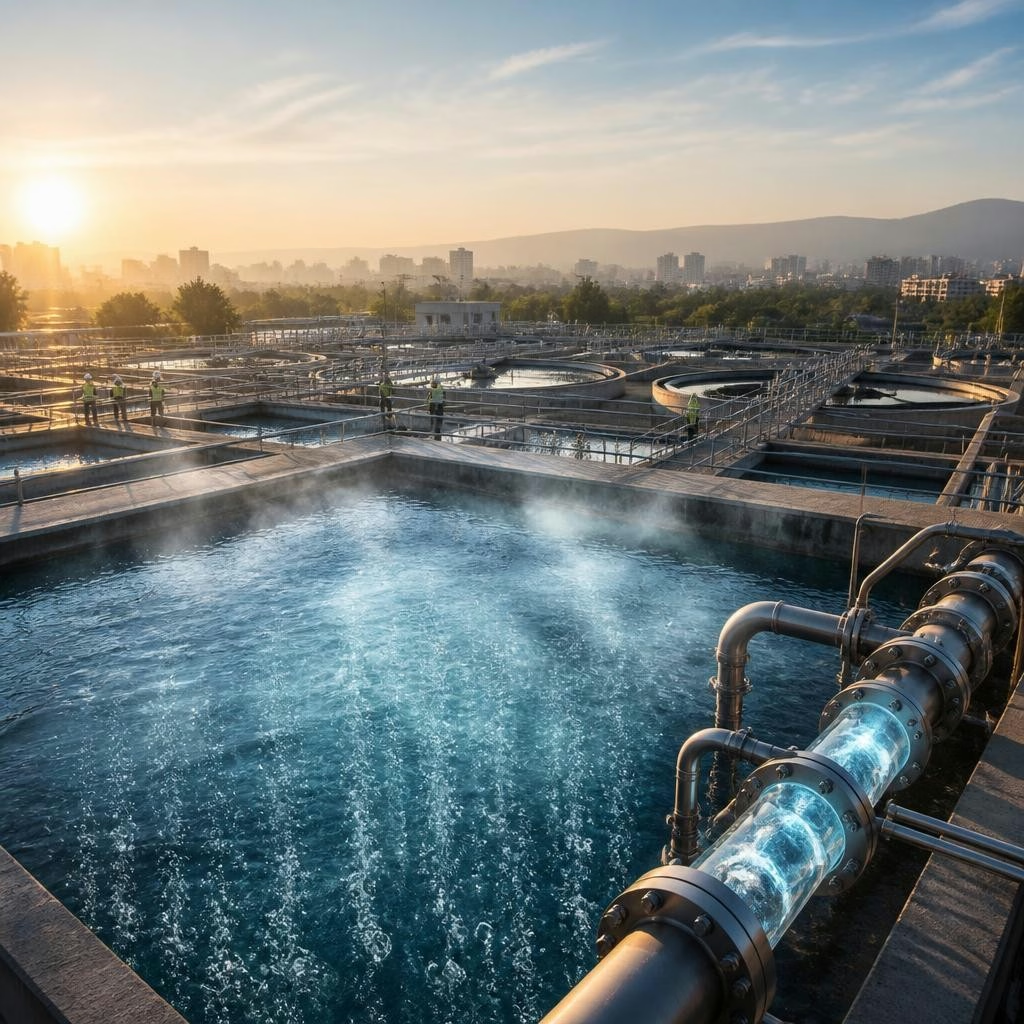
Why plan for advanced oxidation and gas-injection technologies early
Integrating technologies such as nanobubble generators, ozone systems and advanced oxidation processes (AOP) is easiest and most cost-effective when considered at the conceptual and basic design stages. Early planning lets you allocate space, utilities (electrical, compressed air, gas handling and water), and structural support, and it reduces the need for costly retrofits. Designing with these options in mind helps owners meet stricter discharge limits, allow for future process intensification, and select equipment with the right operating envelope for local influent characteristics.
Establish performance goals and boundary conditions
Begin with clear, measurable treatment targets (e.g., required BOD/COD reduction, nutrient limits, pathogen reduction and reuse criteria) and compile reliable influent characterisation. Note variations in flow and load, peak factors, and expected industrial contributions. These inputs drive whether physical–chemical processes (ozone/AOP) or oxygenation and mass-transfer enhancements (nanobubbles) are needed, or whether a hybrid approach is appropriate to achieve compliance and reuse objectives.
Process selection and where each technology typically fits
Nanobubble generators are primarily used to improve dissolved oxygen transfer, support biological processes, and reduce sludge through enhanced aeration and mixing; they commonly complement biological treatment stages such as activated sludge, MBBR or aerated lagoons. Ozone and AOP sit naturally in tertiary and polishing stages where oxidation is required for colour, odour, micropollutant removal, disinfection, or to reduce recalcitrant COD. AOPs (ozone with hydrogen peroxide, UV/O3, etc.) are selected when partial oxidation and mineralisation of persistent organics are required beyond conventional biological capability.
Where nanobubbles deliver practical benefits in a WWTP
Consider nanobubble systems where you need improved oxygen transfer without large aeration blowers or where footprint and energy efficiency matter. Nanobubbles can enhance oxygen availability in bio-reactors, improve contact efficiency for dissolved gases, and assist solids suspension and mixing. For plants targeting lower chemical dosing or wanting to stabilise biological performance during load swings, nanobubbles are a low-visual-impact addition that can be installed inline or at reactor inlets—provided you allocate service access and power at design stage.
Design considerations for ozone and AOP integration
When planning ozone/AOP, include space for ozone generation, gas piping, off-gas destruction, contactors, and safety systems (ozone monitoring and ventilation). Evaluate material compatibility, as ozone is a strong oxidant requiring appropriate contactor linings and gaskets. Design hydraulic retention time and contact configuration to meet CT (concentration × time) for target contaminants, and provide for dosing points for reagents if a combined AOP (e.g., ozone + peroxide) is expected. Include provisions for operator access, instrumentation, and maintenance clearances.
Footprint, utilities and operational implications
Advanced oxidation and nanobubble systems change utility profiles: ozone systems need electricity and sometimes cooling or air dryers; AOPs may require chemical storage and safe handling; nanobubble units require electrical power and simple piping. Account for ventilation, noise control, and safety zones in the layout. From an operations perspective, these technologies can reduce downstream chemical consumption, lower sludge handling needs, and improve effluent quality, but they require trained operators and routine maintenance—design the control and access infrastructure accordingly.
Cost-effectiveness and lifecycle thinking
Rather than viewing these technologies strictly as capital additions, evaluate them across lifecycle costs: energy, chemical savings, sludge disposal, compliance risk and potential revenue from water reuse. For many applications, combining nanobubbles to stabilise biological treatment with targeted tertiary ozone/AOP polishing can reduce overall operating costs and chemical dependence. Use pilot trials or live demonstrations to validate savings in your specific influent context before scaling—clients and technology providers often offer demonstrations to support that assessment.
Selecting a technology partner and next design steps
Choose suppliers experienced in STP/ETP/WWTP applications who can provide site evaluation, demonstration or pilot testing, and lifecycle support. Look for partners who collaborate with design consultants to size systems and define utilities and controls within the overall plant layout. In India, engaging early with a supplier that understands local operating conditions, service expectations, and regulatory context helps ensure timely commissioning and reliable operation. Finally, document the decision logic and provisions in tender and construction drawings so installations remain straightforward during execution.
Article by
Prasinos Tech Innovations
Prasinos Tech Innovations Private Limited is an OEM at the forefront of sustainable environmental technologies. We specialize in the design and manufacturing of advanced systems including nanobubble generators, ozone generators, hydrodynamic cavitation units, and advanced oxidation processes (AOP) tailored for critical applications in sewage treatment plants (STP), effluent treatment plants (ETP), and water and wastewater treatment plants (WWTP). Our technologies are engineered to deliver high-efficiency, low-footprint solutions across diverse sectors such as aquaculture, agriculture, horticulture, and the bioenergy industry, including biogas and biodiesel production.