How Cavitation Air Flotation Works in Industrial Wastewater Treatment
A clear, practical overview of cavitation air flotation: how hydrodynamic cavitation creates micro‑ and nano‑bubbles, how those bubbles remove contaminants, operational advantages and integration options for STP/ETP/WWTP applications.

What is cavitation air flotation?
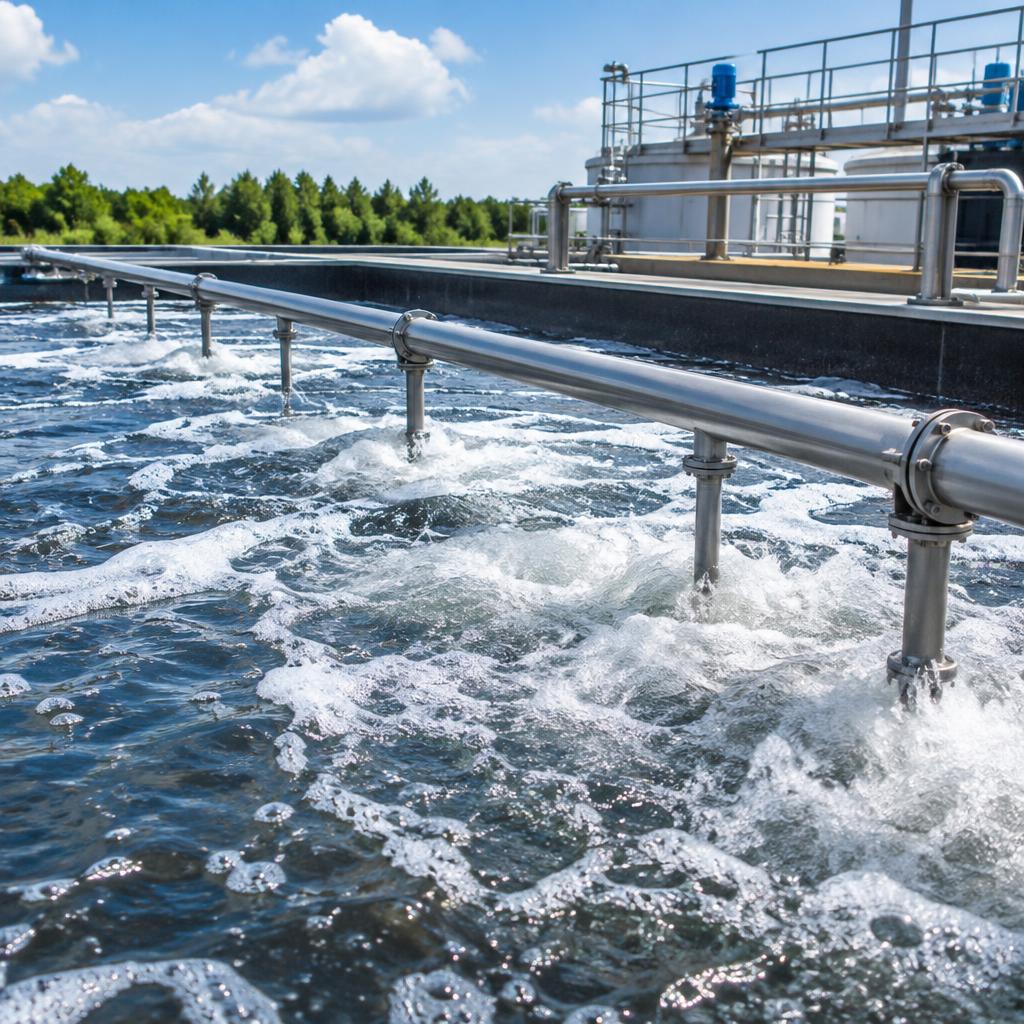
Cavitation air flotation is a physical separation process used in industrial wastewater treatment that combines hydrodynamic cavitation with bubble‑mediated flotation. In practice, the system generates very small gas bubbles (micro‑ and nano‑scale) in the liquid stream; these bubbles attach to suspended solids, oil droplets or other buoyant particles and increase their effective buoyancy so they rise to the surface where they can be skimmed off. The process is often paired with oxidation effects from cavitation to improve contaminant breakdown and downstream treatment performance.
How hydrodynamic cavitation generates bubbles
Hydrodynamic cavitation is produced by forcing wastewater through a specially designed constriction (such as a venturi, nozzle or rotor–stator element). Local pressure drops cause vapor cavities to form and then collapse as pressure recovers. That collapse and associated shear create intense, localized mixing and a population of very small bubbles. Because the bubbles produced by cavitation are extremely small, they have a high surface‑to‑volume ratio and a strong tendency to remain suspended long enough to contact and attach to fine particles.
Bubble–particle interaction and separation mechanics
Separation in cavitation air flotation relies on bubble attachment and buoyant transport. Micro‑ and nano‑bubbles adhere to particles by hydrodynamic and surface forces; once attached, the reduced overall density allows the particle–bubble agglomerate to ascend. At the surface these agglomerates form a concentrated layer that can be removed mechanically. In addition, cavitation can promote partial disintegration of complex organic matter and improve oxygen transfer—both of which can make subsequent biological or chemical treatment more effective.
Complementary effects: oxidation and improved biodegradability
Beyond physical flotation, cavitation often produces conditions that accelerate oxidation reactions (commonly grouped with advanced oxidation processes, or AOPs). The turbulence and transient high‑energy zones formed during cavitation can increase mixing of oxidants and contact between contaminants and oxygen, improving breakdown of recalcitrant organics and improving biodegradability. Combining cavitation‑generated bubbles with AOP steps or ozone treatment is a practical approach for plants that need both removal and pollutant mineralization.
Advantages compared with conventional dissolved air flotation
Cavitation air flotation offers several practical advantages for many industrial applications. Because bubbles are generated in‑line by mechanical cavitation, the system can be compact and require less chemical dosing than some chemical coagulation/ flotation schemes. The process can be effective on very fine particles and emulsified oils due to the small bubble size and high contact efficiency. For plants where footprint, chemical consumption and energy use are concerns, cavitation‑based flotation can be an attractive alternative or complement to traditional dissolved air flotation (DAF).
Operational and design considerations
Successful deployment depends on matching the technology to feed characteristics and plant objectives. Key considerations include upstream solids and oil loading, the need for pre‑screening or equalization, compatibility with downstream processes, routine maintenance of cavitation elements, and trained operators to monitor performance. Pilot trials or live demonstrations are valuable for confirming results under site conditions; several clients have highlighted the value of live demos of nano‑bubble and cavitation systems when evaluating technology fit.
Is cavitation air flotation right for your plant? Next steps
Cavitation air flotation is particularly useful where fine suspended solids, emulsified oils or hard‑to‑treat organics limit conventional treatment performance. Plants in sectors such as municipal STP, industrial ETP, aquaculture or agricultural‑runoff management often benefit from trials that quantify reductions in COD/BOD, solids and oil. If you are evaluating flotation options, consider a staged approach: characterize wastewater, run a small‑scale pilot or demonstration under site conditions, and plan integration with biological or tertiary treatment. For technology demonstrations and consultation, Prasinos Tech Innovations (based in Secunderabad and serving clients across India) offers hydrodynamic cavitation, nanobubble generation and AOP solutions and has shown live demonstrations of their nano‑bubble systems to customers during evaluations.
Customer review


Article by
Prasinos Tech Innovations
Prasinos Tech Innovations Private Limited is an OEM at the forefront of sustainable environmental technologies. We specialize in the design and manufacturing of advanced systems including nanobubble generators, ozone generators, hydrodynamic cavitation units, and advanced oxidation processes (AOP) tailored for critical applications in sewage treatment plants (STP), effluent treatment plants (ETP), and water and wastewater treatment plants (WWTP). Our technologies are engineered to deliver high-efficiency, low-footprint solutions across diverse sectors such as aquaculture, agriculture, horticulture, and the bioenergy industry, including biogas and biodiesel production.