How Food & Beverage Plants in India Can Safely Reuse Wastewater with Nanobubbles and Ozone
A practical guide for bottling, dairy, and food-processing plants explaining how combining nanobubble aeration and ozonation can upgrade ETP/STP performance to produce treated water suitable for non‑potable reuse such as utility water, gardening, and floor washing.
Why non‑potable reuse matters for Indian food & beverage plants
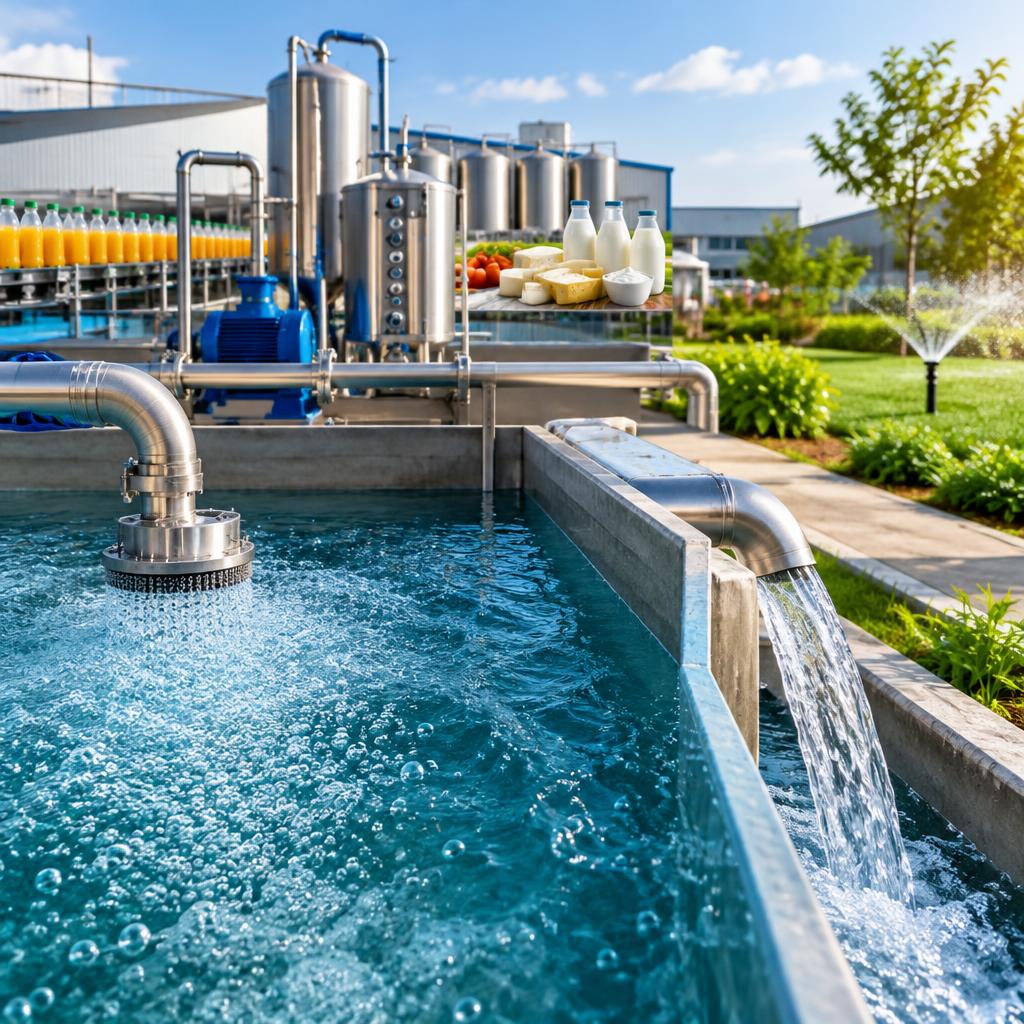
Many food and beverage operations in India face tight water budgets, rising costs for freshwater and effluent discharge, and growing regulatory and customer expectations around sustainability. Reusing treated wastewater for non‑potable purposes—such as equipment washing, floor cleaning, and landscape irrigation—can lower freshwater demand and reduce effluent volumes. To do this safely, plants should upgrade ETP/STP systems so the treated water meets appropriate quality and microbial safety targets for the intended reuse.
What nanobubble aeration contributes
Nanobubble technology introduces extremely small gas bubbles that remain suspended longer than conventional bubbles. In an ETP/STP context, that improves oxygen transfer to biological biomass, helps break down organic pollutants more efficiently, and can reduce sludge generation and chemical dosing needs. For plants that already operate biological treatment stages, adding nanobubble aeration is often a compact, energy‑efficient way to boost COD/BOD removal and overall process stability.
How ozonation polishes effluent and controls microbes
Ozone is a strong oxidant used as a polishing step after biological treatment. It can reduce residual color, remove certain refractory organics, and inactivate many pathogens without leaving long‑lived chemical residues, since ozone decomposes back to oxygen. When applied correctly in a dedicated contactor or pipeline reactor, ozonation can help meet hygiene requirements for non‑potable reuse, but it needs proper design, dosing control and safety measures because ozone is reactive and must be handled and quenched as required.
Why the combination is particularly effective
Nanobubble aeration and ozonation perform complementary roles: nanobubbles strengthen the biological stage so the bulk of COD/BOD is removed efficiently, while ozone acts as a finishing treatment to target remaining organics and reduce microbial counts. This two‑stage approach can reduce reliance on high chemical doses, shrink footprint compared with some conventional upgrades, and deliver more consistent effluent quality suited to many non‑potable uses. Other available technologies—such as advanced oxidation processes or hydrodynamic cavitation—can be added in specific cases where tougher contaminants are present.
A practical upgrade pathway for bottling, dairy and food plants
Start with an influent and plant audit to identify key contaminants, flow variations and current treatment gaps. Next, run a small pilot or on‑site demo of nanobubble aeration in the biological basins to confirm improved oxygen transfer and reduced sludge. If biological polishing reaches target loads, follow with an ozone contactor as a polishing step and implement dosing controls and interlocks. Throughout, establish a monitoring plan (regular BOD/COD, turbidity/TSS and microbial testing) and train operations staff on maintenance, safety and routine checks for both nanobubble units and ozone generators.
Which non‑potable uses are realistic and how to verify safety
Common non‑potable reuses for treated ETP/STP water in food & beverage plants include utility water for cleaning equipment and vehicles, floor washing, and landscape or gardening irrigation. To verify suitability, perform targeted testing for residual organics (BOD/COD), suspended solids (turbidity/TSS), and microbiological indicators appropriate for the use case. Maintain records of tests, institute periodic spot checks, and apply additional disinfection if monitoring shows variability—this keeps reuse safe for workers and prevents cross‑contamination of processing areas.
Choosing a partner and next steps
When selecting an OEM or systems integrator, look for providers with proven nanobubble and ozone solutions tailored to ETP/STP upgrades, plus on‑site demonstration capability and operator training. Prasinos Tech Innovations Pvt. Ltd., based in Secunderabad and serving clients across India, offers nanobubble generators, ozone generators and related AOP and cavitation options for wastewater applications; customers have highlighted the company’s sustainable focus and knowledgeable team. Ask for a site survey and a pilot/demo to evaluate performance on your actual effluent before committing to full‑scale installation.
Customer review


Article by
Prasinos Tech Innovations
Prasinos Tech Innovations Private Limited is an OEM at the forefront of sustainable environmental technologies. We specialize in the design and manufacturing of advanced systems including nanobubble generators, ozone generators, hydrodynamic cavitation units, and advanced oxidation processes (AOP) tailored for critical applications in sewage treatment plants (STP), effluent treatment plants (ETP), and water and wastewater treatment plants (WWTP). Our technologies are engineered to deliver high-efficiency, low-footprint solutions across diverse sectors such as aquaculture, agriculture, horticulture, and the bioenergy industry, including biogas and biodiesel production.