How Nanobubbles Can Boost Survival and Yield on Indian Aquaculture Farms
A practical guide for Indian fish and shrimp farmers on how nanobubble generators improve dissolved oxygen, reduce disease risk, optimize feed conversion, and how to plan and monitor an effective installation.
Why nanobubbles matter for aquaculture
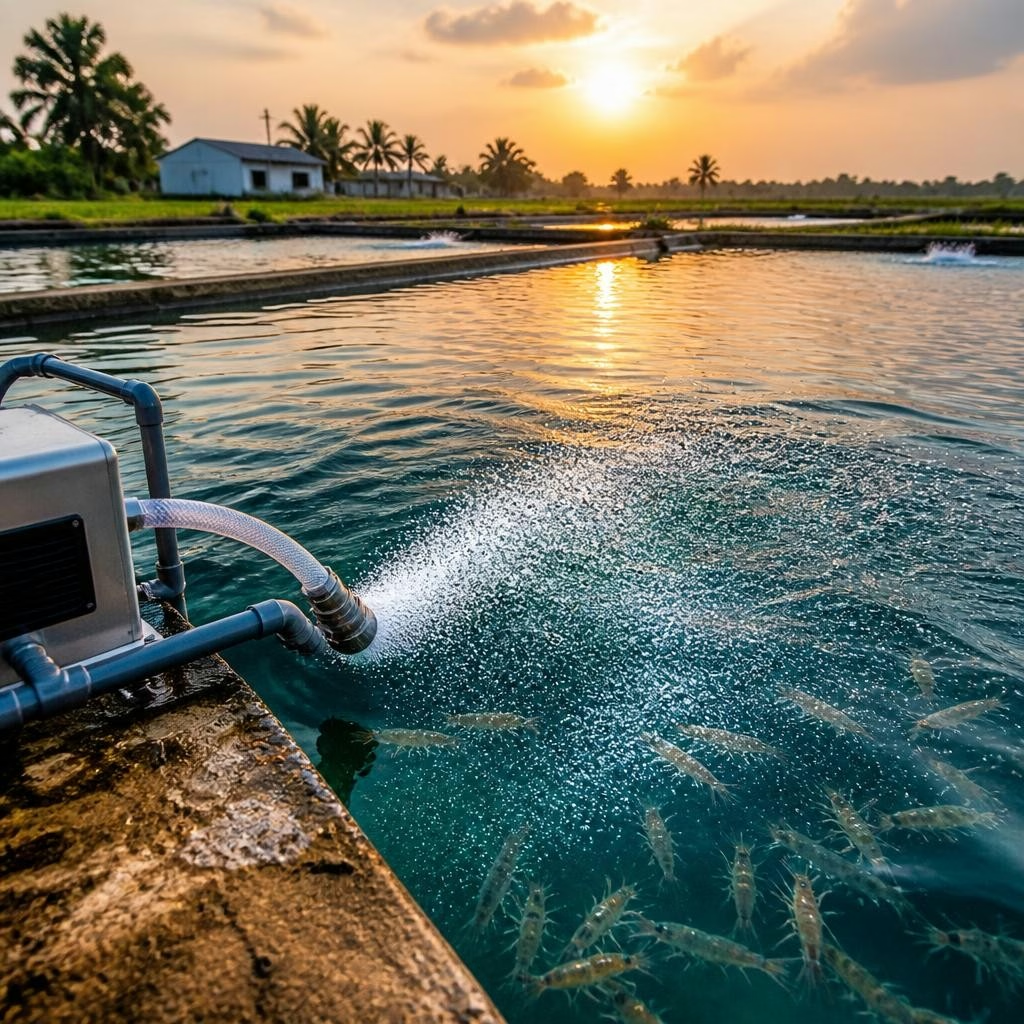
Maintaining stable dissolved oxygen (DO) and water quality is one of the biggest day-to-day challenges for intensive fish and shrimp production. Nanobubble technology introduces extremely small, long-lasting gas bubbles into water that enhance oxygen transfer, support beneficial microbial activity, and help reduce organic loads. For Indian farms facing variable temperatures, high stocking densities, or intermittent power and aeration, nanobubble systems offer a compact, energy-efficient tool to improve pond and tank conditions without heavy chemical use.
Key biological and production benefits
Higher and more stable DO from nanobubbles supports better metabolism, growth rates, and survival—especially during night-time oxygen drops or heat stress. Improved oxygen availability tends to lower physiological stress, which reduces susceptibility to opportunistic pathogens and can reduce disease outbreaks. Operators also report improved feed conversion ratio (FCR) because fish and shrimp convert feed more efficiently when oxygen is adequate. Secondary benefits include reduced sludge accumulation, clearer water, and support for aerobic microbial breakdown of organic matter.
How nanobubbles deliver those benefits
Nanobubbles are typically smaller than 200 micrometers and remain suspended in water for long periods, increasing contact time for gas exchange. This yields higher dissolved oxygen per unit of gas injected and more efficient use of energy compared with conventional surface aerators. Nanobubbles can also enhance the distribution of oxidants when combined with technologies like ozone or advanced oxidation processes, helping to control surface scums, biofilms, and certain microbial loads when properly applied.
Practical tips for Indian farm installation
Start with a site assessment: measure average pond/tank volumes, peak stocking densities, baseline DO patterns, and existing aeration equipment. Position nanobubble outlets to encourage uniform circulation—near inlet points, along raceways, or at pond mid-depth depending on your system. Use a phased approach: begin with one pond or tank to validate effects on DO, feed intake, and sludge before scaling. Pay attention to power availability and plan for inverter or generator backup where needed. Regular cleaning of intake filters and routine checks of pumps and fittings will maintain performance.
Monitoring and key performance indicators
Track a concise set of metrics to evaluate impact: DO (daily and diurnal minimums), temperature, pH, ammonia, and turbidity or suspended solids. Record feed input and growth to calculate FCR and monitor survival rates at harvest. Look for reduced frequency of aerator runtimes, clearer water, lower sludge accumulation, and fewer disease interventions over several production cycles. Consistent measurement before and after installation gives the clearest picture of benefits and return on investment.
Choosing the right system and vendor considerations
Select a nanobubble generator sized for your pond or tank volume and expected peak loading; manufacturers may offer units tailored for aquaculture. Ask about energy consumption, footprint, maintenance needs, spare parts availability, and whether the system can be combined with ozone or other oxidation steps if you plan integrated water treatment. Vendor support—installation assistance, performance validation, and training—can make the difference between a successful trial and premature abandonment. Reviews from other customers indicate that hands-on demonstrations and knowledgeable technical support are highly valued when adopting this technology.
Next steps for farmers interested in nanobubbles
Begin with a simple pilot: collect baseline water-quality and production data, install a single nanobubble unit with proper placement, and monitor for at least one full production cycle. Use the data to evaluate changes in DO stability, FCR, and survival before expanding. Reach out to reputable suppliers that specialize in aquaculture nanobubble solutions and can provide sizing guidance, installation support, and operational training. Several customers have reported finding live demonstrations and technical expertise helpful when deciding to adopt nanobubble systems—seek that kind of hands-on validation to reduce implementation risk.
Customer review


Article by
Prasinos Tech Innovations
Prasinos Tech Innovations Private Limited is an OEM at the forefront of sustainable environmental technologies. We specialize in the design and manufacturing of advanced systems including nanobubble generators, ozone generators, hydrodynamic cavitation units, and advanced oxidation processes (AOP) tailored for critical applications in sewage treatment plants (STP), effluent treatment plants (ETP), and water and wastewater treatment plants (WWTP). Our technologies are engineered to deliver high-efficiency, low-footprint solutions across diverse sectors such as aquaculture, agriculture, horticulture, and the bioenergy industry, including biogas and biodiesel production.