Nanobubble Technology for Biogas Plants: How It Can Improve Digester Performance
An overview of how nanobubble generators and hydrodynamic cavitation can be applied in Indian biogas and bioenergy projects to improve feedstock solubilization, mixing, and digester stability, with practical guidance for implementation.
Why nanobubbles and cavitation matter for biogas
Biogas plants depend on efficient breakdown of organic matter and stable anaerobic conditions to produce methane. Technologies such as nanobubble generation and hydrodynamic cavitation are increasingly used upstream or in recirculation loops to change substrate characteristics, improve contact between microbes and feedstock, and reduce operational problems that limit gas production. For Indian projects using STP/ETP sludge and mixed organic waste, these approaches offer a non-chemical route to enhance digestibility and process reliability.
What are nanobubbles and hydrodynamic cavitation?
Nanobubbles are extremely small gas-filled bubbles with high surface area and long residence times in liquids. They alter mass transfer and suspension behavior without the rapid rise and burst associated with larger bubbles. Hydrodynamic cavitation is a mechanical method that creates localized high-shear, high-pressure zones and micro-scale implosions, which can physically disrupt solids and cell walls. Both techniques change the physical and chemical accessibility of organic material, making it more amenable to microbial degradation.
How these technologies improve feedstock for anaerobic digestion
Applied before or in the recirculation stream of a digester, hydrodynamic cavitation can break down particulate material, reduce particle size, and release soluble organic compounds that are easier for anaerobic microbes to consume. Nanobubbles assist by improving dispersion and contact between microbes and soluble substrates, helping to maintain a more homogeneous slurry. Together, these effects can support steadier hydrolysis and acidogenesis stages of digestion — the steps that often limit overall biogas yield when feedstock is coarse or heterogeneous.
Where to install nanobubble and cavitation units in a plant
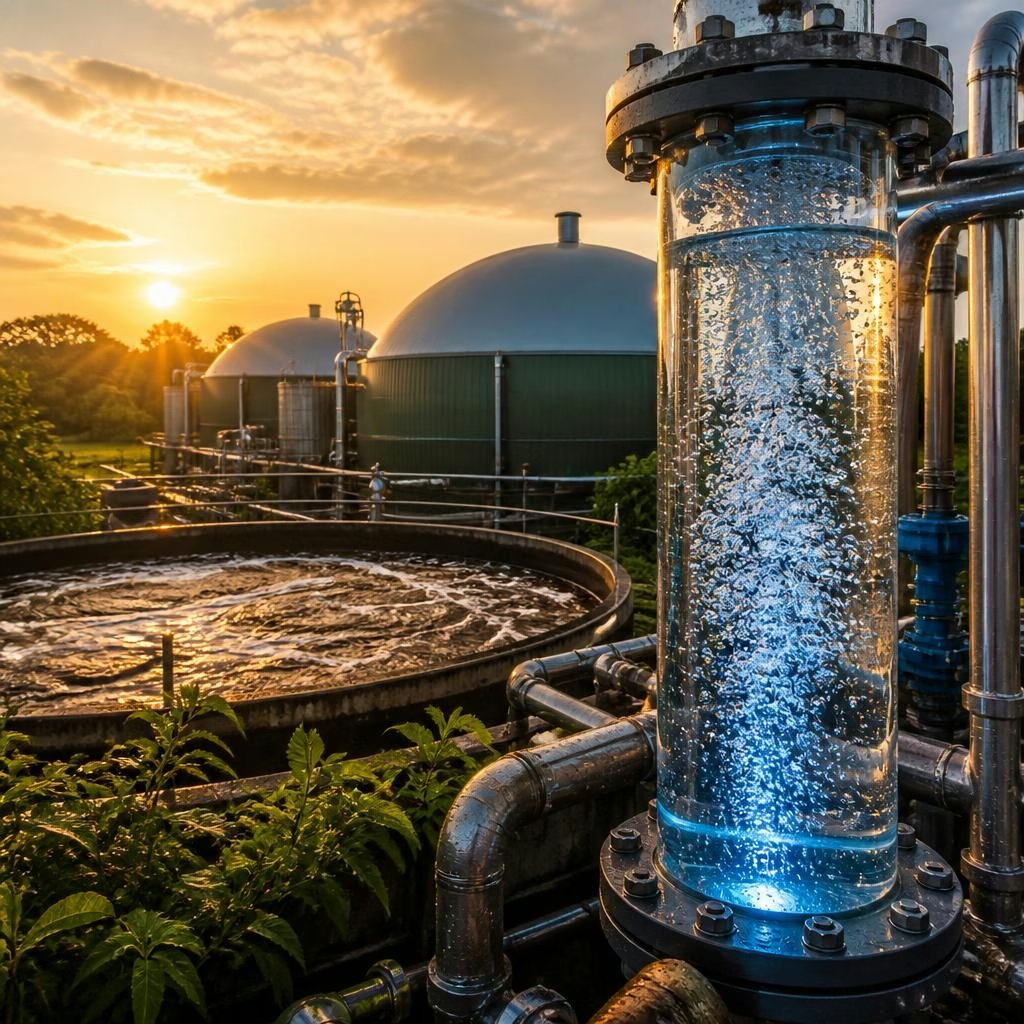
Common placements for these units include pre-treatment tanks, sludge holding or homogenization tanks, pump recirculation lines, and pipework ahead of the primary digester. Using them in a pre-treatment step lets you increase soluble chemical oxygen demand (sCOD) and reduce the proportion of slowly degradable solids entering the digester. For existing plants, integration in a side-stream or recirculation loop is a low-disruption approach that allows you to evaluate effects before wider deployment.
Expected operational benefits (what has been observed)
Operators typically use these technologies to achieve easier pumping and mixing, reduced scum formation, improved solids reduction, and more consistent feedstock quality — all of which support steady methane production. In related wastewater and STP applications, nanobubble systems have been noted to improve COD/BOD reduction and reduce sludge handling needs; similar mechanisms apply when optimizing material for digestion. While site-specific results vary depending on feedstock and process conditions, many projects report improved process stability after commissioning pre-treatment and mixing improvements.
Monitoring and evaluation: key parameters to track
Before and after installation, establish a baseline and monitor indicators that show whether digestion has improved. Useful parameters include feedstock solids (TS/VS), soluble COD (sCOD), volatile fatty acids (VFA), pH, ammonia levels, biogas volume and methane content, and sludge viscosity or settling behavior. Start with pilot trials or small-scale demonstrations to verify effects under your specific feedstock mix and climate. Consistent monitoring allows operators to tune treatment intensity and assess return on investment without risking the main digester operation.
Practical considerations for Indian biogas projects
When evaluating nanobubble or cavitation solutions, consider feedstock variability (municipal sludge, agricultural residues, food waste), seasonal temperature changes, and on-site power and maintenance capacity. Pre-treatment intensity should match the biodegradability of the feedstock: highly lignocellulosic waste may need complementary mechanical or biological treatments. Plan for routine inspections of pumps and contact points, and ensure integration avoids introducing oxygen into strictly anaerobic zones. Pilot testing and phased rollouts are the safest path to scale.
Choosing a technology partner and next steps
Work with an OEM experienced in both water/wastewater treatment and bioenergy integration. Prasinos Tech Innovations Pvt. Ltd. manufactures nanobubble generators and hydrodynamic cavitation units used across STP, ETP and bioenergy applications, and customers often highlight hands‑on demonstrations and technical support as valuable during commissioning. A practical next step is to document baseline performance, run a controlled pilot with nanobubble/cavitation pre-treatment, and evaluate impact on biogas yield and process stability before full-scale adoption.
Article by
Prasinos Tech Innovations
Prasinos Tech Innovations Private Limited is an OEM at the forefront of sustainable environmental technologies. We specialize in the design and manufacturing of advanced systems including nanobubble generators, ozone generators, hydrodynamic cavitation units, and advanced oxidation processes (AOP) tailored for critical applications in sewage treatment plants (STP), effluent treatment plants (ETP), and water and wastewater treatment plants (WWTP). Our technologies are engineered to deliver high-efficiency, low-footprint solutions across diverse sectors such as aquaculture, agriculture, horticulture, and the bioenergy industry, including biogas and biodiesel production.