Reducing Chemical Dependency in Indian ETPs with Ozone-Based AOP
A practical guide for ETP managers in chemicals, pharmaceutical and food processing on how ozone-based advanced oxidation processes can cut coagulant, flocculant and disinfectant use, with example process trains and operational tips for Indian conditions.
Why chemical reduction matters for modern ETPs
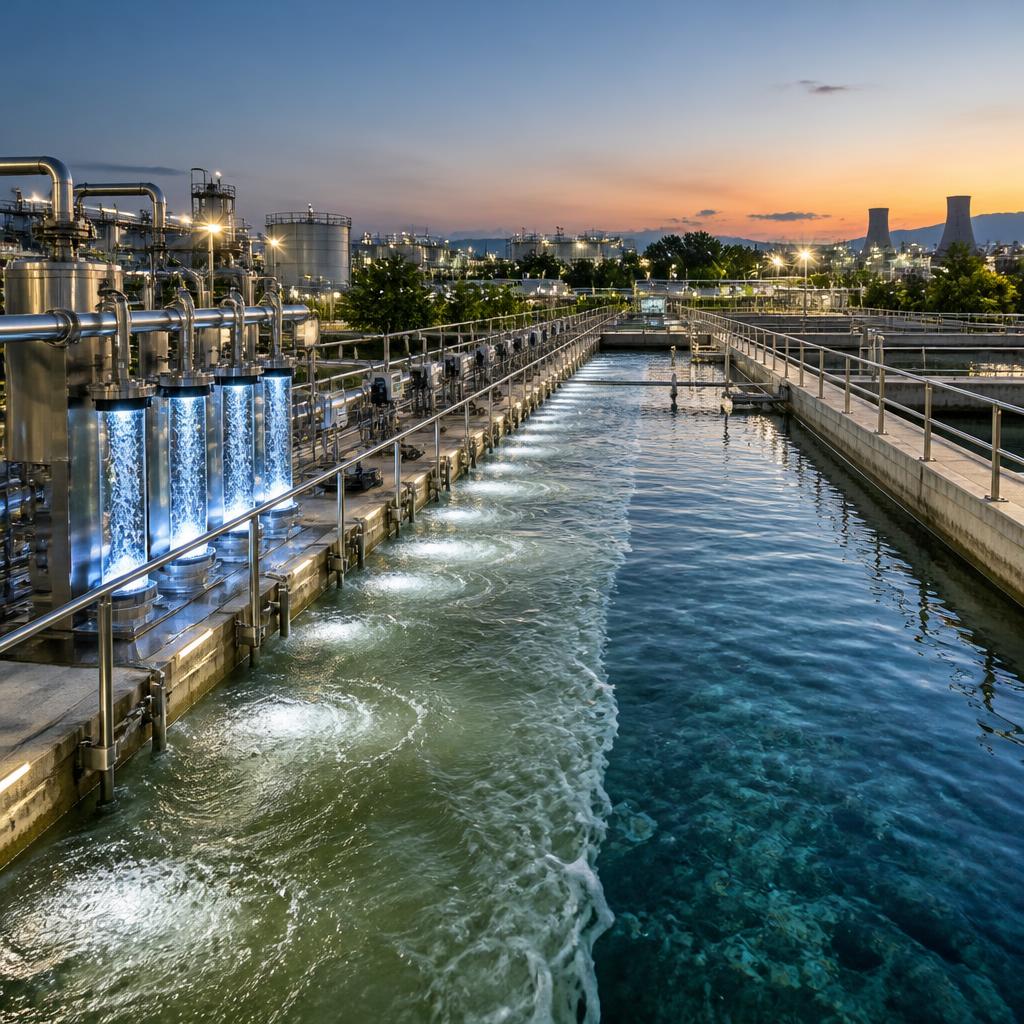
Many effluent treatment plants in the chemical, pharma and food sectors struggle with rising costs, operational complexity and disposal challenges associated with heavy use of coagulants, flocculants and traditional disinfectants. Excessive chemical dosing can increase sludge volumes, complicate downstream handling and create regulatory or residual concerns for water reuse. For managers seeking more sustainable, lower-footprint operation, reducing reliance on these chemicals is both an environmental and operational priority.
How ozone-based AOP helps—basic principles
Advanced oxidation processes (AOP) using ozone produce highly reactive radicals (for example hydroxyl radicals in appropriate configurations) that attack and break down refractory organic compounds, colour-causing molecules and many micropollutants that resist biological treatment. Ozone also provides strong primary disinfection. When combined in an AOP train (ozone with H2O2, UV or catalytic cavitation), the result is faster oxidation, improved biodegradability of the effluent and reduced need for traditional coagulants and disinfectants.
Key advantages specific to ETPs in chemicals, pharma and food processing
For these industries, ozone-AOP can: 1) reduce coagulant/flocculant doses by improving particle destabilization or by reducing organics that bind with suspended solids, 2) lower disinfectant demand because ozone provides strong pathogen inactivation and reduces precursors for regrowth, and 3) increase overall treatment robustness against episodic high-strength loads or toxic spikes. AOP can also enhance final water quality to meet reuse targets, helping plants reduce freshwater intake and sludge handling costs over time.
Example process trains that integrate ozone-AOP
Below are practical, commonly used trains—each should be validated by site-specific piloting before full implementation: • Pre-treatment → Equalization → Ozone-based AOP reactor → Biological polishing (activated sludge/MBBR) → Clarification → Sand/activated carbon polishing → Storage. • Screening/de-oiling → Hydrodynamic cavitation or nanobubble pre-treatment → Ozone AOP → Biological stage → Polishing filtration. Cavitation or nanobubbles can improve mass transfer and make some organics more biodegradable prior to AOP. • Biological primary treatment → Ozone contactor for polishing and disinfection → GAC/adsorption for trace organics → Final discharge or reuse. Prasinos Tech Innovations lists ozone generators, AOP solutions, nanobubble generators and hydrodynamic cavitation among its technologies—these can be combined in the configurations above to tailor solutions to load and pollutant type.
Operational tips for Indian site conditions
Indian ETPs commonly face variable flows, seasonal load swings, high ambient temperatures and intermittent power. Practical measures include: maintain an equalization basin to smooth influent variability; design ozone generation and AOP reactors with headroom for peak loads; choose corrosion-resistant materials and off-gas destruction systems for safety; provide uninterruptible power or sequenced shutdown procedures for ozone equipment; and schedule preventive maintenance (electrode/UV checks, compressor filters, catalyst/regenerant replacement). Work with suppliers who can demonstrate on-site trials and local service support.
Monitoring, start-up and performance indicators
To verify chemical reductions and AOP effectiveness, track key parameters such as influent/outlet COD and BOD, TOC or UV254 where possible, turbidity, turbidity after clarification, residual ozone (to avoid off-spec discharge) and pathogen indicators for disinfection performance. ORP and online COD proxies can support operational control. Start with a pilot or demo to establish reaction times, ozone dose ranges and biological impacts; gradually tune the biological stage to take advantage of increased biodegradability after AOP.
Practical next steps for ETP managers
Begin with a focused site assessment and a small-scale pilot to quantify reductions in chemical dosing and sludge generation for your specific effluent. Request demonstrations and performance data from technology providers—one customer noted a live demonstration of patented nanobubble technology as helpful in evaluating real-world performance. Engage plant operations early for training, plan for safety controls around ozone and off-gas, and develop a phased implementation plan that include monitoring and contingency steps. For Indian plants considering this transition, partnering with an OEM that supplies ozone generators, AOP units and complementary pre-treatment options can simplify integration and after-sales support.
Customer review


Article by
Prasinos Tech Innovations
Prasinos Tech Innovations Private Limited is an OEM at the forefront of sustainable environmental technologies. We specialize in the design and manufacturing of advanced systems including nanobubble generators, ozone generators, hydrodynamic cavitation units, and advanced oxidation processes (AOP) tailored for critical applications in sewage treatment plants (STP), effluent treatment plants (ETP), and water and wastewater treatment plants (WWTP). Our technologies are engineered to deliver high-efficiency, low-footprint solutions across diverse sectors such as aquaculture, agriculture, horticulture, and the bioenergy industry, including biogas and biodiesel production.