Retrofitting Existing STPs with Nanobubble Generators: A Practical Step‑by‑Step Guide
A concise, practical guide for Indian STP operators on assessing performance bottlenecks and adding nanobubble systems with minimal civil work, explaining planning steps, installation approach, commissioning checks, and realistic downtime expectations.
Why consider nanobubble retrofits for your STP
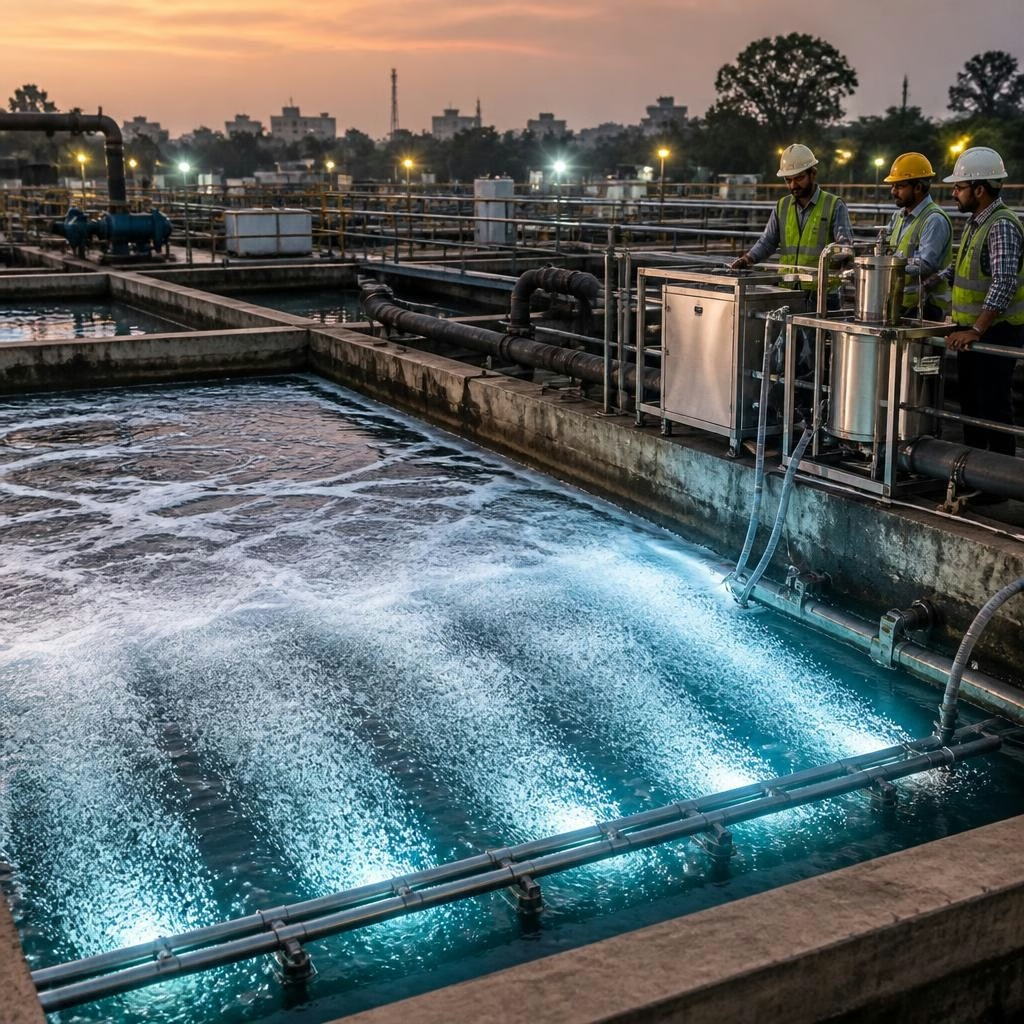
Nanobubble technology can improve oxygen transfer, enhance biodegradation, reduce sludge production and cut chemical use in sewage treatment operations. For many STPs these effects translate into better BOD/COD removal, more stable biological treatment, and improved compliance with discharge limits. Because nanobubble systems are often compact and energy‑efficient, they are a commonly chosen retrofit option when operators want measurable performance gains without major changes to tanks or civil works.
Step 1 — Assess current performance and identify bottlenecks
Start with a focused performance assessment. Key items to review include influent and effluent quality trends (BOD/COD/TSS), dissolved oxygen (DO) profiles through the aeration basin, aeration equipment capacity and operating hours, sludge accumulation and handling, hydraulic short‑circuiting or dead zones, and compliance pain points. Also look at operational practices such as chemical dosing, airflow scheduling, and maintenance frequency. This assessment defines whether a nanobubble retrofit will target aeration efficiency, sludge reduction, or both.
Step 2 — Conduct a site survey and compatibility checks
A site survey verifies physical integration options and system compatibility. Inspect access to aeration basins, available pump capacity and spare piping connections, electrical supply and control interfaces, and space for a skid or compact unit. Review materials of construction where new piping or diffusers will connect, and identify convenient sampling and instrumentation points for commissioning. A short trial or benchtop test using representative wastewater can also help confirm expected improvements before full installation.
Step 3 — Select the appropriate nanobubble configuration
Choose a configuration that matches your operational goals and site constraints. Options include inline generators that attach to recirculation lines, external modules that feed nanobubbles into existing aeration points, and dedicated skids for targeted basins. Prioritize modular, scalable units so capacity can be adjusted without further civil work. Ensure the selected system integrates with existing control systems or can operate autonomously with straightforward setpoints for flow and runtime.
Step 4 — Plan an installation that minimizes civil changes
Well‑planned retrofits avoid major civil interventions. Typical approaches use existing pump recirculation lines or bypass loops to feed the nanobubble generator, mount the equipment on floor‑level skids, and connect via short lengths of pipe to aeration headers or diffusers. This allows installation during a single maintenance window with only local tie‑ins rather than tank modifications. Coordinate installation timing with other plant activities to minimize operational impact and ensure safety.
Step 5 — Commissioning, verification and tuning
Commissioning should validate aeration performance and treatment outcomes. Key checks include verifying generator flow and gas injection, measuring DO responses across the basin, and tracking influent/effluent BOD/COD and TSS for several operational cycles. Look for trends such as improved DO stability, reduced aeration blower runtime, and gradual decreases in sludge accumulation. Adjust operating parameters—such as injection points, timings, and flow rates—based on measured results until performance targets are met.
Operational best practices and expected support
To sustain benefits, establish simple routine checks for the nanobubble unit: inspect connections, confirm electrical and pump performance, and schedule periodic cleaning as recommended by the supplier. Train operators on monitoring DO and interpreting treatment trends so tweaks can be made quickly. Customers have reported that knowledgeable vendor support and timely on‑site work are valuable during retrofit and commissioning, so include vendor training and service agreements in your plan. For STPs in India, reach out to experienced OEMs that offer demo testing and post‑installation support to reduce risk and speed results.
Customer review


Article by
Prasinos Tech Innovations
Prasinos Tech Innovations Private Limited is an OEM at the forefront of sustainable environmental technologies. We specialize in the design and manufacturing of advanced systems including nanobubble generators, ozone generators, hydrodynamic cavitation units, and advanced oxidation processes (AOP) tailored for critical applications in sewage treatment plants (STP), effluent treatment plants (ETP), and water and wastewater treatment plants (WWTP). Our technologies are engineered to deliver high-efficiency, low-footprint solutions across diverse sectors such as aquaculture, agriculture, horticulture, and the bioenergy industry, including biogas and biodiesel production.