Turning STP and ETP Sludge Challenges into Opportunities with Nanobubbles
Practical guidance for Indian STP and ETP operators on how nanobubble and cavitation-based technologies can reduce sludge volume, improve dewatering, and lower handling costs—plus steps to evaluate and implement these solutions.
Why sludge is a persistent challenge for STPs and ETPs
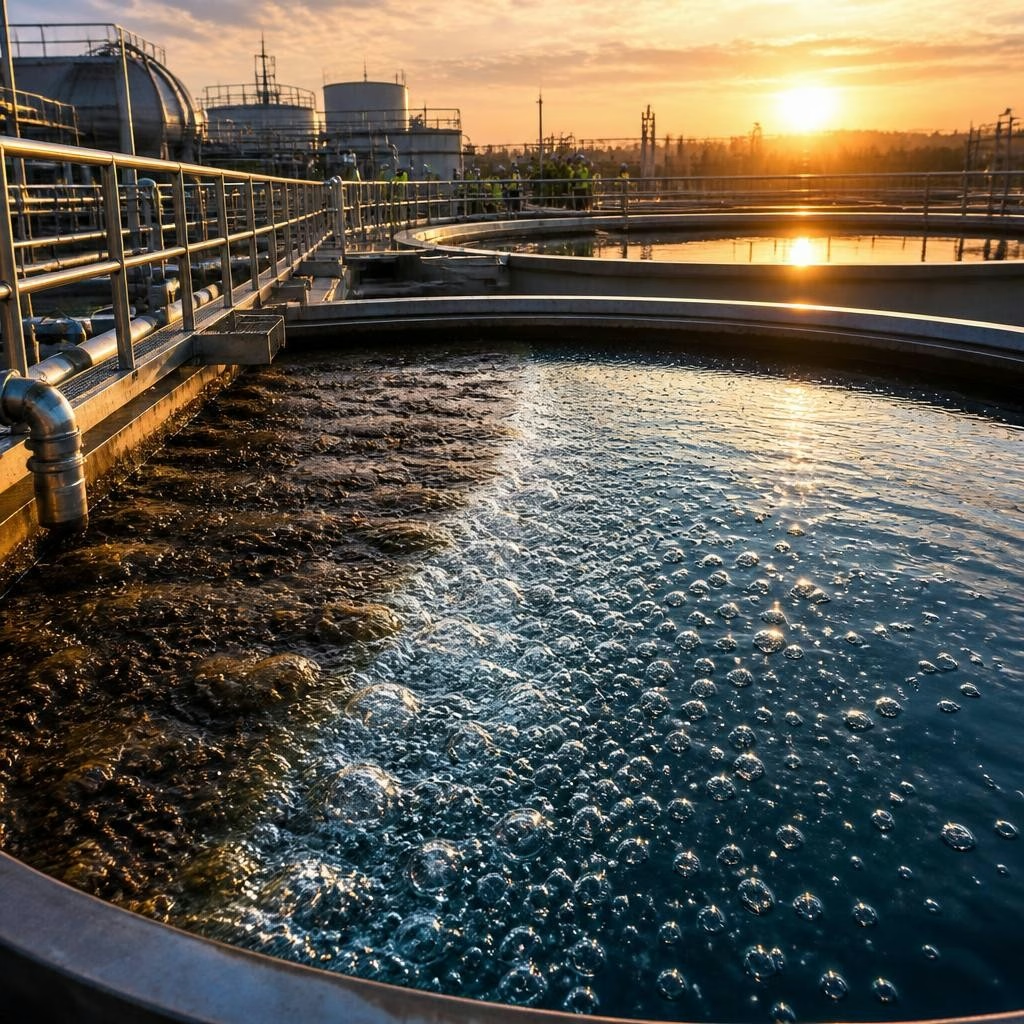
Sludge management is one of the highest operational burdens for sewage and effluent treatment plants: it ties up space, raises transport and disposal costs, complicates dewatering, and can create odour and compliance risks. In many Indian plants, seasonal load variations, high organic loads, and limited on-site handling capacity make sludge volume and handling a continuous concern for operators.
How nanobubbles and hydrodynamic cavitation work in treatment processes
Nanobubbles are extremely small gas bubbles that remain suspended in water for long periods and increase gas transfer efficiency. Hydrodynamic cavitation creates intense local shear and micro-mixing through bubble collapse. Together these phenomena support oxygenation, improved contact between phases, disruption of extracellular polymeric substances (EPS), and enhanced mass transfer without large aeration footprints.
Mechanisms by which nanobubbles reduce sludge production
Nanobubbles can reduce sludge generation indirectly by improving biological process efficiency. Better oxygen transfer supports aerobic degradation of organics, which can reduce production of slowly degradable solids. Nanobubbles also enhance floc formation and settling by changing surface charges and improving particle collisions, which often results in denser flocs that dewater more readily at the thickening and dewatering stages.
How cavitation and AOPs complement nanobubble effects
Hydrodynamic cavitation adds a physical disruption mechanism that can break open complex organic structures and weaken EPS matrices, making organics more biodegradable and easier to dewater. When combined with advanced oxidation processes (AOP) or ozone-based treatment, cavitation can help reduce recalcitrant COD/BOD fractions and control odour and pathogens—allowing plants to target both sludge quantity and quality.
Practical integration points in existing STP/ETP layouts
Nanobubble generators and cavitation units are commonly integrated at points where they can influence biological performance and solids handling: aeration basins to boost dissolved oxygen, secondary clarifiers or thickeners to improve settling, return activated sludge (RAS) streams to enhance floc integrity, and sludge holding tanks to aid dewatering. Selection of injection points depends on plant configuration, flow patterns, and treatment objectives.
A recommended approach for plant operators: assess, pilot, scale
Start with a process assessment to identify the primary drivers of sludge (organic load, hydraulic load, settleability). Run a controlled pilot or live demonstration to observe effects on SVI, MLSS behaviour, and dewatering performance under local conditions. If pilot results are encouraging, develop a phased installation plan that includes operator training and standard operating procedures to preserve gains during scale-up.
Key performance indicators to monitor after installation
Track indicators that reflect both sludge quantity and handling ease: sludge volume index (SVI), settled solids concentration, total solids (TS) and volatile solids (VS) of dewatered sludge, cake dryness after centrifuges or presses, dissolved oxygen levels, and changes in BOD/COD loads to downstream units. Monitoring energy consumption and chemical usage provides insight into operating cost impacts.
Choosing a technology partner and next steps
Select a partner who can provide on-site evaluation, pilot demonstrations, and support during commissioning. Customers of Prasinos Tech Innovations Pvt. Ltd., based in Secunderabad and serving Indian projects, frequently note responsive service, demonstrations of their nanobubble systems, and practical guidance for STP/ETP applications. For operators considering nanobubble or cavitation-based upgrades, request a site assessment and a short pilot so you can validate effects on sludge volume and dewatering under your plant’s actual conditions.
Article by
Prasinos Tech Innovations
Prasinos Tech Innovations Private Limited is an OEM at the forefront of sustainable environmental technologies. We specialize in the design and manufacturing of advanced systems including nanobubble generators, ozone generators, hydrodynamic cavitation units, and advanced oxidation processes (AOP) tailored for critical applications in sewage treatment plants (STP), effluent treatment plants (ETP), and water and wastewater treatment plants (WWTP). Our technologies are engineered to deliver high-efficiency, low-footprint solutions across diverse sectors such as aquaculture, agriculture, horticulture, and the bioenergy industry, including biogas and biodiesel production.