Upgrading CETPs in Industrial Clusters: Practical Guidance for Deploying Ozone‑based AOP and Cavitation
A concise, practical guide for CETP operators in textile, pharma and chemical clusters on when and how to integrate ozone-based advanced oxidation and cavitation technologies—covering process placement, design for shared infrastructure, operational monitoring and cost-sharing approaches among member units.
Purpose and scope
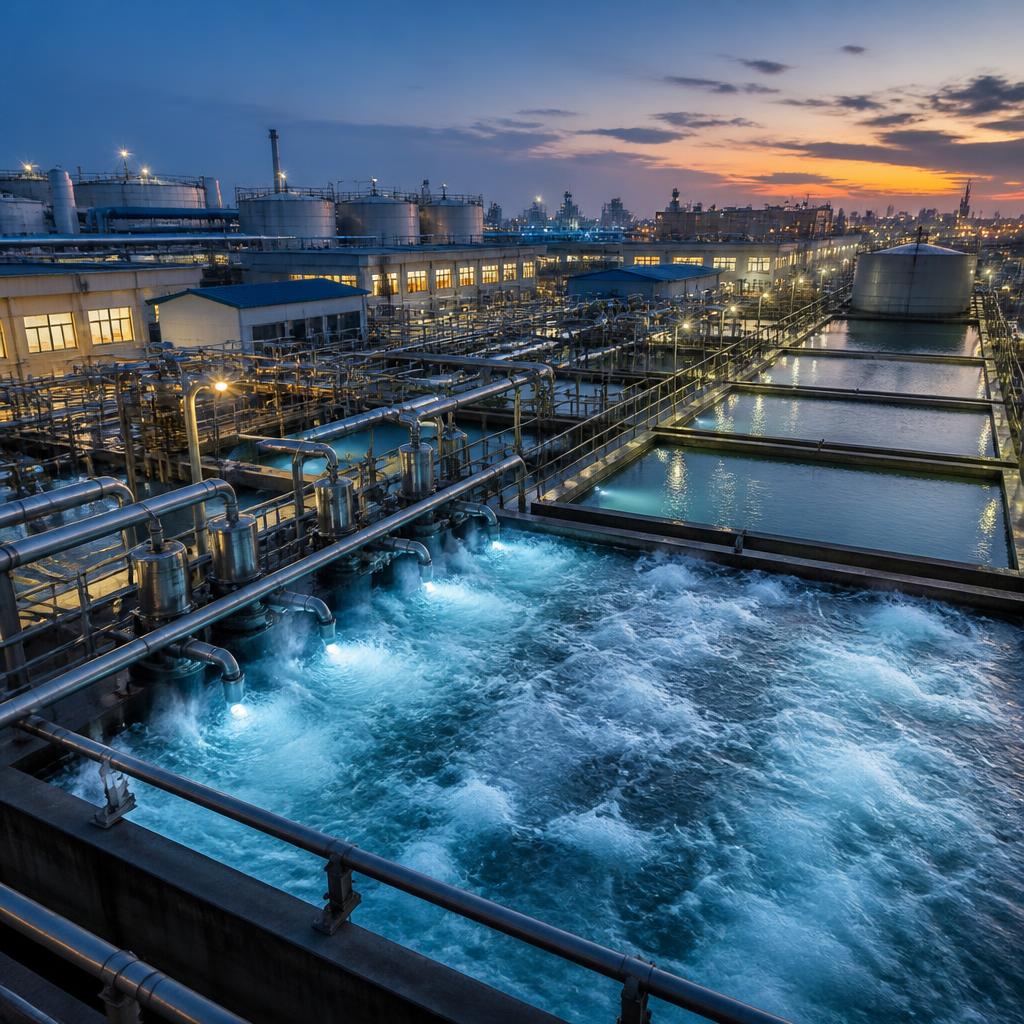
This article explains practical steps CETP operators in industrial clusters can take to upgrade common effluent treatment facilities using ozone‑based advanced oxidation processes (AOP), hydrodynamic cavitation, and complementary mass‑transfer improvements such as nanobubble technology. It focuses on typical challenges faced by textile, pharmaceutical and chemical parks—high COD, persistent colour and toxic compounds—and on shared infrastructure and cost‑sharing arrangements among member units.
Why CETPs need AOP and cavitation
Many cluster CETPs struggle with wastes that are poorly removed by conventional biological treatment: azo and metal‑complex dyes, recalcitrant organics from APIs and specialty chemicals, and intermittent spikes in toxicity. Ozone‑based AOP and cavitation target these refractory compounds by generating strong oxidants and enhancing physical breakdown mechanisms, improving biodegradability and reducing colour and acute toxicity that otherwise limit reuse or discharge compliance.
How ozone‑AOP, cavitation and nanobubbles complement each other
Ozone‑based AOPs produce hydroxyl radicals (through ozone, peroxide, UV or catalytic pathways) that oxidize persistent organics. Hydrodynamic cavitation generates localized high shear and radical formation that can fragment molecules and increase surface area for chemical attack. Nanobubble technology improves gas transfer and contact efficiency for ozone/oxygen, increasing effective oxidant delivery while often reducing chemical demand. Used together, these approaches can accelerate degradation, lower sludge formation and make downstream biological steps more effective.
Process placement and integration
Decide placement based on the main challenge: for intense colour and toxicity issues, place AOP/cavitation after primary/physical and secondary biological stages to polish effluent and detoxify recalcitrant compounds. In some cases a pre‑oxidation stage ahead of biological treatment can convert non‑biodegradable compounds into forms that are more amenable to biodegradation. Integration should preserve biological biomass where required, include adequate buffers or equalization to smooth load variability, and avoid introducing residual oxidants that could disrupt downstream processes.
Designing shared CETP infrastructure
Shared installations should follow modular, skid‑based design so capacity can be scaled as members join or change loads. Key design factors include flow balancing and equalization to handle peak contributions, flexible hydraulic routing for bypass or isolation, redundancy for critical components (e.g., ozone generators, pumps), and centralized operations and maintenance to reduce per‑member overhead. Factor in safety provisions for handling ozone and compressed gases, clear signage, controlled access and standard operating procedures for emergency scenarios.
Monitoring, control and performance targets
Set clear performance metrics (e.g., percent COD and colour reduction, organic load amenability, and acute toxicity assessments) and instrument the system for continuous control. Useful online parameters include ORP, dissolved ozone or residual oxidant, UV254 (as a proxy for aromatic organics), and flow and turbidity. Periodic laboratory checks such as TOC, specific UV absorbance and bioassays will confirm broader effectiveness. Automated control loops can optimize reagent usage and energy consumption while maintaining target treatment levels.
Cost sharing and commercial models for cluster CETPs
Several practical financing and billing models suit clustered CETPs: pro rata capital contributions based on average or peak flow share; a user‑fee or tariff model tied to actual effluent volume and pollutant load; centralized O&M contracts where the CETP operator pays a technology provider and recovers costs from members; or performance‑based arrangements where payments are linked to delivered treatment outcomes. When evaluating options, compare lifecycle OPEX and energy use as well as capital cost, and consider pilot trials to reduce uncertainty before committing to full cost allocation.
Selecting a technology partner and piloting upgrades
Choose partners with demonstrated experience in ozone generators, AOP, hydrodynamic cavitation and enhanced mass‑transfer systems (such as nanobubble generators). Look for vendors that can provide site‑specific design, on‑site demonstrations or pilots, and documented references from similar industrial sectors. Independent feedback from cluster operators often emphasizes the value of knowledgeable, responsive teams, live demos and clear post‑installation support. For clusters in India, working with suppliers that offer pilot systems and phased deployments helps validate performance, define realistic cost shares among members, and build operator confidence before full‑scale rollout.
Article by
Prasinos Tech Innovations
Prasinos Tech Innovations Private Limited is an OEM at the forefront of sustainable environmental technologies. We specialize in the design and manufacturing of advanced systems including nanobubble generators, ozone generators, hydrodynamic cavitation units, and advanced oxidation processes (AOP) tailored for critical applications in sewage treatment plants (STP), effluent treatment plants (ETP), and water and wastewater treatment plants (WWTP). Our technologies are engineered to deliver high-efficiency, low-footprint solutions across diverse sectors such as aquaculture, agriculture, horticulture, and the bioenergy industry, including biogas and biodiesel production.