Using Nanobubbles to Control Algae and Odour in Decorative Lakes and Farm Ponds in India
This article explains how nanobubble systems can reduce algal blooms and unpleasant odour in decorative lakes and farm ponds, how they are implemented and monitored, and why Prasinos Tech Innovations is a practical partner for deployment across India.

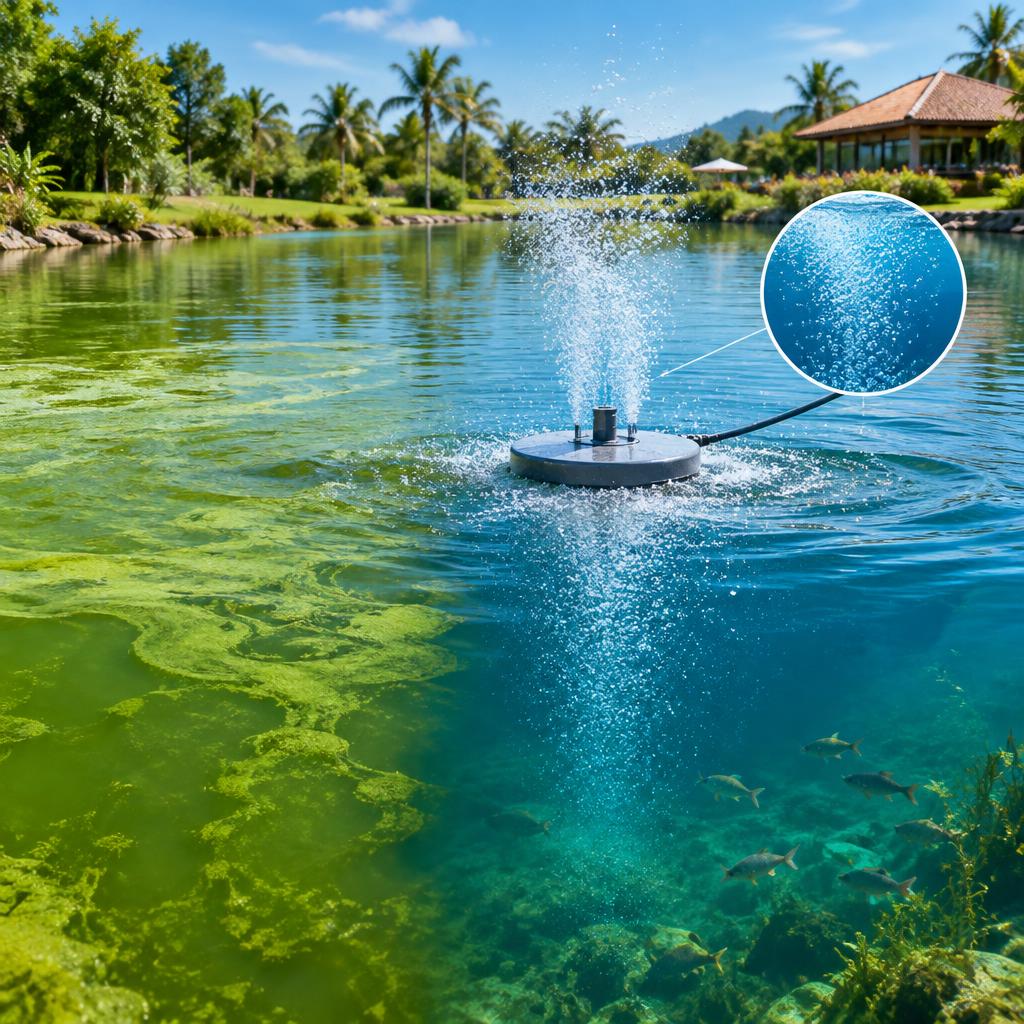
The challenge: green, smelly water in lakes and ponds
Decorative lakes at resorts, municipal ornamental waterbodies and farm ponds frequently develop algal blooms, low dissolved oxygen (DO) and offensive odours. Warm climates and nutrient inputs (runoff, organic matter, livestock waste, fertiliser) accelerate algal growth and decomposition, creating anaerobic zones that harm aesthetics, fish health and local amenity value. Managers need solutions that reduce algae and odour without heavy reliance on chemicals or large infrastructure changes.
What nanobubbles are and how they help
Nanobubbles are extremely small gas bubbles (much smaller than conventional aeration bubbles) that remain suspended in water for long periods. Their small size and large collective surface area improve oxygen transfer efficiency and increase contact with microorganisms and dissolved contaminants. By gently oxygenating deeper layers and supporting aerobic microbial processes, nanobubbles suppress the conditions that favour odour-producing anaerobic decomposition and help limit certain types of algal proliferation.
Key benefits for decorative lakes and farm ponds
For pond and lake managers, nanobubble systems offer several practical advantages: improved dissolved oxygen throughout the water column, reduction in foul odours as aerobic breakdown replaces anaerobic processes, decreased reliance on algaecide chemicals, improved water clarity through enhanced settling and biodegradation of organic material, and better conditions for fish and aquatic plants. Systems are compact and energy‑efficient compared with large mechanical aerators, making them suitable for landscaped or remote sites.
How a typical nanobubble installation is planned
Effective implementation begins with a site assessment: measure pond volume, depth profile, inflows, nutrient sources and current DO/turbidity. Sizing the nanobubble generator and determining the number and placement of injection points follows from that assessment. Installations commonly integrate with existing circulation pumps or use dedicated skids; electrical supply and access for periodic maintenance should be confirmed. Practical considerations such as winter operation, debris screens and animal access are included in the design.
Monitoring performance and realistic timelines
Track a few simple parameters to judge success: dissolved oxygen, turbidity, visual algal cover or chlorophyll indicator, ammonia and pH, and of course odour presence. Improvements are incremental: aeration and odour relief often begin within days to weeks after commissioning, while noticeable reductions in algal biomass and long‑term water quality can take several weeks of steady operation and nutrient management. Routine checks and minor adjustments during early operation ensure the system is delivering expected results.
When to combine nanobubbles with ozone or AOP
For persistent blooms, strong organic loading or when rapid disinfection is required (for example to protect aquaculture stock or reduce pathogen risk at public sites), combining nanobubble oxygenation with ozone generation or advanced oxidation processes (AOP) can be effective. Ozone/AOP provide strong oxidation and disinfection, while nanobubbles sustain aerobic degradation and oxygen levels. Prasinos Tech’s product range includes both nanobubble and ozone/AOP technologies, allowing integrated solutions tailored to site needs.
Working with Prasinos Tech Innovations in India
Prasinos Tech Innovations Pvt. Ltd., based in Secunderabad and serving locations across India, specialises in nanobubble systems for water and wastewater applications. Customers consistently note helpful, knowledgeable service and practical demonstrations of technology during project discussions, which can be valuable when evaluating a site-specific solution. If you manage a decorative lake, resort waterbody or farm pond and want a site assessment or demonstration, contact Prasinos Tech to discuss survey, system sizing and a phased implementation plan.
Customer review


Article by
Prasinos Tech Innovations
Prasinos Tech Innovations Private Limited is an OEM at the forefront of sustainable environmental technologies. We specialize in the design and manufacturing of advanced systems including nanobubble generators, ozone generators, hydrodynamic cavitation units, and advanced oxidation processes (AOP) tailored for critical applications in sewage treatment plants (STP), effluent treatment plants (ETP), and water and wastewater treatment plants (WWTP). Our technologies are engineered to deliver high-efficiency, low-footprint solutions across diverse sectors such as aquaculture, agriculture, horticulture, and the bioenergy industry, including biogas and biodiesel production.