Using Ozone and Advanced Oxidation Processes to Meet Tightening Discharge Norms for Pharma ETPs in India
A practical guide for pharma effluent operators and compliance teams explaining how ozone and AOP systems can be integrated into ETP trains to reduce persistent COD, colour, and complex organics, with operational considerations and complementary technologies to improve compliance and sustainability.
Why ozone and AOP are increasingly relevant for pharma ETPs
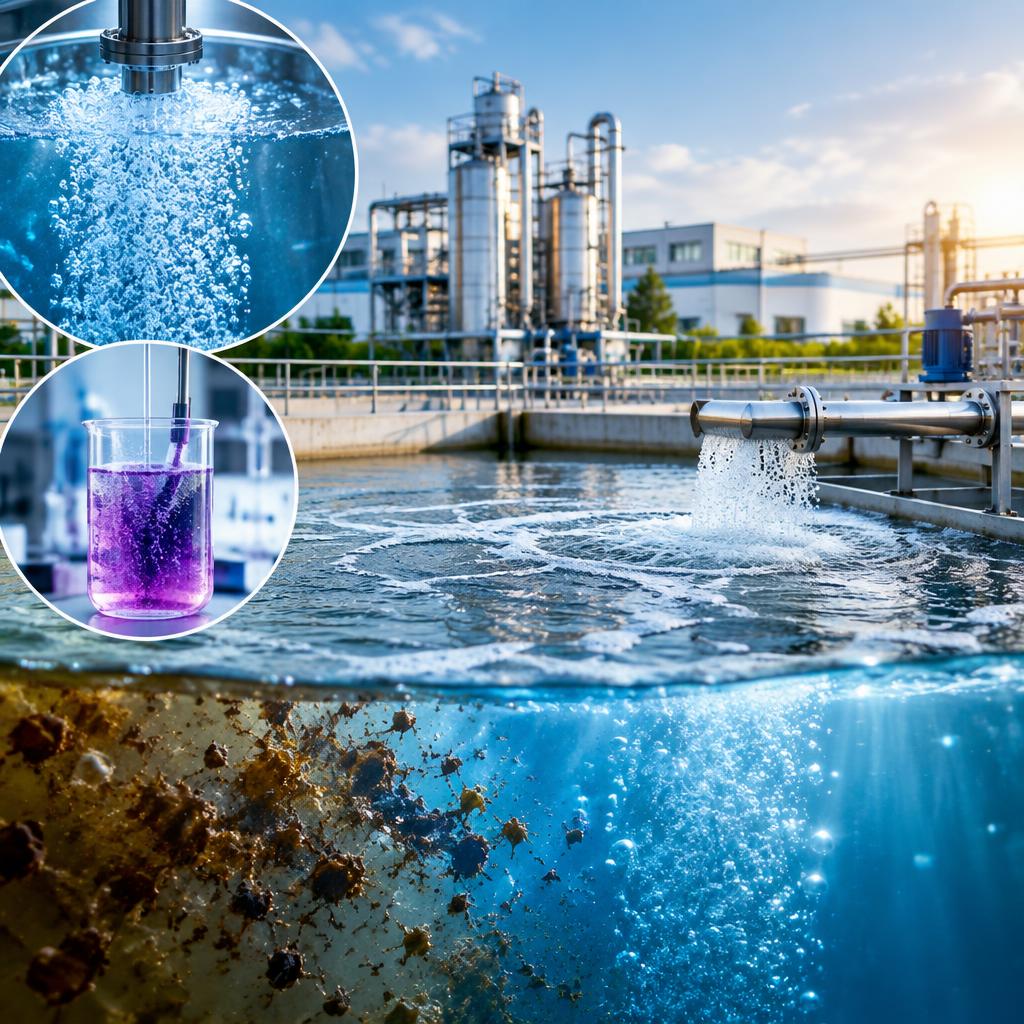
Pharmaceutical effluents often contain high-strength chemical oxygen demand (COD), colour from dyes or intermediates, and recalcitrant organics that resist biological breakdown. With regulators in India tightening discharge expectations and public scrutiny rising, many pharma units need targeted tertiary treatment steps beyond conventional biological processes. Ozone and advanced oxidation processes (AOP) are widely used worldwide as targeted solutions for reducing persistent COD, decolourisation, and breaking down complex molecules that otherwise pass through secondary treatment.
How ozone and AOP work in simple terms
Ozone (O3) is a strong oxidant that reacts directly with many organic compounds and can partially mineralise or transform them into more biodegradable forms. AOPs combine an oxidant (often ozone, hydrogen peroxide, or ozone+H2O2) with catalysts or energy inputs (UV, cavitation) to produce hydroxyl radicals — extremely reactive species that non-selectively oxidise a broad range of organics. The practical effect in an ETP is reduced residual COD, improved colour removal, and better amenability for downstream polishing or biological polishing steps.
Where to place ozone/AOP in the pharma ETP train
There are several common integration points for ozone and AOP systems depending on the effluent profile and treatment goals. Ozonation or AOP can be used as: (1) pre-treatment ahead of biological units to convert non-biodegradable organics into forms that microbes can consume, improving biological performance; (2) a tertiary polishing stage after secondary treatment to remove residual COD, colour and trace organics; or (3) a targeted treatment for specific process streams or batches with high-strength contaminants. Choice of placement depends on influent characteristics, permitted discharge limits, and overall plant layout.
Operational considerations: dose, contact time and monitoring
Successful implementation depends on careful control of ozone dosage, contact time, and reaction conditions. Water quality factors such as pH, alkalinity and the presence of bromide affect oxidation efficiency and byproduct formation, so monitoring is essential. Operators should plan for: accurate dosing and flow control, adequate contact or reaction tanks, online monitoring of key parameters (COD, residual oxidant, pH), and procedures for quenching residual oxidant if needed before discharge or reuse. Pilot testing and bench trials help determine optimal operating windows for a specific pharma effluent.
Watch for oxidation byproducts and safety needs
Oxidation processes can produce byproducts that require attention — for example, bromate can form when bromide-containing waters are ozonated under certain conditions. It is prudent to assess influent ion content and include monitoring for potential byproducts relevant to your stream. Ozone equipment requires appropriate safety measures: gas containment, ventilation, ozone destruct units for off-gas, and trained personnel for maintenance. These considerations should be part of vendor proposals and acceptance testing.
Complementary technologies that improve outcomes
Ozone and AOP are often most effective when combined with complementary technologies. Hydrodynamic cavitation and nanobubble systems can enhance mass transfer and radical generation, potentially improving oxidation efficiency or biological oxygenation. Physical polishing steps such as coagulation, activated carbon adsorption or membrane filtration can be paired after AOP to remove transformed byproducts and colour. Selecting the right combination depends on site-specific constraints; bench-scale trials and pilot demonstrations are valuable to establish cost-effectiveness and operational integration.
Practical next steps for pharma ETP operators
Start with a detailed characterisation of your effluent (COD fractions, colour, specific organics, conductivity and bromide). Request bench-scale or pilot testing that evaluates ozone and AOP performance on your actual stream and clarifies doses, contact times and likely byproducts. Ensure vendor proposals include guarantees for equipment supply (ozone generators, AOP reactors), control and safety systems, and clear commissioning and training plans. Prasinos Tech Innovations, which manufactures ozone and AOP equipment as well as complementary nanobubble and cavitation technologies, has been cited by customers for strong technical support and pilot demonstrations; working with an experienced provider can shorten the path from trial to compliant operation.
Customer review


Article by
Prasinos Tech Innovations
Prasinos Tech Innovations Private Limited is an OEM at the forefront of sustainable environmental technologies. We specialize in the design and manufacturing of advanced systems including nanobubble generators, ozone generators, hydrodynamic cavitation units, and advanced oxidation processes (AOP) tailored for critical applications in sewage treatment plants (STP), effluent treatment plants (ETP), and water and wastewater treatment plants (WWTP). Our technologies are engineered to deliver high-efficiency, low-footprint solutions across diverse sectors such as aquaculture, agriculture, horticulture, and the bioenergy industry, including biogas and biodiesel production.