Bringing Ayurveda Home: Simple Daily Routines to Keep the ‘Ubud Retreat Feeling’ Alive
Practical, low‑effort Ayurvedic habits—morning rituals, meal timing, movement, screen boundaries and sleep practices—based on what guests found most helpful after Rudra Sahashrara Bali stays.

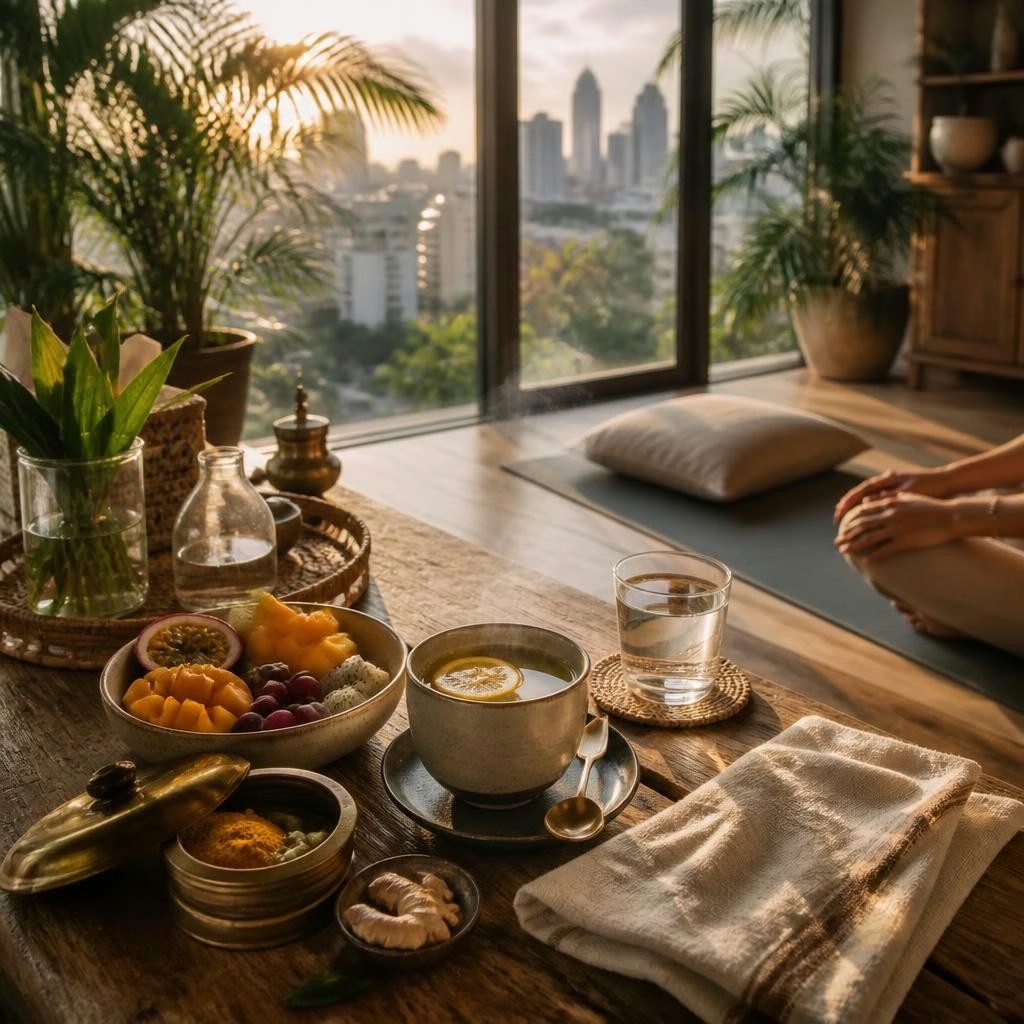
Why a few small habits matter after a retreat
A transformative retreat often creates a new baseline of sleep, digestion and calm; the challenge is keeping that baseline in a busy home or city life. Guests from Rudra Sahashrara frequently describe concrete, repeatable steps they used to preserve retreat benefits—rather than trying to replicate every element of the program, they kept a handful of high‑leverage routines that supported sleep, digestion and nervous‑system balance. This article lays out practical, low‑effort practices you can adopt immediately.
Keep a short morning ritual: 10–20 minutes to set the tone
Start the day with a consistent, unhurried sequence. Simple elements that former guests found effective include brief self‑reflection or journaling, a short guided breathing practice (pranayama) and a few gentle yoga stretches. If you learned Abhyangam (oil massage) or experienced it at the retreat, you can adapt a reduced version at home by massaging warm oil into the hands, feet and scalp for five minutes before a shower. These morning actions help anchor the nervous system and reintroduce the slow, attentive pace that supports digestion and mental clarity.
Meal timing and the easiest nourishing choices
One clear theme from retreat feedback is that diet rhythm matters. Stick to three warm, cooked meals spaced across the day and avoid grazing or frequent snacks—this preserves digestive strength. When possible, favour simple, vegetable‑forward cooked dishes, and include a grounding element like steamed grains or legumes. If you attended a cooking class at the retreat, recreate one of those dishes as a home staple; if not, aim for warm, spiced soups or stews that are easy to prepare and digest. Small preparation habits—warming leftovers gently rather than eating cold straight from the fridge—also make a difference.
Movement and breathwork: short, regular sessions
You don’t need long workouts to keep the retreat effect. Commit to a 20–30 minute morning practice most days: a combination of gentle yoga, walking, or stretching plus five to ten minutes of pranayama. Former guests reported that daily short practices sustained energy and reduced reactivity more than sporadic intense exercise. If you were given specific therapeutic exercises during your program, try to integrate a few of those motions into this brief daily block.
Create screen boundaries that protect rest
A consistent recommendation from retreat participants is strict limits on screen use—especially in the first and last hours of the day. Practically this looks like doing essential online tasks before your morning ritual, setting a daily ‘no‑phone’ window during meals, and stopping screens at least 60–90 minutes before bedtime. One guest emphasized how removing phone and computer use during the program helped them sleep and digest better; bringing that boundary home preserves much of the restful effect.
Evening routine: wind down without rushing
An evening ritual helps carry daytime benefits into sleep. Choose two calming actions: light journaling or reflection on the day’s small wins, a short guided meditation, or a warm bath. Maintain a regular bedtime and avoid naps during the day so that nighttime sleep is restorative. Guests who followed scheduled rest during their programs reported clearer sleep patterns when they stuck to a regular wake and sleep time at home.
Practical tips to make change stick in a busy life
Translate retreat structure into realistic rules. Pack away or silence devices during designated ritual times, set a repeating calendar reminder for your morning and evening practice, and keep a small kit of items that cue retreat habits (a journal, a cloth for brief self‑massage, a favourite tea). If you learned specific dietary or therapeutic guidelines from the Ayurvedic doctor, treat them as experiments: try one change at a time for two weeks and note the effects. For many guests, committing to the plan given at the retreat—rather than partial adherence—was the single most effective strategy for sustained benefit.
When to seek further guidance and how to stay connected
If you notice persistent sleep disruption, digestion concerns or mounting stress despite home routines, it is reasonable to consult an Ayurvedic practitioner or your primary healthcare provider for personalized guidance. Many guests return to short follow‑up programs or attend additional classes (for example, cooking or breathwork) to refresh practices and deepen habit change. Above all, view the home phase as a continuation of your retreat: small, consistent actions are what preserve the calm, restorative gains you experienced in Ubud.
Customer review


Article by
Rudra Sahashrara Bali
Opened in December 2023, Rudra Sahashrara Bali is a new Ayurvedic health and wellness resort located in the heart of Ubud, Bali. The resort offers a serene escape with stunning ricefield views, featuring artistic design, an infinity pool, and a yoga studio. Guests can indulge in Ayurvedic treatments at the Ashtalaxmi spa and enjoy delicious vegetarian meals inspired by Ayurvedic principles at the Panchamrit restaurant. Rudra Sahashrara Bali offers Panchakarma programs, combining traditional Ayurvedic practices with the tranquility of Bali's natural beauty.