How Ayurvedic Cuisine Supports Your Panchakarma: Inside a Retreat Kitchen in Ubud
An overview of how an Ayurvedic retreat kitchen uses diet as a therapeutic tool during Panchakarma—tailoring meals to doshas, common ingredients and cooking methods, how menus shift during cleansing phases, and simple practices you can continue at home.

Why diet is central to Panchakarma
Panchakarma is a multi-day program of purification and rejuvenation in the Ayurvedic tradition, and diet is one of its foundational pillars. Food is treated not only as nourishment but as medicine: the right meals support digestion, reduce toxin load, and reinforce the effects of therapies. At a retreat that offers an integrated Panchakarma program, kitchen practice and clinical guidance are coordinated so that what you eat amplifies the treatments you receive.
Personalized meals: matching food to your dosha
A core principle in Ayurvedic nutrition is tailoring meals to an individual’s dosha profile and current condition. In practice this means that the retreat’s Ayurvedic doctor assesses your patterns and prescribes specific foods, spices and meal rhythms to balance your constitution. Guests at Rudra Sahashrara Bali consistently note that the restaurant prepares meals according to personal recommendations and that dietary guidance is part of the overall program, ensuring food supports the therapeutic plan rather than working against it.
Common ingredients and how they support digestion
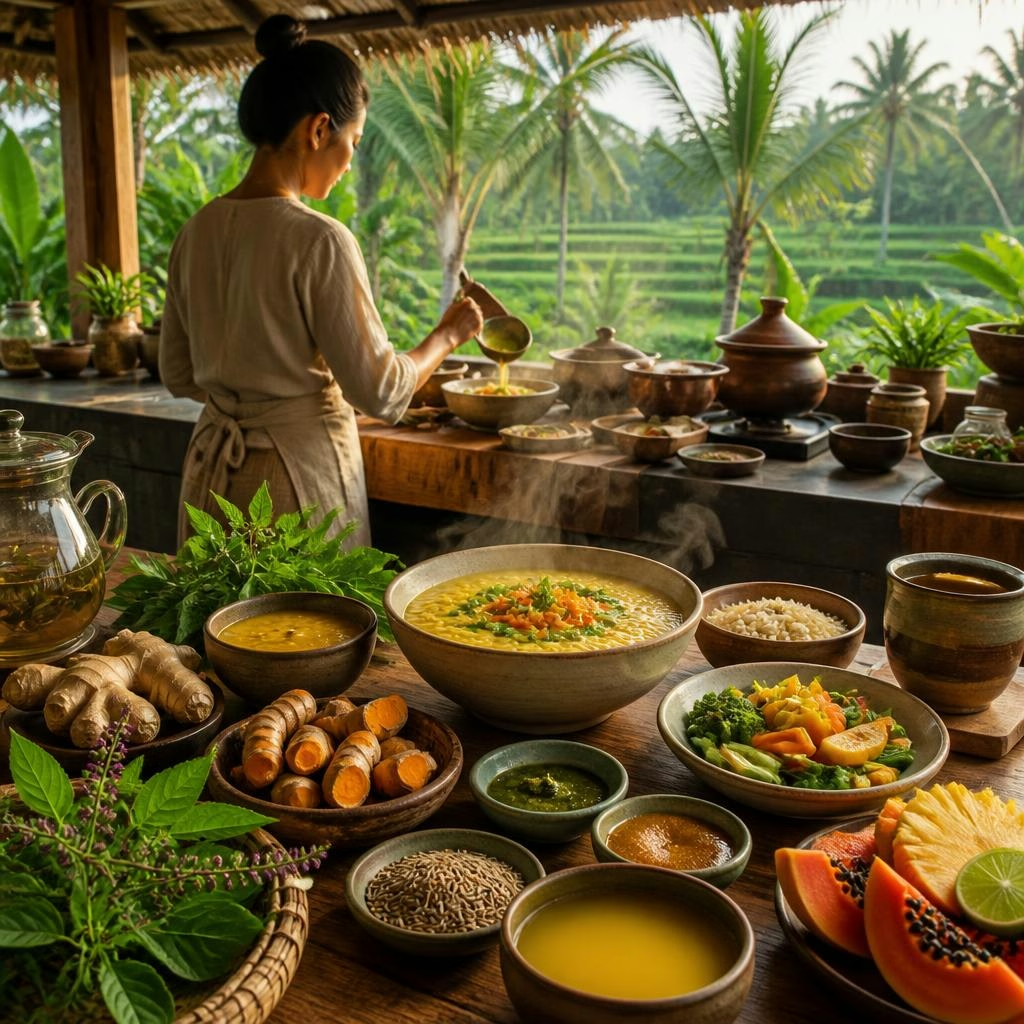
Ayurvedic retreat kitchens favor simple, easily digestible ingredients and cooking methods that kindle digestion. Typical components include whole grains like basmati rice and khichdi, mung dal and other well-cooked legumes, seasonal vegetables, ghee as a stabilizing fat, and warming spices such as ginger, cumin, coriander and turmeric. Herbs and light broths are used to soothe digestion and provide hydration. Preparing food with gentle steaming, slow simmering or light sautéing helps make nutrients more assimilable during a cleansing program.
How menus shift through Panchakarma phases
Menus are usually adjusted across the preparatory, cleansing and recuperative phases of Panchakarma. In the preparatory phase, meals aim to improve digestion and gently mobilize toxins—lighter, warm, cooked foods and digestive spices are emphasized. During the more intensive cleansing days the kitchen often offers very simple, mono-diet items and broths that minimize digestive load. After therapies conclude, menus become more nourishing and restorative, reintroducing diverse cooked vegetables, legumes and wholesome fats to rebuild strength. Throughout, portion sizes, textures and spice levels are adapted to individual tolerance.
Practical eating habits to continue at home
Many of the dietary habits taught during a Panchakarma can be carried into daily life with beneficial effects. Key practices include favoring warm, freshly cooked meals over cold or heavily processed foods; eating at regular times to stabilize digestion; chewing slowly and avoiding distractions while eating; limiting snacking between meals; and choosing spices and preparations that support your digestion. These are general lifestyle supports rather than quick fixes—guests report better sleep, steadier energy and calmer digestion when they maintain consistent, mindful eating routines.
What you can learn from a retreat kitchen
A retreat kitchen is also a classroom: hands‑on cooking sessions and demonstrations show how Ayurvedic dishes are assembled, spiced and balanced. At Rudra Sahashrara Bali, guests have the opportunity to learn from the restaurant chef about simple recipes and techniques that translate well to a home kitchen. These practical takeaways—how to prepare a light khichdi, use spices to aid digestion, or make a restorative broth—help bridge the retreat experience and everyday cooking back home.
Preparing for a dietary experience at the retreat
If you plan to do Panchakarma at an Ayurvedic resort in Ubud, expect an individualized dietary plan as part of your program and be prepared for vegetarian, Ayurvedic-style meals throughout your stay. Consultations with the Ayurvedic doctor and regular check-ins ensure the kitchen adapts your menu as your body responds. If you have dietary restrictions or strong preferences, communicate these in advance so the team can advise how the retreat’s cuisine will fit your needs. The goal is a coherent program in which treatments, movement, rest and especially food work together to support your clarity and recovery.
Article by
Rudra Sahashrara Bali
Opened in December 2023, Rudra Sahashrara Bali is a new Ayurvedic health and wellness resort located in the heart of Ubud, Bali. The resort offers a serene escape with stunning ricefield views, featuring artistic design, an infinity pool, and a yoga studio. Guests can indulge in Ayurvedic treatments at the Ashtalaxmi spa and enjoy delicious vegetarian meals inspired by Ayurvedic principles at the Panchamrit restaurant. Rudra Sahashrara Bali offers Panchakarma programs, combining traditional Ayurvedic practices with the tranquility of Bali's natural beauty.