Budgeting Your First Commercial Kitchen in Sharjah: Cost Ranges and Smart Savings
A practical guide to the main cost categories for a new commercial kitchen in Sharjah, and disciplined ways to reduce upfront expenses while keeping safety, hygiene, and durability intact.

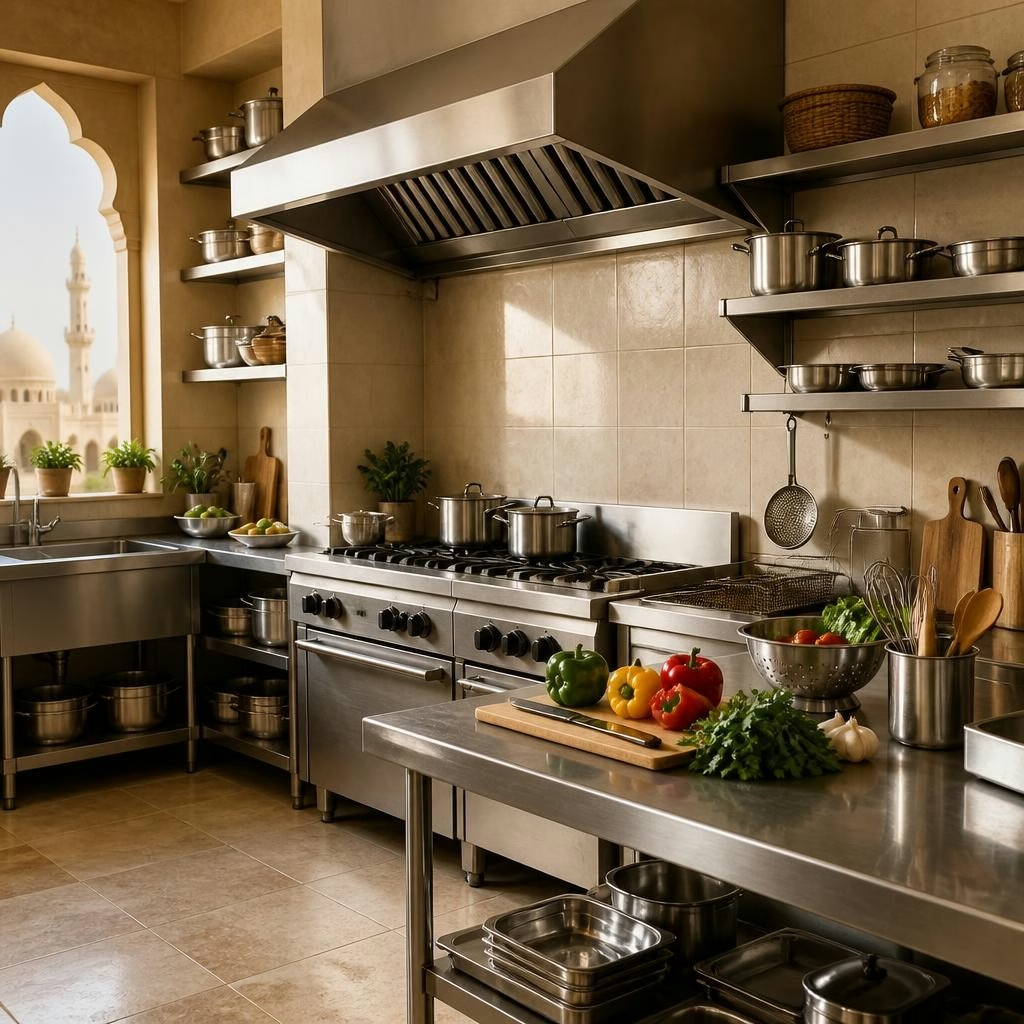
Why a clear budget matters
Starting a commercial kitchen without a realistic budget is one of the most common mistakes new operators make. Your budget shapes what equipment you buy, how you plan the space, and how quickly you can open. This article breaks costs into sensible categories so you can set priorities and make trade-offs that protect food safety, staff workflow, and long-term durability.
Define scope first: menu, seats, and throughput
The single biggest cost driver is what you plan to cook and how much you must produce. A simple counter-serve café needs different equipment than a full-service restaurant or hotel kitchen. Start by defining your menu, expected covers per hour, and peak service patterns—this defines the capacity of ranges, refrigeration, and dishwashing equipment you'll need and helps you avoid overspending on oversized machines.
Key equipment categories and their relative cost tiers
Budgeting is easier when you group purchases. Typical categories are: heavy cooking (ranges, ovens, fryers), refrigeration (walk-in, undercounter, display), prep and workstations (stainless steel tables, sinks, cabinets), ventilation and exhaust, warewashing (dishwashers and sinks), and miscellaneous (shelving, smallwares, kettles). Heavy cooking and refrigeration are usually the largest line items, while worktables and shelving are relatively low cost. Treat ventilation and warewashing as essential: skimping here creates operational or compliance risks.
What changes a low cost into a high cost
Several factors move an item from a low to high price: custom sizes or complex fabrication, higher-grade materials or finishes, integrated controls and automation, energy-efficiency options, and brand/import costs. Site constraints—like difficult access, long installation runs, or the need to retrofit existing ductwork—also add to total cost. Plan early to identify these risk items so you can budget contingencies.
Where you can save without compromising hygiene or safety
Look for savings in standardization and modular choices. Standard-size equipment and off-the-shelf modules are less expensive than custom fabrications. Choose stainless steel basics for food-contact surfaces but avoid decorative finishes in back-of-house areas. For non-food-contact storage, consider robust but lower-cost shelving rather than custom cabinets. Prioritize spending on items that directly impact food safety and throughput (refrigeration, ventilation, warewashing) and delay aesthetic upgrades until after opening.
Material choices: durability vs. initial cost
Stainless steel is the industry standard for durability and hygiene; investing in quality stainless for counters, sinks, and cabinets reduces long-term replacement and maintenance costs. For items not directly exposed to food or cleaning chemicals you can choose cost-effective alternatives, but be cautious: lower upfront cost can mean higher maintenance over time. Balance initial savings against expected lifecycle costs.
Plan for installation, delivery and local compliance
Installation and ventilation planning are integral to the budget. Costs for ductwork, hood installation, gas lines, and electrical upgrades can be significant if identified late. Work with a supplier that offers design and installation services so these elements are coordinated from the start. Customers of local suppliers frequently highlight competitive pricing and prompt delivery as key benefits when these services are bundled.
Include after-sales service and spare parts in your budget
Remember to account for commissioning, spare parts, and routine maintenance. Many buyers find that suppliers who provide reliable after-sales support reduce downtime and overall operating costs. While most customers report strong after-sales care and timely project completion from reputable suppliers, some projects do encounter follow-up gaps—so ask about the supplier’s warranty terms and response times when comparing quotes.
Phased buying: how to launch sooner with a smaller budget
If capital is limited, consider a phased approach: prioritize essentials needed for safe operation and high-turnover items (refrigeration, cooking line, ventilation, warewashing). Delay non-critical items—specialty ovens, extra prep stations, or high-end finishes—until revenue stabilizes. Phasing reduces initial capex and allows you to refine equipment choices based on actual workflow and customer demand.
How to compare quotes effectively
When you receive multiple proposals, compare apples to apples: ensure the same scope, materials, and inclusions (delivery, installation, testing). Ask for itemized lists and lead times. Competitive pricing and quick delivery are commonly cited advantages among satisfied customers; use those references to verify that a low price isn’t omitting essential services or parts.
Final checklist and next steps in Sharjah
Before you sign an order: confirm the equipment list against your menu and capacity plan; verify installation scope and lead times; include commissioning, spare parts, and maintenance; and build a contingency for unforeseen site work. If you’re planning in Sharjah, consider suppliers who design, manufacture, and install locally to reduce lead times and logistics costs. For a practical starting point, visit the local showroom or office to discuss your project requirements in detail and get a transparent, itemized quote that reflects both upfront cost and expected lifecycle value.
Customer review


Article by
SAS Kitchens - Commercial Kitchen Equipment
SAS Kitchens is a trusted provider of high-quality stainless steel commercial kitchen equipment in the UAE. We specialize in designing, manufacturing, and installing durable, high-performance kitchen solutions for restaurants, cafés, hotels, and food service businesses. With a focus on precision craftsmanship, functionality, and hygiene, our equipment is built to withstand the demands of professional kitchens. Our experienced team is committed to delivering reliable service, timely project execution, and tailored solutions that meet each client’s operational needs. At SAS Kitchens, customer satisfaction, product durability, and professional support are at the core of everything we do.