Choosing Commercial Refrigeration for Restaurants in Dubai and Abu Dhabi
A practical guide to selecting under‑counter chillers, upright fridges, cold rooms, and display units for UAE restaurants and cafés, with tips on capacity planning, energy use, and kitchen layout.

Why the Right Refrigeration Matters
Refrigeration is one of the most critical investments for any restaurant or café in Dubai or Abu Dhabi. The right equipment preserves food safety, reduces waste, supports consistent service during peak hours, and can have a direct impact on energy costs. Selecting units that suit your menu, kitchen workflow, and local climate will help maintain product quality while keeping operating expenses under control.
Overview of Common Commercial Refrigeration Types
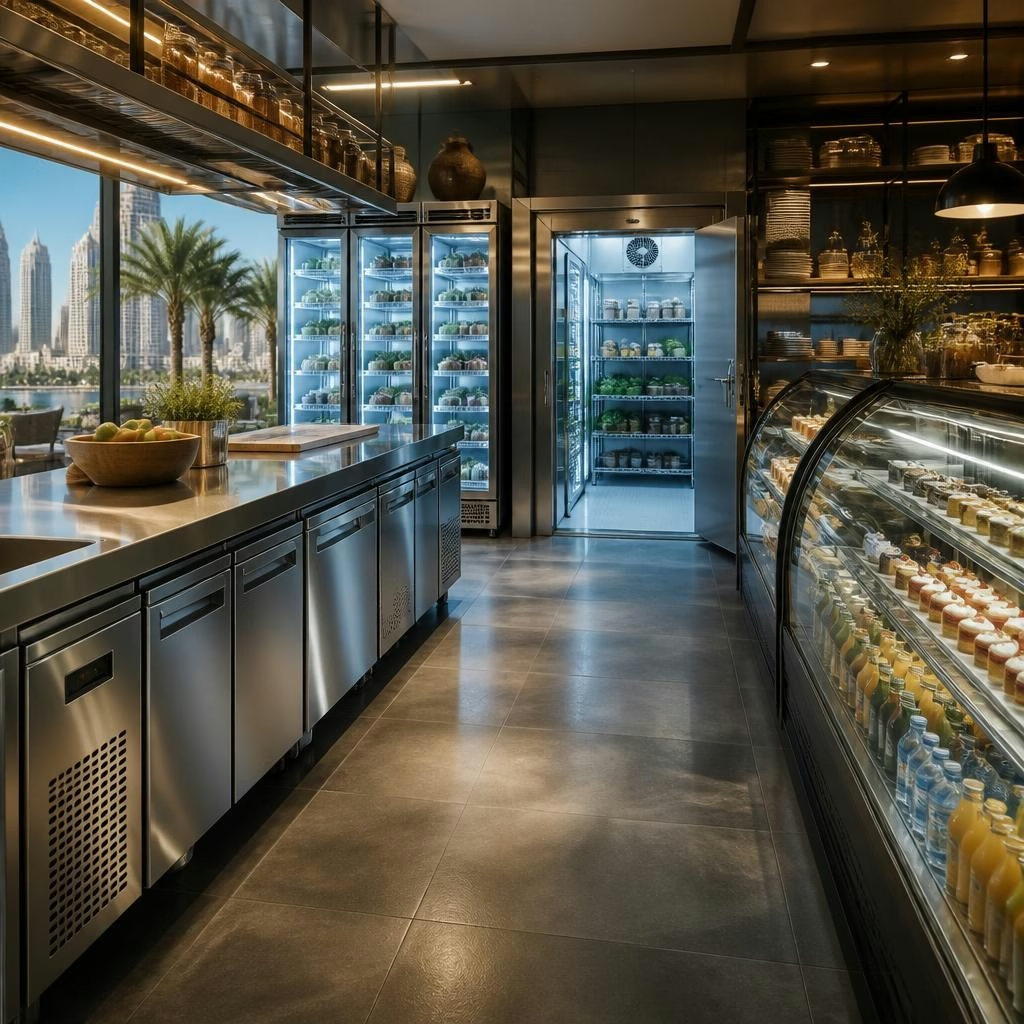
Commercial kitchens typically use four main types of refrigeration: under‑counter chillers, upright refrigerators/freezers, cold rooms (walk‑in coolers), and refrigerated display units. Each type serves a different operational need: under‑counter units provide quick access at the line, uprights store larger volumes, cold rooms centralize bulk storage, and display units present ready‑to‑sell items to customers.
Under‑Counter Chillers: When to Choose Them
Under‑counter chillers are compact, stainless‑steel units designed to sit beneath preparation counters or service stations. They are ideal for kitchens that require immediate access to ingredients during plating or assembly. Choose under‑counter models when space is limited but frequent access is required; they reduce staff movement, speed up service, and are commonly used for prep stations, pastry lines, and chef counters.
Upright Refrigerators and Freezers: Versatility and Capacity
Upright fridges and freezers provide organized vertical storage and are suitable for most back‑of‑house needs. They are easier to inventory than stacked or chest units and typically include adjustable shelving. For busy restaurants in Dubai and Abu Dhabi, select models with robust door seals, corrosion‑resistant interiors, and a layout that matches your stock rotation practices (first in, first out). Consider door swing and space around units to ensure proper airflow and service access.
Cold Rooms: Planning Bulk Storage
Cold rooms (walk‑in coolers) are the best solution for operators who need to store large quantities of raw materials, bulk ingredients, or prepped product. When planning a cold room, focus on convenient location relative to receiving and the main production line, appropriate shelving and drainage, and partitioning for different temperature zones if needed. In the UAE climate, ensure the insulation and door design limit heat gain to reduce compressor workload.
Display Refrigeration: Balance Visibility and Food Safety
Refrigerated display units are used to showcase ready‑to‑eat items, desserts, or beverages. When choosing display refrigeration, balance visibility with temperature control; glass doors and open displays can increase heat load, so opt for units designed for consistent internal temperatures. Consider lighting, shelf layout, and ease of cleaning to maintain hygiene standards without compromising presentation.
Capacity Planning: Match Equipment to Service Patterns
Capacity planning begins with understanding your menu, service volume, and delivery schedule. Estimate daily usage for perishable items and allow buffer stock for busy shifts or supply delays. Smaller establishments may rely on a combination of under‑counter units and a single upright fridge, while larger operations often need multiple uprights and a cold room. Avoid oversizing equipment, which wastes energy, and undersizing, which forces frequent resupply and disrupts service.
Energy Use and Efficiency Considerations
Energy consumption is a major ongoing cost. Prioritize units with efficient compressors, good insulation, and controls that allow precise temperature settings. In the UAE, where ambient temperatures are high, proper placement (away from direct sunlight and heat sources) and sufficient ventilation around compressors are essential. Regular maintenance — cleaning condensers and checking door gaskets — preserves efficiency and extends equipment life.
Layout and Workflow: Positioning Refrigeration in the Kitchen
Thoughtful placement of refrigeration improves productivity and reduces cross‑traffic. Place frequently accessed units near the prep line and service stations; reserve larger storage closer to receiving areas. Plan clear paths for moving bulk items into cold rooms and ensure that doors can open fully without obstructing workstations. A stainless‑steel finish, common in commercial equipment, helps with durability and hygiene in high‑use environments.
Choosing a Supplier and What to Ask
Selecting a supplier is as important as choosing the right unit. Look for a provider experienced with commercial kitchens in the UAE who can advise on layout, delivery, and installation. Ask about local installation services, warranty terms, spare parts availability, and after‑sales maintenance. Many customers value timely delivery and professional installation; one reviewer who installed a full kitchen setup noted smooth execution and recommended the supplier for restaurant projects in the UAE. When possible, request references and examples of past installations to confirm fit for your specific needs.
Maintenance and After‑Sales Support
Reliable after‑sales support keeps refrigeration running and prevents costly downtime. Establish a regular maintenance schedule that includes condenser cleaning, gasket inspection, and temperature verification. Confirm whether the supplier offers scheduled service visits and emergency repairs, and clarify response times for your area (for example, operations in Dubai or Abu Dhabi). If warranty coverage is offered, document what it includes and any required maintenance to keep the warranty valid.
Final Checklist Before Purchase
Before you buy, run through a checklist: confirm the required capacity, measure installation space and door clearances, check energy efficiency and ventilation needs, verify temperature range and controls, and ensure the supplier provides installation and service in your emirate. Prioritize durable, corrosion‑resistant materials and clear terms for warranty and maintenance. Careful planning up front will yield reliable refrigeration that supports food safety, efficient service, and lower lifecycle costs.
Customer review


Article by
SAS Kitchens - Commercial Kitchen Equipment
SAS Kitchens is a trusted provider of high-quality stainless steel commercial kitchen equipment in the UAE. We specialize in designing, manufacturing, and installing durable, high-performance kitchen solutions for restaurants, cafés, hotels, and food service businesses. With a focus on precision craftsmanship, functionality, and hygiene, our equipment is built to withstand the demands of professional kitchens. Our experienced team is committed to delivering reliable service, timely project execution, and tailored solutions that meet each client’s operational needs. At SAS Kitchens, customer satisfaction, product durability, and professional support are at the core of everything we do.