Choosing Heat‑Resistant, Easy‑Clean Stainless Steel Equipment for UAE Shawarma and Grill Kitchens
Practical guidance for restaurateurs on selecting stainless steel benches, hoods, surrounds, and fixtures that withstand high heat, oil, and frequent cleaning in UAE shawarma and grill operations.

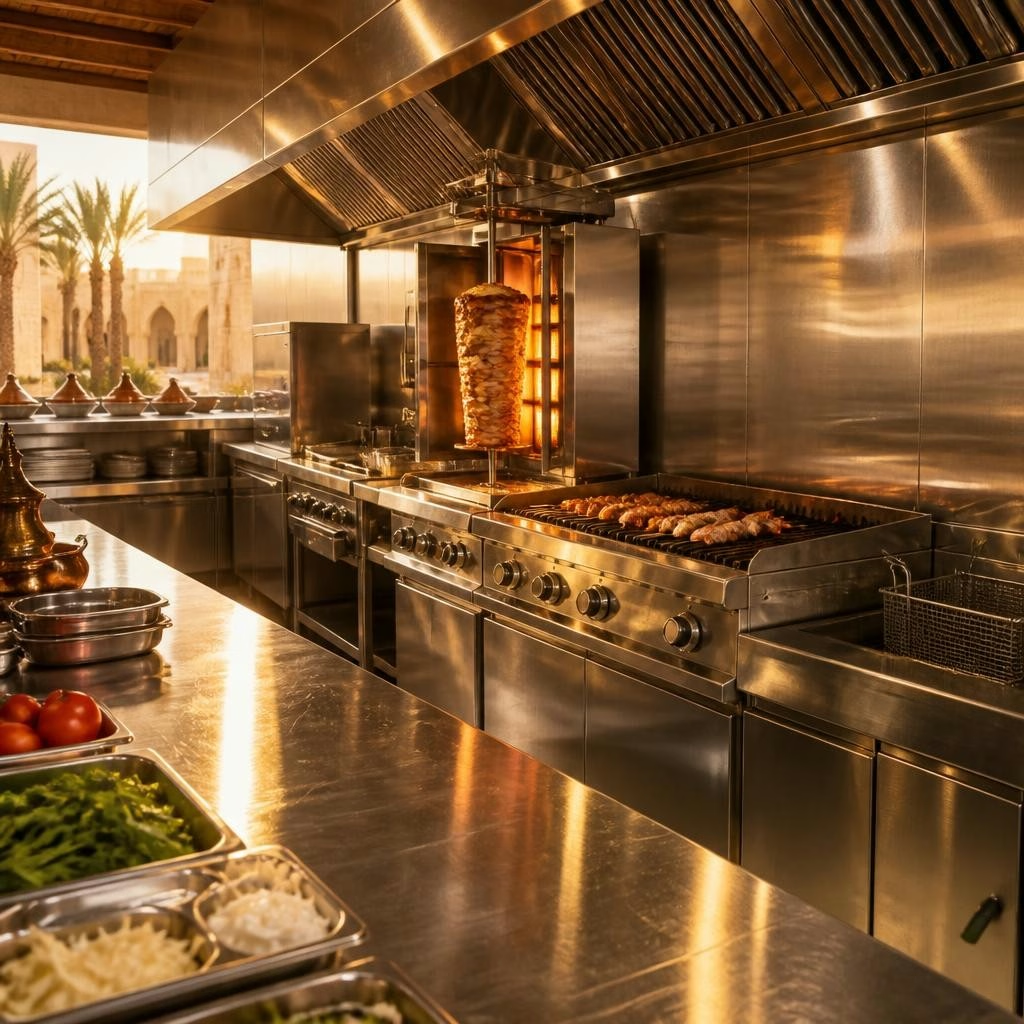
Why material choice matters for shawarma and grill concepts
Shawarma and grill kitchens subject equipment to intense, continuous heat, splattering oil and frequent, aggressive cleaning. Choosing stainless steel that tolerates these stresses is essential not only for safety and hygiene but for long‑term durability and predictable operating costs. The right combination of material, fabrication details and ventilation reduces downtime, simplifies cleaning and helps preserve finished food quality.
Key challenges in UAE commercial kitchens
In the UAE, high ambient temperatures and busy service periods increase thermal load on equipment; kitchens also face heavy use of oils and marinades that leave stubborn residues. Frequent chemical cleaning to maintain hygiene, plus hard water in some areas, can accelerate wear on poorly specified components. Selecting equipment with heat‑resistant construction and easy‑clean features mitigates these local challenges.
Stainless steel types and thickness — practical guidance
For food‑service surfaces, choose food‑grade austenitic stainless steels commonly used in commercial kitchens because of their corrosion resistance and heat performance. Equally important is material thickness: thicker gauge tops and structural members resist warping under heat and heavy loads. When comparing quotes, ask vendors for material grade and gauge, and for clarification about which parts use thicker or reinforced steel (worktops, frames, and oven surrounds) versus lighter sheet used for non‑structural panels.
Design features for heat resistance and cleaning
Look for welded, seamless worktops and fully finished undersides that prevent grease traps and bacterial harborage. Rounded corners and coved welds make wiping quicker and more effective than flat seams. Raised or integrated backsplashes protect walls from heat and splatter and are easier to clean. Consider worktops with integrated drainboards or fall to carry liquids away from cooking zones during washing.
What to require in hoods and surrounds
Hoods and surrounds over grills and rotisseries should use durable stainless liners and be designed for easy access to filters and baffles. Removable baffle filters simplify degreasing; smooth internal surfaces with accessible seams reduce buildup. Ensure the hood construction accounts for high heat exposure near open grills — liners and ducts should be specified for high temperature and frequent cleaning cycles.
Protecting equipment near open flames and rotisseries
Install heat shields and maintain appropriate clearances between heat sources and adjacent equipment to reduce direct thermal stress. For mounted controls and cabinetry near grills, prefer heat‑resistant components and ventilation gaps to avoid warping. Where rotisseries generate continuous radiant heat, select surrounds and supports designed to allow airflow and provide stable mounting for heavy, rotating loads.
Grease management and easy‑access cleaning
Effective grease management reduces fire risk and simplifies cleaning. Choose designs with removable drip trays and accessible grease collection points that can be emptied and washed without dismantling major equipment. For grills and fryers, look for components that can be lifted or slid out for deep cleaning, and ensure that grease lines or traps are accessible for routine maintenance.
Recommended cleaning practices for longevity
Adopt a cleaning schedule that balances daily wipe‑downs with deeper weekly and monthly procedures. Use non‑abrasive scouring pads and cleaners compatible with stainless steel; avoid chlorine‑based cleaners that can cause pitting. Regularly clean and degrease removable filters, drainboards and drip trays, and follow up with a neutral rinse and thorough drying. Periodic professional servicing — including checking welds, fastenings and passivation where applicable — preserves corrosion resistance.
What to ask suppliers and how SAS Kitchens aligns
When evaluating suppliers, request written details on material grade, gauge, weld finishes, removable components and hood filter design, and confirm whether installation and after‑sales support are included. One customer noted that the stainless steel equipment they received was top‑quality and built to last, and that the team was responsive and focused on customer satisfaction, underscoring the value of quality workmanship and service in real projects. Consider also asking about warranty coverage and practical examples of prior installations similar to your concept.
A practical pre‑purchase checklist and local support
Before placing an order, use a checklist: define peak cooking loads, list appliances that will sit on or near benches, confirm hood extraction capacity with your HVAC consultant, and ask for drawings showing clearances and service access. Confirm installation and commissioning timelines and whether the supplier provides on‑site training for staff. SAS Kitchens is based in Sharjah (Shop no 1‑3, Dar Al Khan Building) and supplies stainless steel commercial kitchen equipment across the UAE and neighbouring GCC markets; when choosing a local vendor, prioritize proven fabrication quality, timely delivery and reliable after‑sales support to keep your shawarma or grill concept running smoothly.
Customer review


Article by
SAS Kitchens - Commercial Kitchen Equipment
SAS Kitchens is a trusted provider of high-quality stainless steel commercial kitchen equipment in the UAE. We specialize in designing, manufacturing, and installing durable, high-performance kitchen solutions for restaurants, cafés, hotels, and food service businesses. With a focus on precision craftsmanship, functionality, and hygiene, our equipment is built to withstand the demands of professional kitchens. Our experienced team is committed to delivering reliable service, timely project execution, and tailored solutions that meet each client’s operational needs. At SAS Kitchens, customer satisfaction, product durability, and professional support are at the core of everything we do.