Choosing the Right Commercial Fryer and Ventilation Setup for Small Restaurants in Dubai
Practical guidance for new restaurant operators in Dubai on selecting fryer size, oil capacity, and a compatible exhaust hood to control smoke, meet safety expectations, and simplify daily cleaning — with contractor considerations for working with a local stainless‑steel equipment provider.

Why fryer and ventilation choices matter
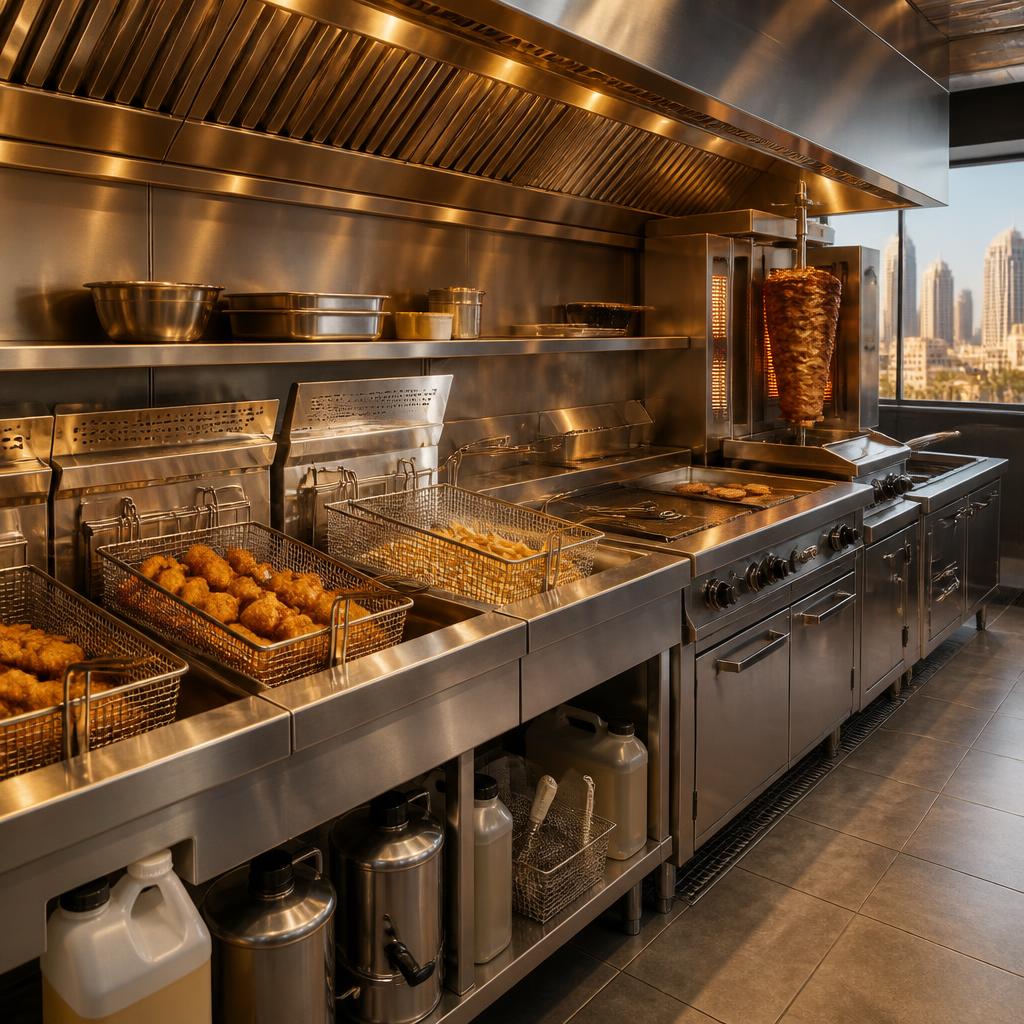
For shawarma stands, burger counters, and fried‑chicken concepts, the fryer and the ventilation system define kitchen performance, safety, and running costs. The right fryer supports consistent cook quality and throughput; the right hood controls smoke, grease, and kitchen heat. Planning both together from the start reduces retrofits, downtime, and cleaning burdens.
Start from your menu and expected volume
Begin by mapping what you will cook and the expected service pace. Menus focused on occasional fried items need a different solution than concepts where frying is the primary cook method. For small operations, consider fryers designed for frequent, smaller batches that are easy to filter and change oil in‑house. Match fryer selection to peak periods rather than average demand to avoid service bottlenecks.
Choosing fryer size and oil capacity (practical factors)
Select fryer size based on batch size, basket count, and how often you want to change oil. Smaller fryers are easier to maintain and heat faster, while larger units reduce cooking cycles but require more oil management. Prioritize fryers with simple-to-access oil filtration, robust stainless‑steel construction, and serviceable components — features that improve uptime and lower long‑term running costs.
Basket arrangement and kitchen workflow
Think about how basket configuration will affect speed and cross‑contamination. Multiple baskets let you cook varied items simultaneously and reduce wait times during peaks. Place fryers near work tables and holding equipment to streamline plating, and leave clearance around fryers for safe oil handling and cleaning. A clear workflow reduces accidents and makes daily cleaning faster.
Fuel type and temperature control considerations
Whether you choose electric or gas fryers depends on kitchen utilities, responsiveness, and operating costs. Precise temperature control is essential for consistent results and oil life — look for reliable thermostatic control and easy‑to‑service heating elements or burners. Because fuel availability and local regulations vary, confirm utilities and approvals before final selection.
Ventilation basics: capture, airflow, and makeup air
A properly designed hood captures steam, smoke, and grease at the source and vents it safely. Effective ventilation combines the hood canopy, grease filters, ductwork, exhaust fans, and adequate makeup air to replace exhausted volume. Insufficient makeup air can create negative pressure, pulling smoke into dining areas and stressing equipment; ventilation must be balanced for stable kitchen conditions.
Matching fryers to hood capacity and layout
Hoods should be sized for the heat and grease output of your cooking line. Factors include the number of fryer baskets, adjacent cook equipment, and hood capture zone. For small restaurants, a well‑designed canopy hood with quality grease filtration often provides adequate control when matched to exhaust capacity and duct routing. Engage a ventilation specialist to produce an equipment‑specific design rather than relying on generic rules.
Smoke, odour and grease control measures
Control smoke and odors through proper hood placement, high‑quality grease filters, routine filter cleaning, and correctly routed ductwork. Consider installing accessible grease traps and providing regular cleaning schedules for ducts and canopy interiors. These measures reduce fire risk, improve kitchen air quality, and make daily housekeeping more efficient.
Fire safety and compliance essentials
Fryers are a common ignition source; kitchens require appropriate fire protection, safe clearances, and staff training. Confirm local fire codes and required suppression systems with authorities and your installer. Regular inspection of gas connections, electrical supply, and grease accumulation in hoods and ducts is essential. Train staff on shut‑down procedures and safe oil handling to reduce risk.
Daily cleaning and routine maintenance tips
Establish straightforward daily and periodic tasks: skimming and filtering oil after service, scheduling oil changes, wiping down fryer exteriors, cleaning canopy filters, and inspecting vents for grease buildup. Keeping a simple log of service dates helps track oil life and filter maintenance. Routine care extends equipment life and improves food consistency.
What to ask your equipment supplier and installer
When selecting a supplier and installer, ask about their experience designing combined fryer‑ventilation systems, lead times, installation services, and availability of spare parts. Confirm whether they provide on‑site measurements, custom stainless‑steel fabrication, and after‑sales support for both cooking equipment and ventilation components. Also request references or examples of similar small restaurant projects to evaluate practical outcomes.
Working with SAS Kitchens: practical considerations
SAS Kitchens is a local provider of stainless‑steel commercial kitchen equipment and ventilation components that serves Dubai and other UAE areas from its Sharjah base. Many customers praise the company for quality equipment, timely execution, and helpful staff, which is important when coordinating fryer selection with hood design. When you consult with SAS Kitchens, bring your menu and projected service times so their team can recommend practical combinations, installation steps, and routine maintenance plans tailored to your concept.
Next steps for new operators
Plan the fryer and ventilation together early in design so equipment, ducting, and utilities align with local regulations and your service model. Schedule a site visit with your chosen supplier and ventilation specialist, document peak loads, and plan training and maintenance routines before opening. Thoughtful upfront planning reduces surprises, protects staff and customers, and helps small restaurants deliver consistent food quality and efficient daily operations.
Customer review


Article by
SAS Kitchens - Commercial Kitchen Equipment
SAS Kitchens is a trusted provider of high-quality stainless steel commercial kitchen equipment in the UAE. We specialize in designing, manufacturing, and installing durable, high-performance kitchen solutions for restaurants, cafés, hotels, and food service businesses. With a focus on precision craftsmanship, functionality, and hygiene, our equipment is built to withstand the demands of professional kitchens. Our experienced team is committed to delivering reliable service, timely project execution, and tailored solutions that meet each client’s operational needs. At SAS Kitchens, customer satisfaction, product durability, and professional support are at the core of everything we do.