Commercial Kitchen Equipment for Food Trucks and Kiosks in the UAE: Space‑Saving Stainless Steel Solutions, Power, and Safety
Practical guidance on selecting and fitting stainless steel commercial kitchen equipment into food trucks, kiosks and small mall units in the UAE, covering space‑saving layouts, power and gas options, ventilation and safety, and what to expect from a supplier.

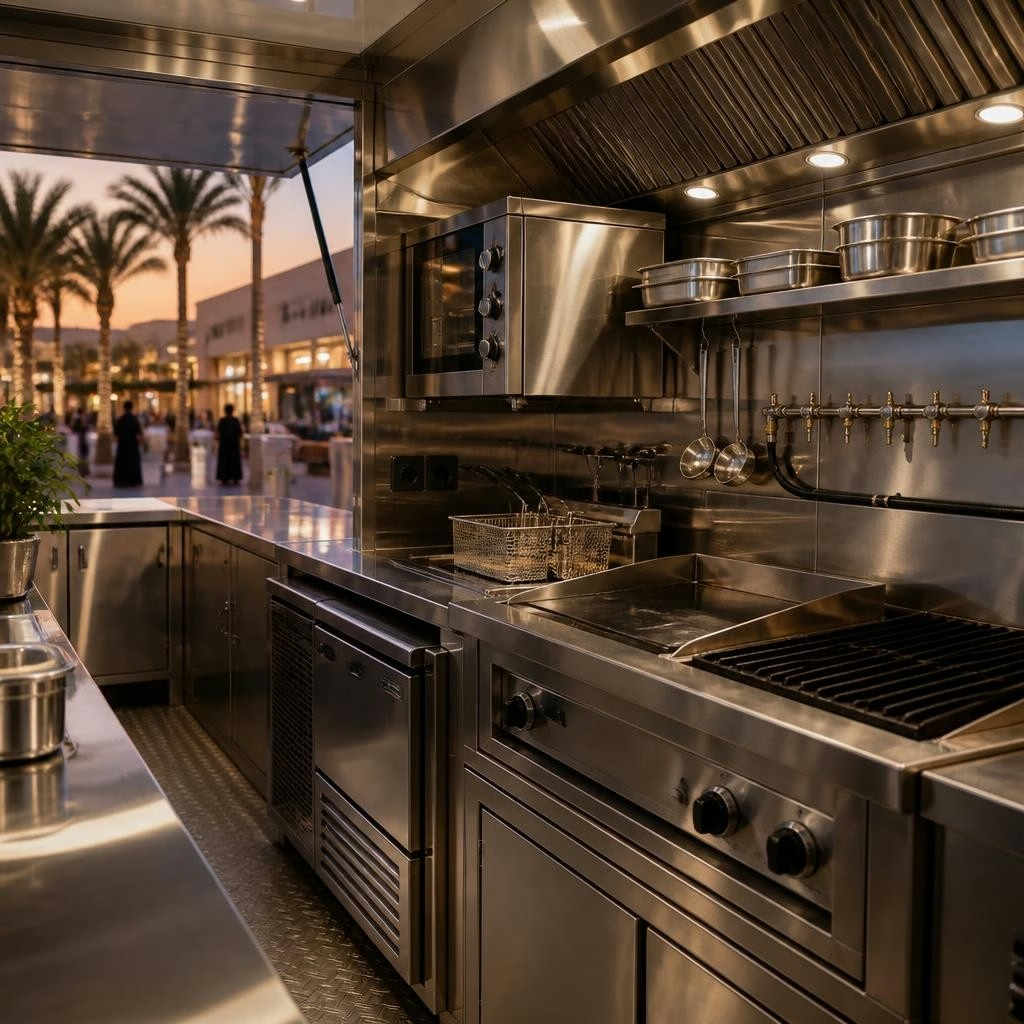
Introduction: Practical design for small food operations
Fitting full cooking functionality into a food truck, kiosk or compact mall unit requires careful choices about materials, equipment layout, power sources and safety. Stainless steel remains the preferred material for professional kitchens because it is durable, hygienic and easy to clean—qualities that make it especially suitable for mobile and confined operations. This article outlines practical, UAE‑relevant guidance to help operators and fit‑out teams plan efficient, safe and serviceable kitchens in tight footprints.
Why stainless steel works best in tight commercial kitchens
Stainless steel resists corrosion, tolerates frequent cleaning, and withstands high temperatures and heavy use. For mobile or small‑unit kitchens, it offers a slim profile, is relatively easy to fabricate to custom sizes, and integrates well with hygienic surfaces such as sinks and worktops. Many UAE food businesses choose stainless steel equipment for these durability and hygiene benefits, and because it can be manufactured and installed to match non‑standard spaces.
Space‑saving design strategies
Optimize every centimeter by working with modular and multi‑use components. Typical strategies include using combined cooktops and griddles, integrated under‑counter refrigeration, wall‑mounted shelving to free floor space, and custom stainless steel counters sized to the vehicle or kiosk footprint. Plan for access to service panels, and leave clearances for staff movement and safe operation. Where possible, design equipment to be removable or foldable for maintenance and transportation.
Choosing cooking power: gas, electric and induction options
Decide on cooking energy early in the design process. LPG or bottled gas is common for food trucks due to portability, but requires safe storage, certified regulators and leak detection. Electric and induction appliances simplify fuel handling and can be a good fit when reliable shore power is available at the site or mall unit. Each option affects ventilation needs, footprint, and the layout of utilities, so coordinate with your supplier and installer before finalizing plans.
Ventilation and fire safety essentials
Adequate ventilation is critical in compact kitchens. A properly sized extraction hood and filtered airflow help remove heat, grease and fumes—reducing discomfort and fire risk. For mobile units, ensure the hood and exhaust system are suitable for the chosen cooking equipment and that routing does not compromise vehicle structure. Install appropriate fire suppression or extinguishers rated for kitchen use, and include gas leak detection where LPG is used. Regular checks and maintenance are important to keep systems effective.
Layout and workflow: designing for speed and hygiene
A tight footprint must still support a logical workflow: receiving/prep, cooking, plating and service, with sanitation points accessible throughout. Place cold storage close to prep areas, position hot equipment so staff avoid crossing paths, and keep dedicated hand‑wash facilities within sight of the cooking line. Stainless steel partitions, counters and shelving can help separate tasks while maintaining easy cleanability.
Essential equipment checklist for food trucks and kiosks
Focus on durable, modular items that fit the space: stainless steel worktops and under‑counter storage, compact sinks with drainage, wall shelving, refrigerated counters or small upright fridges, compact cooking units (grill, fryer or induction range chosen to match power supply), and service counters. Consider lightweight stainless frames and removable panels to reduce weight and simplify cleaning. Tailor the list to your menu and staffing to avoid unnecessary appliances.
Installation, delivery and after‑sales considerations
Small kitchens benefit from suppliers who can design, fabricate and install equipment to non‑standard dimensions and who understand mobile or kiosk constraints. Look for clear timelines for delivery and installation, and confirm post‑sale support and warranty coverage. Customers commonly value prompt delivery and responsive service when setting up time‑sensitive operations; working with a provider that coordinates installation and handover will reduce downtime and help meet opening deadlines.
Selecting a supplier in the UAE and the wider region
Choose a supplier experienced in stainless steel commercial equipment and local regulations. Practical indicators include proven installation work for restaurants and cafés, familiarity with UAE site requirements, transparent communication, and available after‑sales support. Customers in the UAE have noted the importance of timely delivery, competitive pricing and responsive teams when commissioning commercial kitchen equipment—factors that can be decisive for small operators on tight schedules.
Next steps: planning your fit‑out and who to involve
Begin by documenting your available footprint, menu needs, expected daily output and utility access (electric, gas, water, drainage). Share those details with an equipment designer who can propose stainless steel solutions that maximize space and meet safety requirements. Arrange a site visit and ask for a layout drawing, equipment list and installation timeline. Confirm maintenance and warranty terms before signing. With careful planning and the right partner, a compact food truck or kiosk can deliver full‑scale cooking performance in a small, efficient package.
Customer review


Article by
SAS Kitchens - Commercial Kitchen Equipment
SAS Kitchens is a trusted provider of high-quality stainless steel commercial kitchen equipment in the UAE. We specialize in designing, manufacturing, and installing durable, high-performance kitchen solutions for restaurants, cafés, hotels, and food service businesses. With a focus on precision craftsmanship, functionality, and hygiene, our equipment is built to withstand the demands of professional kitchens. Our experienced team is committed to delivering reliable service, timely project execution, and tailored solutions that meet each client’s operational needs. At SAS Kitchens, customer satisfaction, product durability, and professional support are at the core of everything we do.