Commercial Kitchen Ventilation Basics for New Operators in Fujairah and Ras Al Khaimah
A practical introduction to exhaust hoods, canopies, ventilation components, and maintenance considerations to help restaurant and hotel operators in Fujairah and Ras Al Khaimah plan safer, cleaner, and more efficient kitchen ventilation systems.
Why ventilation matters for new commercial kitchens
Proper ventilation is one of the most important investments a restaurant or hotel kitchen can make. A well‑designed system removes smoke, cooking odours, grease and excess heat; improves staff comfort and food‑safety hygiene; and reduces the risk of grease buildup that can create fire and maintenance problems. For operators opening in Fujairah or Ras Al Khaimah, understanding basic ventilation principles helps you plan equipment, layout and ongoing maintenance from day one.
Core components of a commercial ventilation system
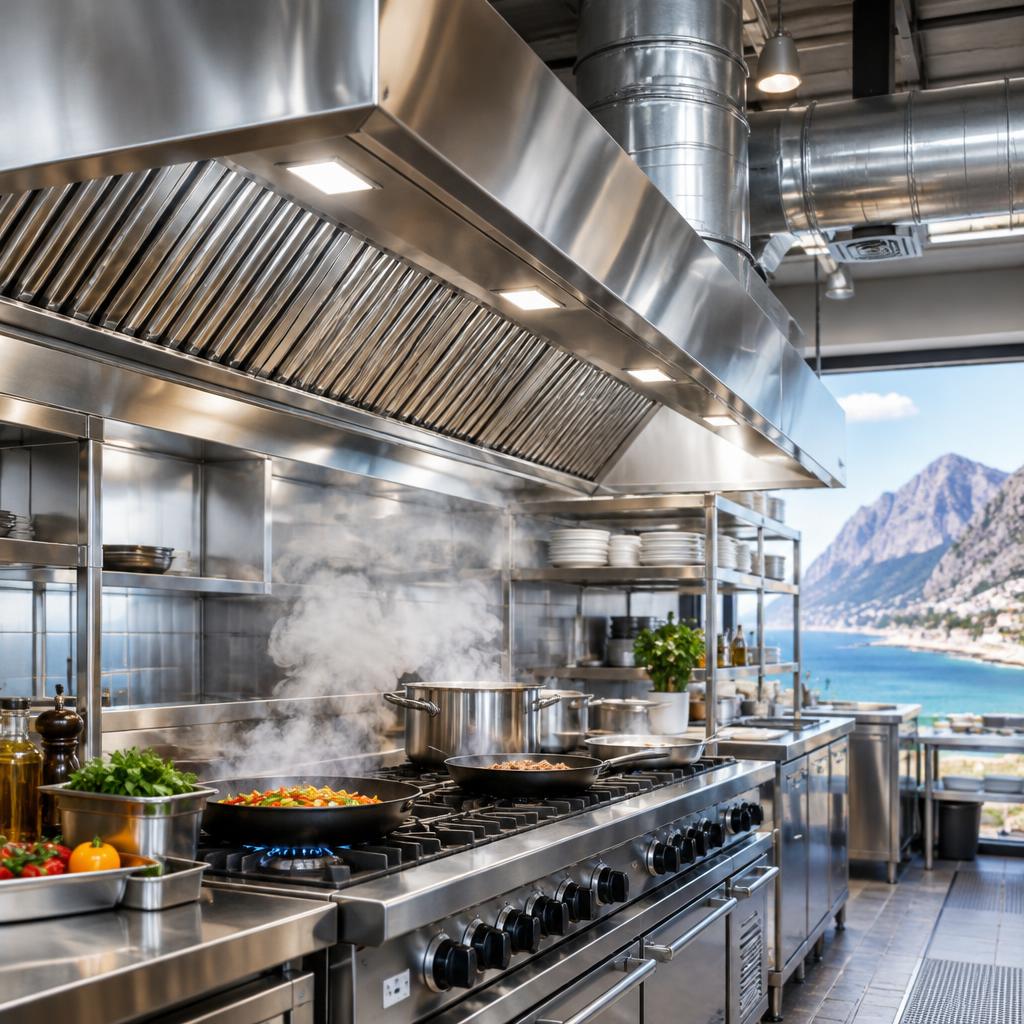
A commercial kitchen ventilation system is a collection of coordinated parts: exhaust hoods and canopies placed over cooking appliances, exhaust fans and motors, ductwork, filters and grease extractors, and supply or make‑up air to replace exhausted air. Ventilation components also include silencers, dampers and access points for cleaning. Choosing robust components and planning access for service are essential for long‑term reliability.
Types of exhaust hoods and where they fit
Common hood styles include wall‑mounted hoods, island hoods for central cook lines, and canopy hoods that cover lengthy cooking lines. The right hood type depends on your kitchen layout and the appliances beneath it. Hoods are designed to capture and contain cooking effluent immediately above the source, so selecting the proper style and size for your cooking line is a priority during design.
Sizing and airflow fundamentals (what to ask a designer)
Rather than focusing on single numbers, new operators should understand the concepts of capture, containment and airflow balance. A system must provide sufficient exhaust near the cooking source and balanced make‑up air so staff do not feel drafts. During equipment selection and layout, ask your designer about capture performance for your actual appliances, how duct routing affects airflow, and provisions for future capacity increases. SAS Kitchens and other professional fabricators can design, manufacture and install systems tailored to your cooking profile and kitchen layout.
Placement, layout and coordination with other trades
Hoods must be positioned directly over cooking appliances and integrated with ductwork routing, gas lines, electrical services and fire‑safety systems. Early coordination with the construction team, mechanical contractors and local authorities prevents costly rework. Plan for clear access to filters, grease collection points and fan units to make scheduled cleaning straightforward and safe.
Material choices for coastal and mountain locations
In coastal and exposed mountain environments, material durability is a central concern. Stainless steel fabrication is commonly used in commercial kitchens because it resists corrosion, is easy to clean and withstands heavy daily use. For operators in Fujairah’s coastal areas or elevated locations in Ras Al Khaimah, specifying corrosion‑resistant finishes and planning routine inspections reduces long‑term degradation from salt, humidity or abrasive dust.
Routine maintenance and why it pays off
A ventilation system’s performance depends on regular cleaning and maintenance: scheduled filter changes, removal of grease from hoods and ducts, fan inspections and monitoring of exhaust airflow. Routine service reduces fire risk, maintains energy efficiency and extends equipment life. Many customers emphasize the value of reliable after‑sales support and warranties when choosing suppliers—look for partners who offer clear maintenance plans and responsive service to keep your system working as designed.
Compliance, permits and safety considerations
Ventilation systems must meet local building and fire safety requirements. New operators should obtain the necessary permits and confirm requirements for fire suppressions, clearances, and duct routing with local authorities or an accredited consultant. While ventilation fabricators supply and install hoods and components, coordination with fire‑safety and mechanical specialists ensures full compliance and safe operation.
Challenges specific to Fujairah and Ras Al Khaimah
Operators in Fujairah and Ras Al Khaimah can face unique environmental factors: salt air and humidity near the coast, and windblown sand or dust in exposed areas. These conditions increase the need for corrosion‑resistant materials, tighter seals, and more frequent maintenance intervals. Climate‑aware design choices—such as protected fan locations, easy access for cleaning, and suitable material selection—help maintain performance under local conditions.
Selecting a local partner and next practical steps
When you are ready to specify or upgrade kitchen ventilation, choose a partner experienced in design, stainless steel fabrication and local installation. SAS Kitchens provides design, manufacture and installation of exhaust hoods, canopies and ventilation components across the UAE, including service to Fujairah and Ras Al Khaimah. Many operators value suppliers who combine durable stainless steel fabrication, professional project execution and dependable delivery. Start with a site survey to evaluate your cooking profile and layout, request a documented ventilation plan that includes access and maintenance points, and agree a schedule for installation and post‑installation servicing.
Article by
SAS Kitchens - Commercial Kitchen Equipment
SAS Kitchens is a trusted provider of high-quality stainless steel commercial kitchen equipment in the UAE. We specialize in designing, manufacturing, and installing durable, high-performance kitchen solutions for restaurants, cafés, hotels, and food service businesses. With a focus on precision craftsmanship, functionality, and hygiene, our equipment is built to withstand the demands of professional kitchens. Our experienced team is committed to delivering reliable service, timely project execution, and tailored solutions that meet each client’s operational needs. At SAS Kitchens, customer satisfaction, product durability, and professional support are at the core of everything we do.