Common Mistakes in GCC Commercial Kitchen Installations — And How to Avoid Them
Practical guidance for restaurant, café and hotel operators in the UAE and wider GCC on frequent design and installation errors — from wrong equipment sizing to poor maintenance access — and clear steps to prevent them with experienced suppliers.

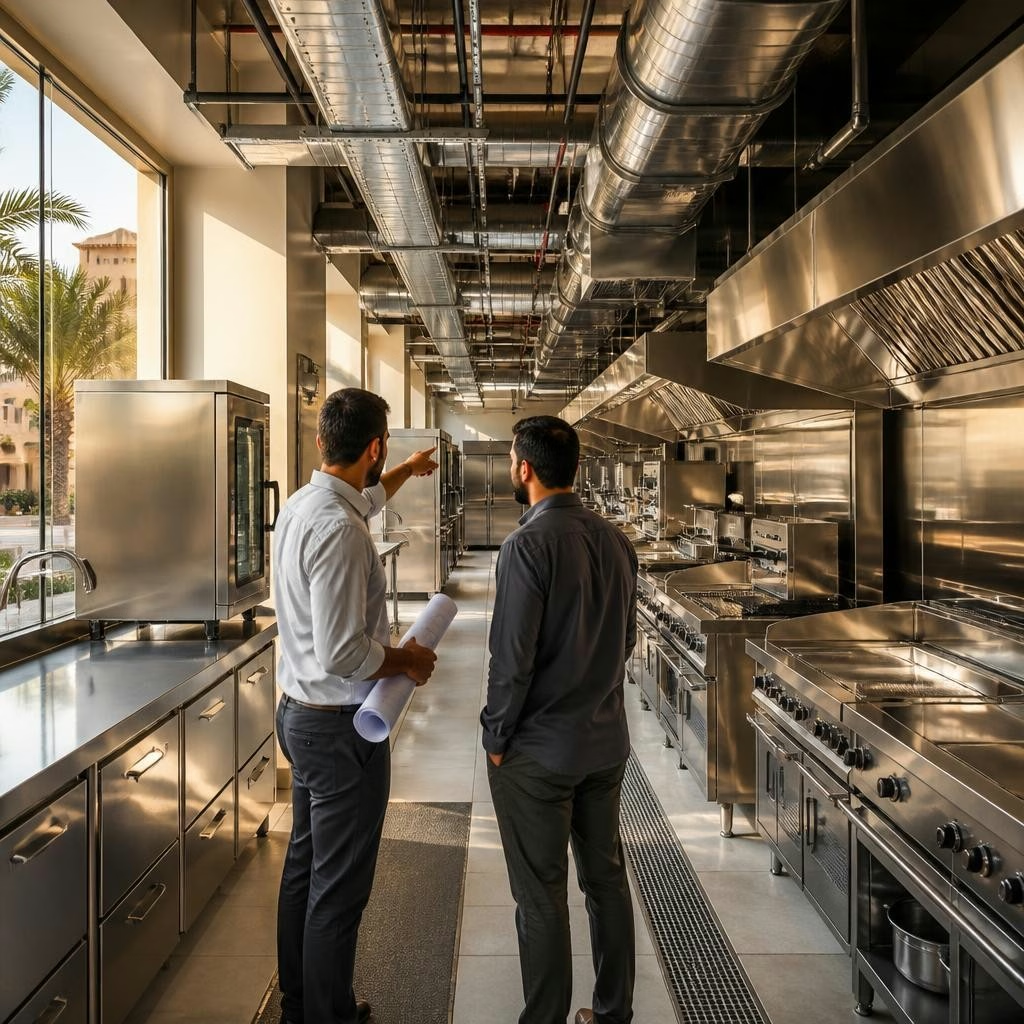
Why getting installations right matters in the GCC
Commercial kitchens in the GCC face particular operational demands: high customer volumes, hot ambient conditions, and strict hygiene expectations. Mistakes at the design or installation stage have long-term consequences for performance, operating costs and staff safety. Careful planning and working with suppliers who understand regional constraints reduces rework, downtime and costly retrofits.
Start with an accurate project scope and site survey
A common early mistake is proceeding with vague requirements. Installers and owners should agree a clear scope that covers menu, peak service volumes, required production lines, storage needs and service schedules. Conducting a thorough on-site survey — measuring clearances, door swings, delivery access and existing utility locations — prevents surprises during installation. Formal design documentation and a staged approval process keep expectations aligned.
Wrong equipment sizing and capacity planning
Selecting undersized or oversized equipment undermines efficiency and increases costs. Undersized equipment causes bottlenecks during peak service; oversized machines waste space and energy. Avoid this by basing equipment capacity on realistic daily throughput, peak covers per hour and menu mix. Where uncertainty exists, choose modular or scalable solutions so capacity can be increased without a full replacement.
Inefficient layout and poor workflow
A layout that ignores kitchen flow leads to congestion, longer service times and higher staff fatigue. Common layout mistakes include mixing incompatible zones, insufficient pass-through areas, and placing heavy-use equipment in narrow aisles. Plan for clear zones (receiving, prep, cooking, plating, wash), unobstructed circulation, ergonomic workstation heights, and appropriate shelving near points of use to speed service and reduce cross-traffic.
Neglecting ventilation, extraction and heat management
Ventilation is frequently underestimated, especially in hot climates. Insufficient hood capacity, poorly sized ductwork or inadequate make-up air cause heat buildup and can affect appliance performance. Ensure hood and extraction designs follow manufacturer requirements, allow access for filter cleaning, and coordinate with HVAC engineers for make-up air and conditioned staff areas. Designs that facilitate routine filter and fan maintenance keep systems operating effectively.
Inadequate utilities: water, drainage, gas and electrical provisioning
Utility failures are a common cause of delays and unsafe conditions. Mistakes include under-rated gas lines, undersized electrical circuits, insufficient hot water capacity and poor drainage slopes. Carry out MEP load calculations early, locate shutoffs and isolation valves for key equipment, and allow spare capacity for future expansion. Coordinate routing and access points so connections are straightforward at installation time.
Poor access for maintenance and cleaning
Kitchens are sustained by repeatable maintenance. A frequent installation mistake is denying technicians access to serviceable components — welded-in units, blocked panels or inaccessible filters. Design equipment with removable panels, clear service clearances and easily replaceable consumables. Clarify warranty terms and after-sales response expectations up front; many operators value suppliers who offer reliable post-sale support and warranty handling.
Choosing low-quality materials or poor fabrication
Material quality directly affects durability and hygiene. For stainless-steel worktops, cabinets and fabrication, attention to thickness, surface finish and weld quality matters. Inferior fabrication can warp, corrode or trap food debris. Specify commercial-grade stainless steel and inspect welds, joints and drainage fall during installation. Using proven fabrication partners reduces the risk of premature wear and simplifies cleaning routines.
Overlooking hygiene, waste handling and safety details
Small oversights compound into health and safety risks. Mistakes include inadequate sink layouts, lack of designated dishwashing flow, insufficient waste segregation areas and slippery floor finishes. Ensure proper separation between raw-food prep and ready-to-serve areas, adequate handwashing stations at convenient points, and floor slopes that support draining. Planning for grease traps and accessible waste collection points keeps operations compliant and more hygienic.
How to avoid these mistakes: a practical checklist and supplier selection tips
Avoiding installation pitfalls comes down to process and partners. Use a checklist that includes: defined menu and throughput targets; completed site survey; MEP load calculations; equipment capacity sheets and clearances; hood, duct and HVAC coordination; maintenance access and spare-parts planning; and formal handover with training. Work with suppliers who build, install and commission equipment and who have a track record of timely project completion, clear communication and dependable after‑sales support. In the UAE market, many customers emphasize the value of honest project execution, on-time delivery and post-sale warranty assistance when choosing a kitchen-equipment partner. When these elements are in place, projects finish on schedule and kitchens perform reliably from day one.
Article by
SAS Kitchens - Commercial Kitchen Equipment
SAS Kitchens is a trusted provider of high-quality stainless steel commercial kitchen equipment in the UAE. We specialize in designing, manufacturing, and installing durable, high-performance kitchen solutions for restaurants, cafés, hotels, and food service businesses. With a focus on precision craftsmanship, functionality, and hygiene, our equipment is built to withstand the demands of professional kitchens. Our experienced team is committed to delivering reliable service, timely project execution, and tailored solutions that meet each client’s operational needs. At SAS Kitchens, customer satisfaction, product durability, and professional support are at the core of everything we do.