Designing an Efficient Dishwashing and Waste Area for Busy UAE Kitchens
Practical guidance on planning sink lines, choosing and positioning dishwashers, organising waste sorting, and using stainless‑steel worktables to keep busy restaurant and café cleaning zones fast, hygienic, and reliable during peak service.

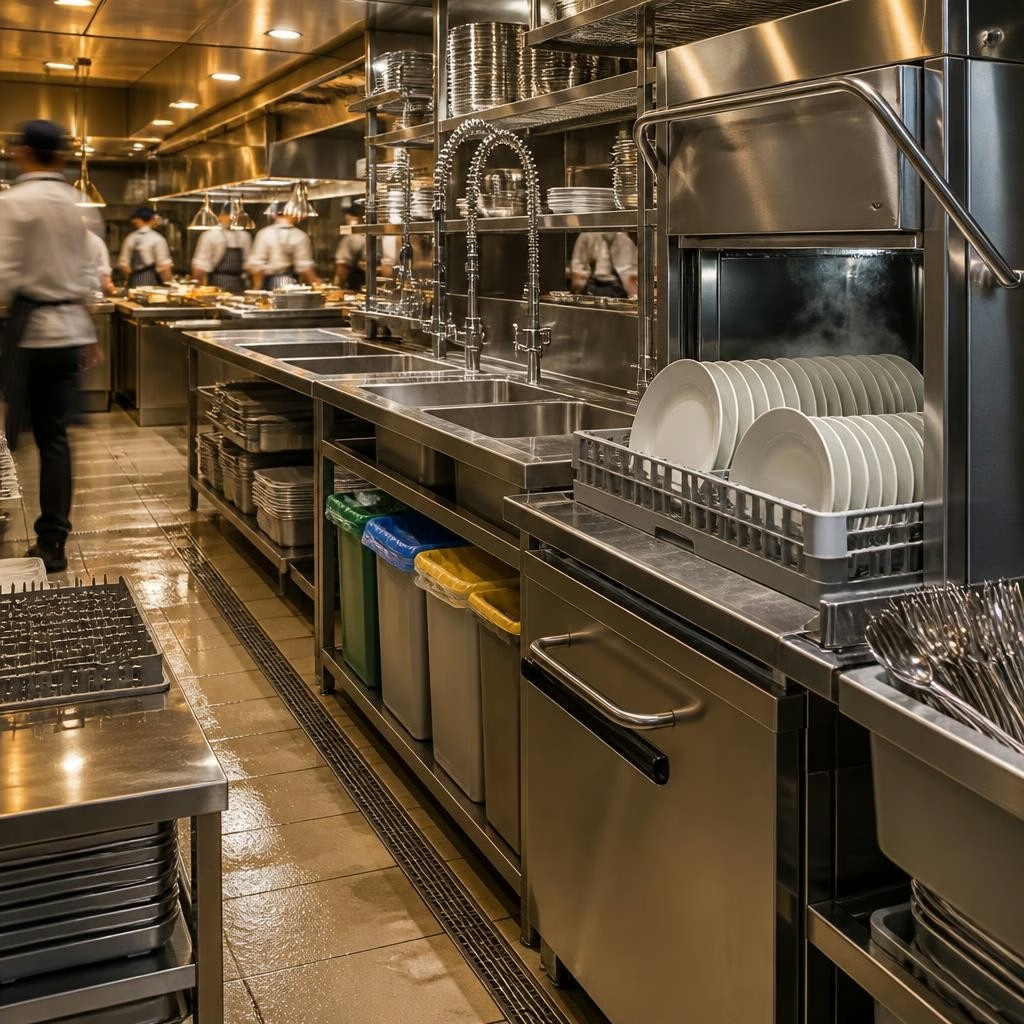
Why a dedicated dishwashing and waste zone matters
In high‑volume foodservice operations a properly designed dishwashing and waste area preserves service speed, reduces cross‑contamination risk, and protects staff safety. When sinks, dishwashers, worktables and waste stations are arranged to support a single, continuous workflow, turnover times fall and back‑of‑house congestion is minimised—critical during lunch and dinner peaks in UAE restaurants, cafés and hotels.
Design the workflow first: three clear zones
Start with a simple rule: separate dirty, cleaning, and clean zones. The dirty zone receives used plates and glassware; the cleaning zone contains sinks and dishwashers; the clean zone holds drying racks and storage for sanitized items. Orient the layout so items move forward only—no backtracking. Allow a clear path for bussing staff and for waste removal so housekeeping tasks don’t cross the washing line.
Sink lines: practical configurations for throughput
A robust sink line is the backbone of the washing zone. Typical setups include a pre‑rinse or scraping station followed by a three‑compartment sink for wash, rinse and sanitise, plus a dedicated hand‑wash basin. Size sinks to match expected load: wider, deeper bowls reduce splash and speed handling. Ensure adequate adjacent bench space for staging and scraping so staff can work ergonomically without crowding the dishwasher.
Integrating commercial dishwashers effectively
Place the commercial dishwasher between the pre‑wash and clean staging area so items enter from the dirty side and exit directly to drying or shelving. Consider throughput (racks per hour), service access for maintenance, and utility requirements—adequate water volume, temperature control and drainage. Provide a short run of stainless‑steel table immediately after the washer for draining and inspection so items are ready for immediate use or storage.
Stainless‑steel tables and shelving: durability and hygiene
Stainless‑steel worktables and shelving create hygienic, long‑lasting surfaces suited to constant wet use. Use tables with adjustable feet for correct working height and clearance for cleaning beneath. Specify closed or semi‑open undershelves depending on storage needs; slatted or removable shelving makes cleaning easier. Because SAS Kitchens specialises in manufacturing and installing stainless‑steel commercial equipment, consider customised table lengths and integrated splashbacks to match your workflow and available space.
Waste sorting and grease management
Design waste stations near, but not inside, the washing line to keep odours and pests away from clean items. Provide clearly labelled bins for general waste, recyclable packaging, and food organics, and allow space for temporary holding of separated waste. Plan for a grease interception strategy: allocate space and access for a grease trap or interceptor outside the washing area and ensure routing of wastewater meets your local waste‑collection and health regulations.
Plumbing, drainage and floor finishes
Good drainage prevents standing water and simplifies cleaning. Floors should slope gently to floor drains with sealed, accessible drains for routine flushing. Choose non‑slip, durable floor finishes that tolerate frequent washing; use coved wall‑to‑floor junctions for hygienic cleaning. Coordinate plumbing and drain locations early so sinks, dishwashers and floor drains align and reduce the need for later retrofits.
Ventilation, lighting and ergonomic details
Adequate ventilation reduces steam build‑up and improves staff comfort in intensive washing areas. Provide bright, shadow‑free lighting over sink lines and worktables for safe, accurate inspection of cleaned items. Smaller ergonomic choices—anti‑fatigue mats at workstations, single‑lever hands‑free taps, and correct workbench heights—reduce fatigue and speed handling during busy shifts.
Maintenance, cleaning routines and service support
Design for maintainability: choose equipment with easy access panels, removable filters, and smooth stainless surfaces that resist corrosion. Establish simple daily, weekly and monthly cleaning checklists (e.g., filter cleaning, drain flushing, visual inspection of seals). Customers often value reliable after‑sales support and warranty coverage when equipment is under heavy use; for example, one customer commented that the stainless‑steel equipment was built to last and that the team was responsive and supportive after installation. When planning, confirm what maintenance, warranty and spare‑parts support a supplier provides.
A practical checklist and working with a specialist
Checklist before finalising a design: estimate peak racks/hour, map a forward‑flow layout, identify sink and dishwasher footprints, plan waste sorting locations, ensure plumbing and electrical capacities, and specify stainless‑steel table dimensions and finishes. SAS Kitchens offers design, manufacture and installation of stainless‑steel commercial solutions and can provide a site survey and tailored layout to fit your space and throughput. Their Sharjah location and regional service presence mean they can work with operators across the UAE to deliver project‑oriented solutions that prioritise durability, hygiene and timely execution.
Customer review


Article by
SAS Kitchens - Commercial Kitchen Equipment
SAS Kitchens is a trusted provider of high-quality stainless steel commercial kitchen equipment in the UAE. We specialize in designing, manufacturing, and installing durable, high-performance kitchen solutions for restaurants, cafés, hotels, and food service businesses. With a focus on precision craftsmanship, functionality, and hygiene, our equipment is built to withstand the demands of professional kitchens. Our experienced team is committed to delivering reliable service, timely project execution, and tailored solutions that meet each client’s operational needs. At SAS Kitchens, customer satisfaction, product durability, and professional support are at the core of everything we do.