Equipping a Hotel or Staff Canteen in Abu Dhabi: Capacity, Workflow and Hygiene for Stainless‑Steel Kitchens
Practical guidance for hotels and staff accommodations in Abu Dhabi on sizing cooking, prep and washing areas, selecting durable stainless‑steel solutions, and maintaining a hygiene‑focused workflow for large headcounts.

Why thoughtful kitchen design matters for hotels and staff canteens
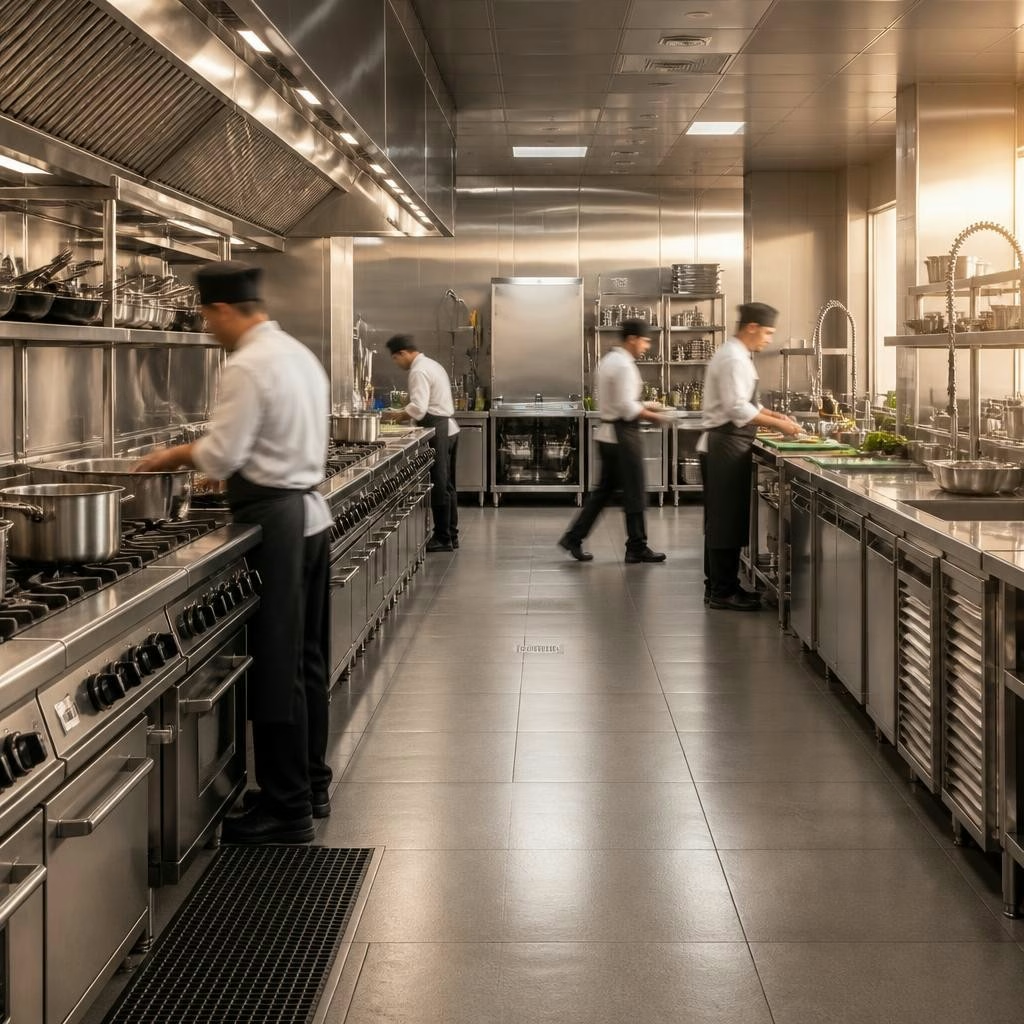
A well‑designed commercial kitchen balances capacity, safety and hygiene while supporting efficient service during peak meal periods. For hotels and staff accommodations in Abu Dhabi, kitchens must reliably handle large, repeating headcounts and comply with local food safety expectations. Durable stainless‑steel fabrications, functional layouts, and straightforward cleaning regimes reduce downtime, improve food safety, and extend equipment life.
Start by defining headcount and meal profile
Begin with realistic daily and peak figures: number of diners per meal, busiest hour throughput, and menu complexity. A staff canteen with steady, predictable service needs a different balance of cooking and holding capacity than a hotel kitchen serving banquets and à la carte dining. Map typical meal windows (breakfast, lunch, dinner, shifts) and estimate peak covers per hour to set capacity targets for burners, griddles, ovens and hot‑holding.
Sizing the core cooking line for reliability
Design the cooking line to match peak throughput rather than average service. Allow redundancy so breakdowns don’t halt service: multiple burners or modular cooktops, backup oven space, and adequate extraction. Stainless‑steel worktops and supports withstand heavy use and frequent cleaning, while modular units make repairs and replacement faster—important for uninterrupted hotel operations.
Designing prep and cold stations for speed and hygiene
Separate raw preparation, vegetable/fruit prep, and plating areas to prevent cross‑contamination. Provide ample stainless steel benching with integrated splashbacks, refrigerated counters for cold ingredients, and designated allergen or pastry zones if needed. Layout prep areas to minimise travel between cold storage, prep benches and the cooking line to keep food at safe temperatures and speed up service.
Planning washing and sanitation areas effectively
A dedicated dishwashing and potwashing bay should be sized for peak dish volume and include pre‑wash, mechanical washing and drying/stacking zones. Stainless‑steel sinks and drainage tables resist corrosion and facilitate high‑temperature wash cycles. Position the washing area so soiled traffic does not cross food prep flows, and include space for waste segregation and temporary storage of chemical and cleaning supplies.
Material choices: why stainless steel is the practical standard
Stainless steel is preferred in professional kitchens for its durability, heat resistance and hygienic surface characteristics. It tolerates frequent cleaning with high‑temperature water and approved detergents, resists staining and corrosion, and maintains structural integrity under heavy loads. For hotel and canteen environments, specifying grade and surface finish appropriate to the intended use helps balance cost and longevity.
Organising staff flow and operational zones
Design distinct circulation routes for hot food, clean dishware and soiled items to reduce cross‑traffic. Define clear staff responsibilities and station assignments that mirror physical zones—prep, cook, plating, service and cleaning. Efficient pass‑throughs between cooking and service, and adequate service counters, reduce bottlenecks and speed up handoffs during service surges.
Hygiene practices to integrate into the kitchen design
Incorporate features that simplify compliance with hygiene protocols: smooth, coved stainless‑steel junctions; adequate handwashing stations; clear separation of raw and ready‑to‑eat zones; and easy access for deep cleaning. Provide proper ventilation and adequate lighting, and plan for routine maintenance access to equipment to support regular sanitisation without disrupting operations.
Project delivery: timelines, installation and after‑sales support
A reliable supplier should offer design, manufacture and installation services tailored to your schedule. Plan for delivery and installation windows that avoid service interruptions, and confirm warranty and maintenance pathways in advance. Many customers report positive experiences with timely delivery and responsive after‑sales support; one recent customer specifically noted that staff were professional and attentive during the project, which helps ensure smooth execution and handover.
Budgeting, durability and long‑term value
Investing in robust stainless‑steel solutions typically reduces lifecycle costs by lowering repair frequency and simplifying cleaning. When budgeting, prioritise equipment and zones that directly affect throughput and hygiene—cookline durability, adequate refrigeration, and an efficient washing bay. Request transparent proposals that itemise supply, installation and any maintenance or warranty inclusions so you can compare long‑term value, not just upfront price.
Next steps when planning a kitchen in Abu Dhabi
Start with a site assessment that captures peak covers, menu needs and building constraints. Work with a supplier experienced in stainless‑steel commercial kitchens to develop a layout that meets capacity and hygiene goals while fitting operational workflows. Confirm delivery and installation timing that align with your opening or renovation schedule, and ensure clear lines for post‑installation support to keep the kitchen running reliably.
Customer review


Article by
SAS Kitchens - Commercial Kitchen Equipment
SAS Kitchens is a trusted provider of high-quality stainless steel commercial kitchen equipment in the UAE. We specialize in designing, manufacturing, and installing durable, high-performance kitchen solutions for restaurants, cafés, hotels, and food service businesses. With a focus on precision craftsmanship, functionality, and hygiene, our equipment is built to withstand the demands of professional kitchens. Our experienced team is committed to delivering reliable service, timely project execution, and tailored solutions that meet each client’s operational needs. At SAS Kitchens, customer satisfaction, product durability, and professional support are at the core of everything we do.