From Sketch to Installation: What to Expect When Custom‑Building a Commercial Kitchen in Sharjah
A step‑by‑step guide for restaurant and foodservice owners in Sharjah that explains the stages of a custom commercial kitchen project, what decisions you’ll make, and how to prepare your site for a smooth delivery and installation by SAS Kitchens.

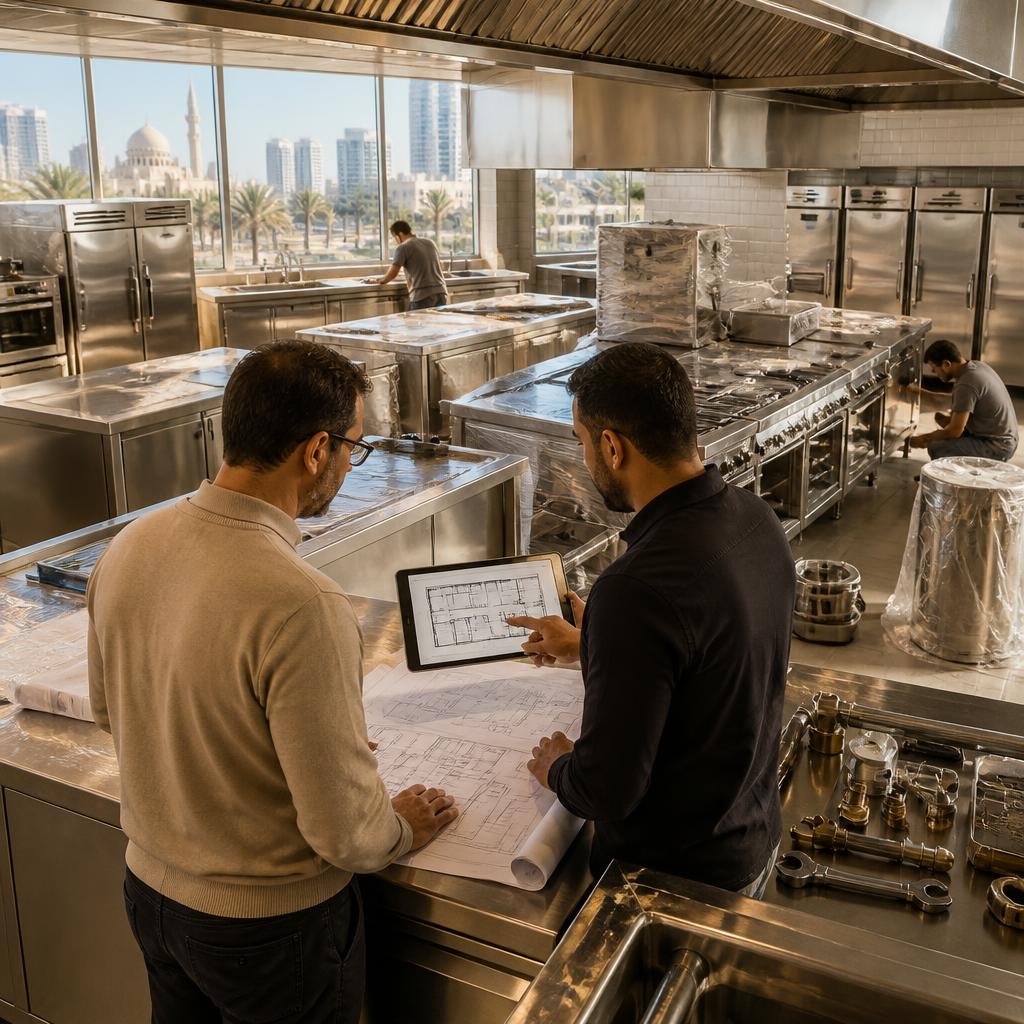
Why plan a custom commercial kitchen?
A well planned, custom commercial kitchen supports workflow, safety, and long‑term durability. For cafés, restaurants, hotels and other foodservice businesses, purpose‑built stainless steel equipment and layouts reduce downtime and simplify cleaning. Working with a specialist who designs, fabricates, and installs—such as a Sharjah‑based team—helps align equipment selection, site constraints, and operational needs from the start.
Initial consultation: defining scope and priorities
The project typically begins with an initial consultation to define your operational goals: expected covers per service, menu needs, high‑use stations (e.g., fry, grill, prep), and budget priorities. At this stage you and the design team agree a scope—what equipment is required, which items will be custom built, and whether you need integrated cabinets, shelving, or worktops in stainless steel. Clear priorities at this stage speed later decisions and reduce revisions.
Site survey and critical measurements
A thorough site survey is essential. The team will verify floor plan dimensions, ceiling heights, doorways and corridor widths, and the location of utilities (electrical risers, gas lines, water supply and drainage, and ventilation openings). You can prepare by clearing the area, providing access to utility drawings if available, and identifying a staging zone for deliveries. Noting any structural constraints or access limits early avoids surprises during delivery and installation.
2D layout, workflow planning and approvals
Designers produce a 2D layout that places equipment for efficient workflow, safety and compliance with local regulations. Expect an iterative process: you’ll review placements, suggest adjustments to suit staff movement and service flow, and confirm the equipment list. If your project requires municipal permits or landlord approvals, gather those requirements early—your project lead can advise what documentation will be needed for sign‑off.
Material choices and customization
For commercial kitchens, stainless steel is the industry standard for durability and hygiene. During design you’ll choose grades and finishes appropriate for different items—heavy‑duty fabrication for cooking lines, hygienic finishes for prep surfaces, and reinforced constructions for high‑use cabinets. Custom sizing or integrated solutions (e.g., undercounter cabinets, fitted ventilation hoods) are finalized before fabrication to ensure parts fit perfectly on site.
Fabrication and quality checks
Once designs are approved, fabrication begins in the workshop. Skilled metalworkers cut, weld and finish components to match the approved drawings. Quality checks at this stage focus on fit, finish, weld quality, level surfaces, and corrosion‑resistant finishes. Your project manager should share progress updates and confirm any minor changes before items leave the workshop so delivery and installation proceed without delays.
Delivery logistics: preparing the site
Coordinate delivery windows to minimize disruption. Confirm access routes, loading zones, and whether special lifting equipment will be required for large items. On delivery day, secure a clear, protected path from the vehicle to the installation area and ensure staff are available to receive and sign for equipment. Protective floor coverings and temporary barriers help prevent damage to the site during installation.
On‑site installation and coordination with trades
Installation brings the fabricated equipment into final position and involves plumbing, gas, electrical connections and ventilation integration. It’s common for the installation team to coordinate with your electricians, plumbers and HVAC contractors—each trade must complete its work in sequence for a safe commissioning. Expect final leveling, anchoring, and sealing; the installer will confirm utilities are connected and safe before testing begins.
Testing, commissioning and handover
After installation the team performs operational tests to ensure equipment heats, drains and ventilates correctly. Minor adjustments and alignment are completed, and the installer will walk you through operating controls, routine cleaning points, and recommended maintenance practices. Many customers appreciate a clear handover that includes a demonstration and a checklist of items completed—this reduces questions when the kitchen opens for service.
Tips for a smooth project and what other customers notice
To keep a project on track: confirm the scope and sign‑off process early, maintain open communication with your project manager, and prepare the site as advised during the survey. Customers frequently highlight timely completion and honest communication as key measures of success—one recent client specifically noted that their project was completed as agreed and on time. SAS Kitchens operates from Sharjah (Shop no 1‑3, Dar Al Khan Building) and supports clients across the UAE and the Gulf region, offering design, fabrication and installation of stainless steel commercial equipment along with ongoing support after handover.
Customer review


Article by
SAS Kitchens - Commercial Kitchen Equipment
SAS Kitchens is a trusted provider of high-quality stainless steel commercial kitchen equipment in the UAE. We specialize in designing, manufacturing, and installing durable, high-performance kitchen solutions for restaurants, cafés, hotels, and food service businesses. With a focus on precision craftsmanship, functionality, and hygiene, our equipment is built to withstand the demands of professional kitchens. Our experienced team is committed to delivering reliable service, timely project execution, and tailored solutions that meet each client’s operational needs. At SAS Kitchens, customer satisfaction, product durability, and professional support are at the core of everything we do.