How Professional Stainless Steel Kitchen Equipment Improves Food Safety Audit Outcomes in the UAE
Practical guidance on how the right stainless steel worktops, cabinets, and washing stations help UAE food businesses pass hygiene inspections, with concrete design and maintenance recommendations.

Introduction: Why equipment matters in food safety audits
Food safety auditors evaluate both process and physical conditions. In the UAE, inspectors look for evidence that surfaces, storage, and cleaning systems reduce contamination risks and can be maintained in a hygienic state. Professional-grade stainless steel equipment is not just about longevity and appearance—when specified and installed correctly it directly affects how smoothly an inspection proceeds and whether noncompliance issues are raised.
Stainless steel: the practical advantage for hygiene
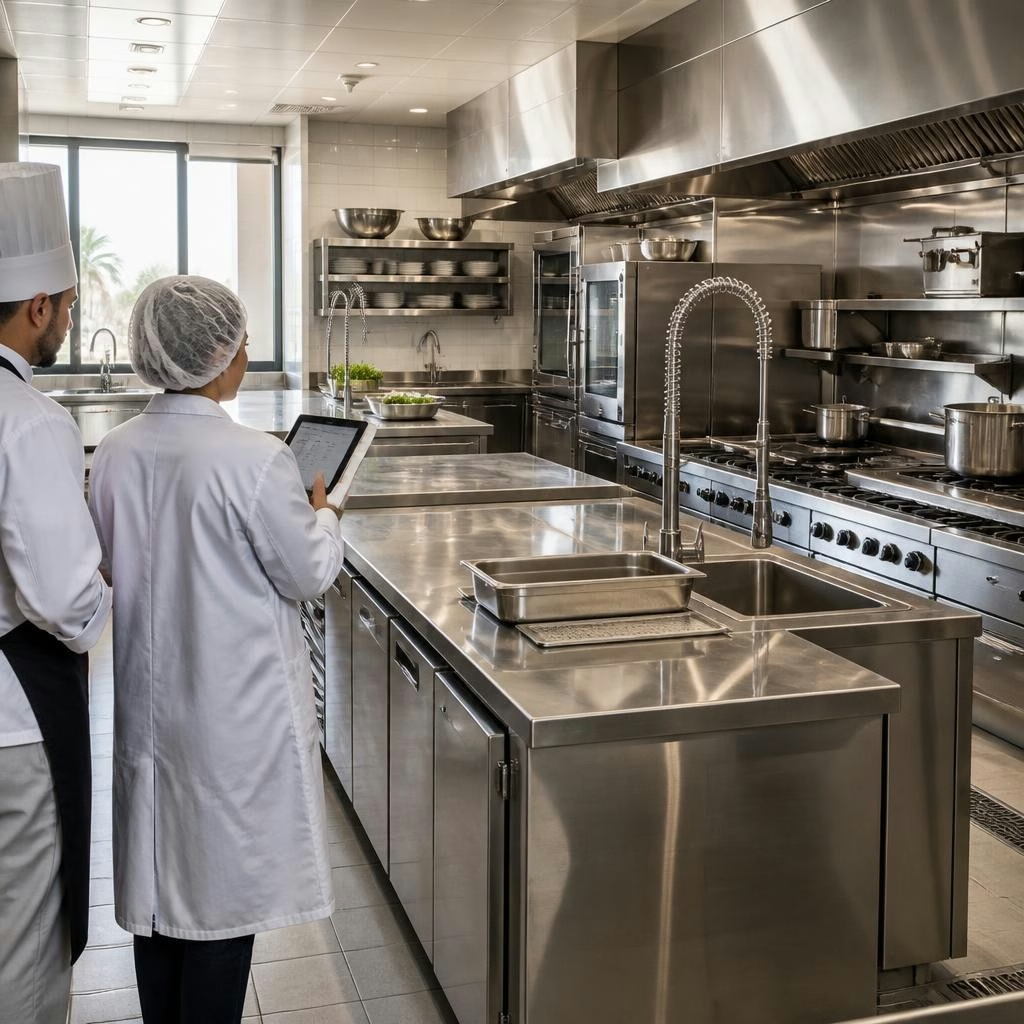
Stainless steel is widely used in commercial kitchens because it is non-porous, resists corrosion when maintained, and tolerates frequent cleaning with approved sanitizers. Smooth, properly finished stainless surfaces reduce places where bacteria and food residues collect. For audit purposes, a visibly clean and intact stainless surface demonstrates good hygiene practice in a way many other materials cannot.
Worktop and cabinet design details auditors look for
Auditors pay attention to seams, joints, and edges. Design decisions that help include welded or tightly sealed joins instead of butt joints, rounded or hemmed edges to eliminate sharp crevices, continuous backsplash joints sealed to the wall, and adjustable legs that allow floor cleaning underneath. Cabinets with removable trays or pull-out shelves allow inspectors to check for pests and buildup; closed cabinetry keeps supplies protected from splash contamination when used correctly.
Washing stations and drainage: reducing cross‑contamination
Properly designed sinks and washing stations are a focal point during audits. Recommended features include integrated drainboards with adequate slope to channel water toward drains, rounded internal corners for easier cleaning, and splash guards where washing touches adjacent food-prep areas. Ensuring drain traps are accessible and that drains are free-flowing helps demonstrate control over standing water, a common audit finding.
Material finish and accessibility for cleaning
The finish of stainless steel affects cleanability. A smooth, satin or brushed finish hides fewer micro-crevices than poorly finished metal. Equally important is access: equipment should be installed with enough clearance for cleaning around, under, and behind units, or be mounted on removable stands. Surfaces that can be disassembled for periodic deep cleaning make it easier to show inspectors a documented cleaning regime.
Layout and workflow to prevent contamination
Equipment choice is one part of compliance—layout is another. Separating raw-food preparation areas from ready-to-eat stations, placing dishwashing and hand‑washing stations away from food-prep lines, and using dedicated stainless steel benches for specific tasks reduce cross-contamination risk. Auditors commonly assess traffic flow and whether equipment placement supports hygienic operations.
Installation, durability and the role of maintenance records
Correct installation ensures that equipment performs as intended during inspections. Durable stainless fittings that resist warping and corrosion reduce the chance of audit findings tied to damaged surfaces. Keeping maintenance and service records—logbooks for cleaning, scheduled repairs, and warranty actions—provides auditors with evidence that the business actively manages equipment condition. Recent customer feedback highlights quick delivery, reliable workmanship, and warranty availability as factors that help operators maintain inspection-ready facilities.
A concise pre-audit checklist operators can use
Before an audit, walk through these checks: confirm all stainless surfaces are free of rust and food residue; verify seams and edges are sealed; ensure drains and traps are clean and accessible; check that hand-wash stations are stocked and unobstructed; confirm storage areas are closed or covered and show no signs of pest activity; review maintenance logs and supplier contacts for recent repairs. These practical checks focus on the tangible items auditors verify on-site.
How a specialist equipment provider supports compliance
Partnering with a supplier who designs, manufactures, and installs stainless steel solutions helps align equipment decisions with audit expectations. A specialist can advise on welded joins, suitable finishes, and cabinetry that supports cleaning regimes. Customer reviews for local providers emphasize helpful, responsive teams and equipment built to last—qualities that make it easier for operators to maintain hygienic conditions between inspections.
Practical next steps for UAE food businesses
Start by auditing current equipment against the checklist above and identify the highest-risk areas (sinks, prep counters, and storage). Where replacement or modification is needed, prioritize stainless surfaces with sealed joins and accessible drainage. Keep clear service and cleaning records, and work with manufacturers or installers who provide installation support and post‑sale assistance. For businesses in Sharjah and across the UAE, choosing durable, well‑designed stainless steel solutions reduces audit friction and supports ongoing food safety compliance.
Customer review


Article by
SAS Kitchens - Commercial Kitchen Equipment
SAS Kitchens is a trusted provider of high-quality stainless steel commercial kitchen equipment in the UAE. We specialize in designing, manufacturing, and installing durable, high-performance kitchen solutions for restaurants, cafés, hotels, and food service businesses. With a focus on precision craftsmanship, functionality, and hygiene, our equipment is built to withstand the demands of professional kitchens. Our experienced team is committed to delivering reliable service, timely project execution, and tailored solutions that meet each client’s operational needs. At SAS Kitchens, customer satisfaction, product durability, and professional support are at the core of everything we do.