How to Plan a Central Production Kitchen to Supply Multiple Branches in the UAE
A practical guide for multi‑outlet food brands on designing a central production kitchen: capacity planning, stainless‑steel equipment choices, workflow layout, packing and dispatch areas, and working with a reliable supplier in the UAE and the Gulf.

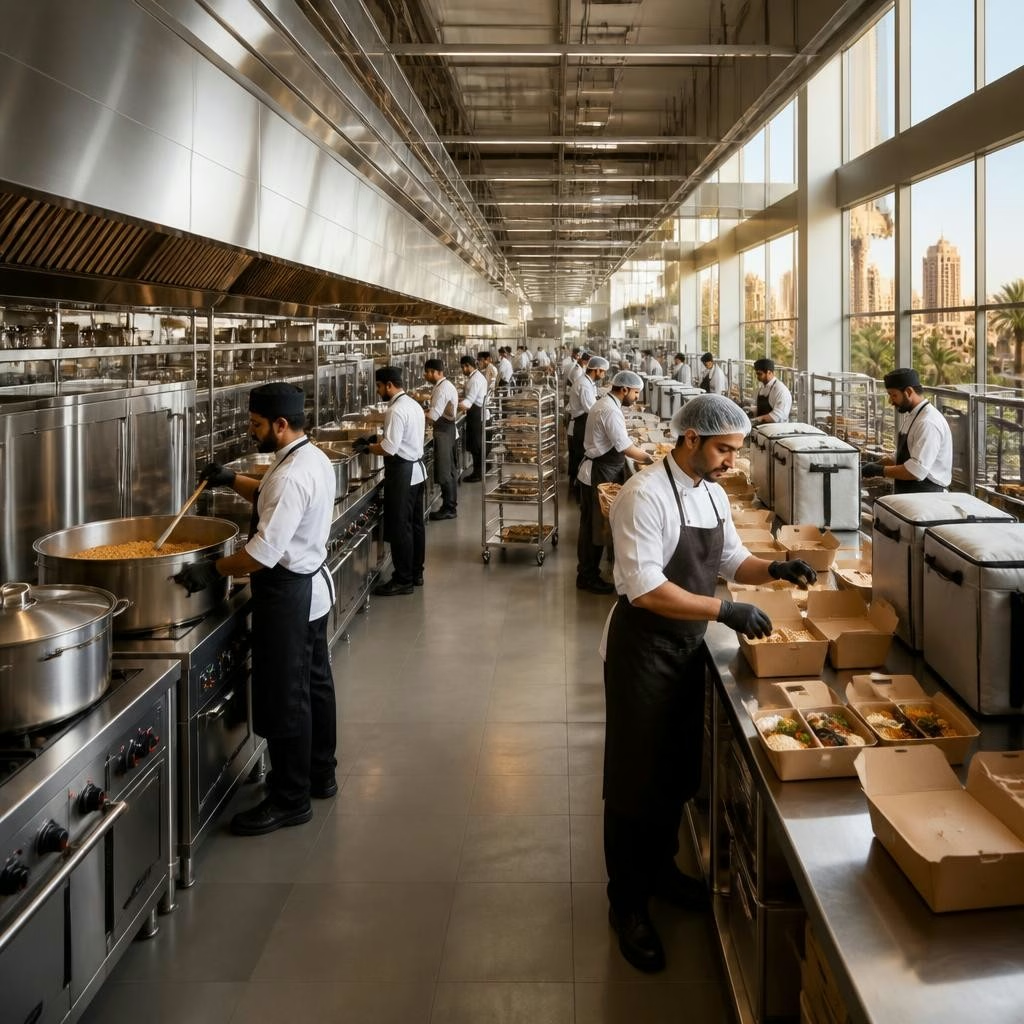
Why a Central Production Kitchen?
A central production kitchen (CPK) consolidates bulk cooking, portioning and packaging for multiple outlets. For brands with two or more branches, a CPK can improve consistency, reduce unit food costs, centralize quality control and simplify staffing. In the UAE market, where scale and rapid service expectations are high, planning a CPK helps brands standardize recipes, streamline procurement and free individual outlets to focus on service and front‑of‑house operations.
Start with Demand and Capacity Forecasting
Begin by mapping current and projected demand from each branch. Use sales history, menu mix and peak‑period estimates to determine daily and hourly throughput requirements. Identify items suitable for central production (sauces, par‑cook items, baked goods, plated components) versus items that must be finished at each outlet. Leave capacity buffers for promotions, seasonality and growth. This data drives kitchen footprint, equipment sizing and staffing levels.
Zone Your Layout for Efficient Workflow
Organize the CPK into clear zones to minimize cross‑traffic and contamination: receiving and goods in, dry and cold storage, preparation and portioning, cooking and holding, cooling/blast chilling, packaging, and dispatch. Design a linear flow from raw ingredients to finished goods. Position hand‑wash stations, waste points and QA sampling stations at strategic points. A well‑zoned layout reduces handling time, improves hygiene and speeds throughput.
Choose Heavy‑Duty Stainless‑Steel Equipment for High Capacity
For central kitchens, prioritize robust stainless‑steel equipment built for continuous use. Typical pieces to consider include large‑capacity convection or combi ovens, steam kettles, high‑output ranges or griddles, industrial fryers, planetary mixers, high‑volume slicers and dough handling equipment where relevant. Stainless‑steel worktables, shelving, sinks and cabinets provide durable, easy‑to‑clean surfaces. When selecting equipment, focus on reliability, serviceability and the ability to integrate into production lines or packing stations.
Cold Chain and Storage Strategy
An effective cold chain is critical. Specify adequate walk‑in coolers and freezers with proven temperature stability, shelving configured for FIFO (first in, first out), and, where needed, blast chillers to rapidly reduce product temperature before packaging. Allocate separate cold zones for raw ingredients, in‑process items and finished goods to prevent cross‑contamination. Consider pallet and racking arrangements that match delivery vehicle loading patterns to speed dispatch.
Designing a Packaging and Dispatch Area
The packaging and dispatch zone should support fast, ergonomic workflows. Provide dedicated packing benches, heat/hot‑holding cabinets or insulated hot boxes for immediate dispatch, scale and labeling stations, and a QA checkpoint to verify orders. Include packing materials storage and an area for assembling multi‑branch delivery manifests. Where distribution covers multiple emirates, plan for temperature‑controlled vehicle handover and efficient loading docks sized for your fleet.
Hygiene, Cleaning and Maintenance Planning
Select stainless‑steel finishes and equipment layouts that simplify cleaning and sanitation. Implement a documented cleaning schedule, clear responsibilities, and routine equipment maintenance plans to reduce downtime. Many customers value supplier after‑sales support and warranty coverage when equipment is under constant use; when evaluating vendors, confirm availability of spare parts, routine service options and response times to keep production running reliably.
Logistics and Distribution Considerations in the UAE
Distribution in the UAE and across neighbouring Gulf markets requires careful timing and route planning to avoid peak traffic and meet branch opening windows. Choose insulated or refrigerated vehicles sized to your typical loads, and plan delivery runs to minimize trip times while maintaining the cold chain. Establish clear SOPs for drivers and receiving staff at branches (temperature checks, delivery documentation, and handling instructions) to ensure product quality on arrival.
Working with an Equipment Partner
Partnering with a supplier experienced in commercial stainless‑steel kitchens helps translate operational needs into practical equipment and layout plans. Look for partners who design, manufacture and install stainless‑steel solutions and who can coordinate project timelines and site work. Many clients report positive experiences when suppliers deliver durable equipment, timely installations, reasonable pricing and responsive customer support—factors that reduce risk during commissioning and scale‑up.
Practical Checklist and Next Steps
Before you commit, complete a concise checklist: 1) confirm demand projections and menu items to centralize; 2) develop a schematic layout with distinct zones; 3) specify high‑capacity stainless‑steel equipment and cold‑chain assets; 4) design a packing and dispatch workflow that matches your distribution model; 5) establish cleaning, maintenance and QA procedures; and 6) select a supplier capable of design, manufacturing and installation. After planning, run a pilot production day to validate timings, refine staffing, and adjust equipment or packing needs before full rollout.
Article by
SAS Kitchens - Commercial Kitchen Equipment
SAS Kitchens is a trusted provider of high-quality stainless steel commercial kitchen equipment in the UAE. We specialize in designing, manufacturing, and installing durable, high-performance kitchen solutions for restaurants, cafés, hotels, and food service businesses. With a focus on precision craftsmanship, functionality, and hygiene, our equipment is built to withstand the demands of professional kitchens. Our experienced team is committed to delivering reliable service, timely project execution, and tailored solutions that meet each client’s operational needs. At SAS Kitchens, customer satisfaction, product durability, and professional support are at the core of everything we do.