How to Size Commercial Refrigeration for Cafés and Juice Bars in Sharjah
Practical guidance for café and juice bar owners in Sharjah on choosing undercounter, upright, or display chillers and freezers, estimating storage needs, and planning energy-efficient kitchen layouts.

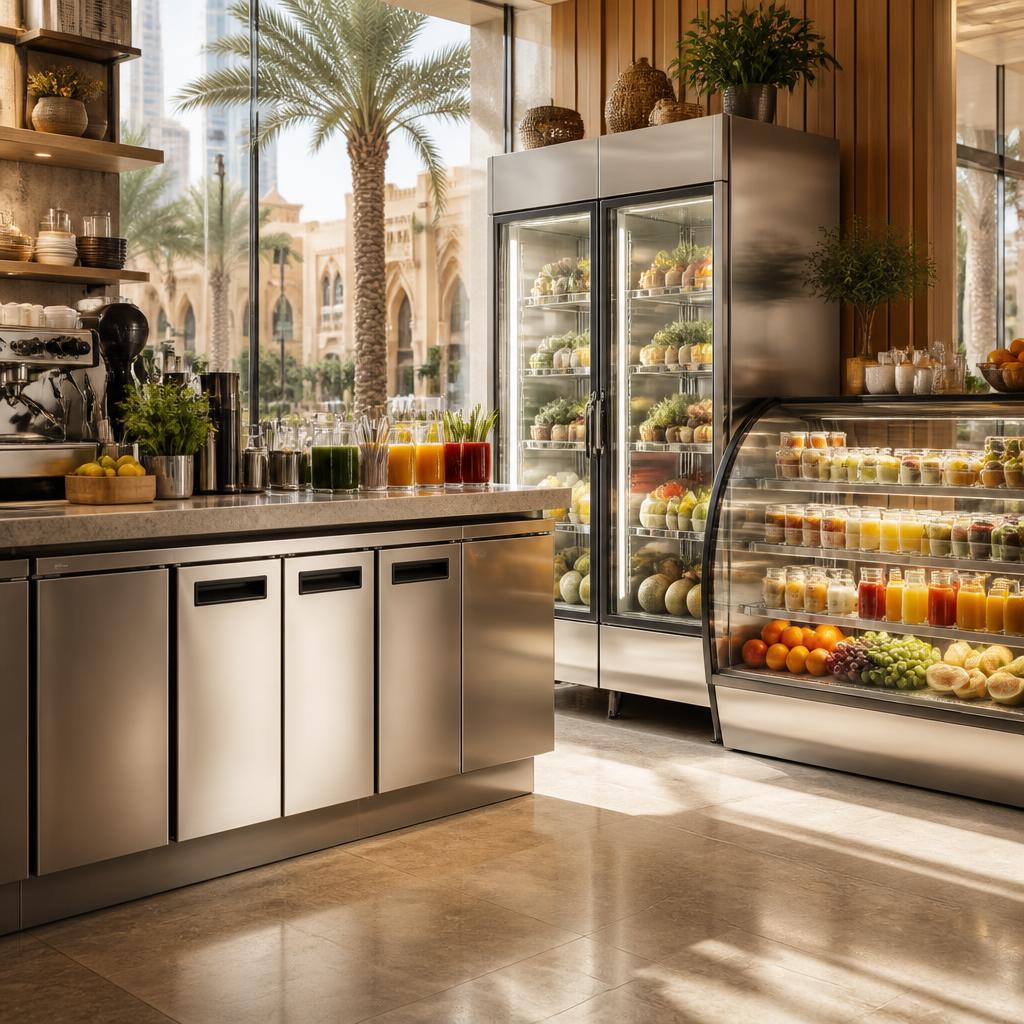
Why correct refrigeration sizing matters
Choosing the right refrigeration for a café or juice bar affects food safety, product quality, operating costs, and service speed. Undersized equipment leads to product shortages, temperature fluctuations, and heavier wear; oversized equipment increases capital and energy costs. This article explains practical steps to select between undercounter, upright, and display units, how to estimate storage volume, and layout considerations relevant to Sharjah outlets.
Understand the three common refrigeration types
There are three refrigeration types most relevant to cafés and juice bars: undercounter chillers and freezers (compact units placed beneath counters), upright chillers and freezers (tall storage units with larger capacity), and display refrigeration (transparent-fronted chillers for ready-to-sell items). Each type serves different operational roles — preparation, bulk storage, and merchandising — and choosing the right mix helps balance accessibility, inventory control, and energy use.
When to choose undercounter chillers
Undercounter chillers are ideal for tight workstations where staff need rapid access to ingredients — for example, fresh fruit tubs, milk, and garnishes used during preparation. They reduce steps during service, help maintain speed at the counter, and keep the front-of-house tidy. Select undercounter units when bench space is available, daily turnover is high, and you need chilled ingredients within arm’s reach rather than bulky storage.
When to choose upright chillers and freezers
Upright units are best for bulk storage of inventory that does not require constant front-of-house access: bottled beverages, reserve fruit stock, bulk dairy, frozen sorbets, or backup supplies. They offer larger volume and better organization for multiple product types. Choose upright refrigeration when you need longer storage times, clearer inventory segmentation, and the ability to hold a week’s worth of stock or to accommodate larger deliveries.
When to choose display chillers
Display refrigeration is a merchandising tool as well as storage. Use display chillers for grab-and-go bottled drinks, prepared salads, or chilled desserts that benefit from visibility. Consider glass-fronted units when impulse purchases form a meaningful share of revenue. Keep in mind that display units often face frequent door openings and higher ambient heat loads, so plan capacity accordingly.
Step-by-step: estimating storage needs
Estimate storage needs by working from your menu and expected daily volumes. Start with projected daily sales per item, then calculate required chilled inventory as: daily usage × safety buffer (commonly one to two days for fast-moving goods). Convert item quantities into volume or shelf space by checking supplier packaging dimensions. Sum the volumes and allocate space by use: immediate prep (undercounter), bulk reserve (upright), and merchandising (display). Allow additional capacity for delivery cycles, seasonal peaks, and small growth over time.
Account for Sharjah conditions and energy efficiency
Sharjah’s warm climate increases refrigeration load from frequent door openings and warm ambient temperatures. To reduce energy consumption and maintain internal temperatures: place refrigeration away from direct sunlight and heat sources, use energy-efficient models with good insulation and variable compressors where possible, and ensure display units have night covers if they remain stocked after hours. Planning for ventilation and preventing heat buildup around compressors is essential to preserve performance and lower running costs.
Layout and workflow integration
Design refrigeration placement to support the service flow: position undercounter units at preparation stations, upright storage near receiving areas or back-of-house, and displays close to customer circulation. Keep a clear path for deliveries and ensure that refrigeration doors do not block service zones when opened. Also plan for adequate clearance around units for ventilation and maintenance access; cramped installations reduce equipment life and complicate repairs.
Maintenance, hygiene, and supplier support
Regular maintenance preserves efficiency and reduces downtime: schedule condenser cleaning, gasket inspection, and temperature log checks. Choose equipment with accessible components and consider spare parts availability. Customer feedback for local suppliers often highlights the value of responsive service and warranties; one customer review specifically praised friendly, humble service and a good purchasing experience. When evaluating vendors, confirm after-sales support and parts availability for your chosen models.
Practical checklist and next steps
Before you buy: 1) List menu items and estimate daily volumes. 2) Allocate item storage between undercounter, upright, and display units. 3) Measure available space and check clearance for ventilation and doors. 4) Consider energy-efficient features and placement away from heat sources. 5) Ask suppliers about lead times, warranty, and local maintenance. If you need help converting menu volumes into equipment capacity or planning a kitchen layout for Sharjah, consult commercial kitchen specialists who supply undercounter chillers, upright cabinets, and display refrigeration suitable for cafés and juice bars.
Customer review


Article by
SAS Kitchens - Commercial Kitchen Equipment
SAS Kitchens is a trusted provider of high-quality stainless steel commercial kitchen equipment in the UAE. We specialize in designing, manufacturing, and installing durable, high-performance kitchen solutions for restaurants, cafés, hotels, and food service businesses. With a focus on precision craftsmanship, functionality, and hygiene, our equipment is built to withstand the demands of professional kitchens. Our experienced team is committed to delivering reliable service, timely project execution, and tailored solutions that meet each client’s operational needs. At SAS Kitchens, customer satisfaction, product durability, and professional support are at the core of everything we do.