Selecting Meat Processing Equipment for Butcher Counters and Meat‑Heavy Restaurants in Sharjah
Practical guidance for choosing commercial slicers, mincers, and mixers that boost speed, safety, and hygiene for butcher counters and meat-focused restaurants operating in Sharjah.

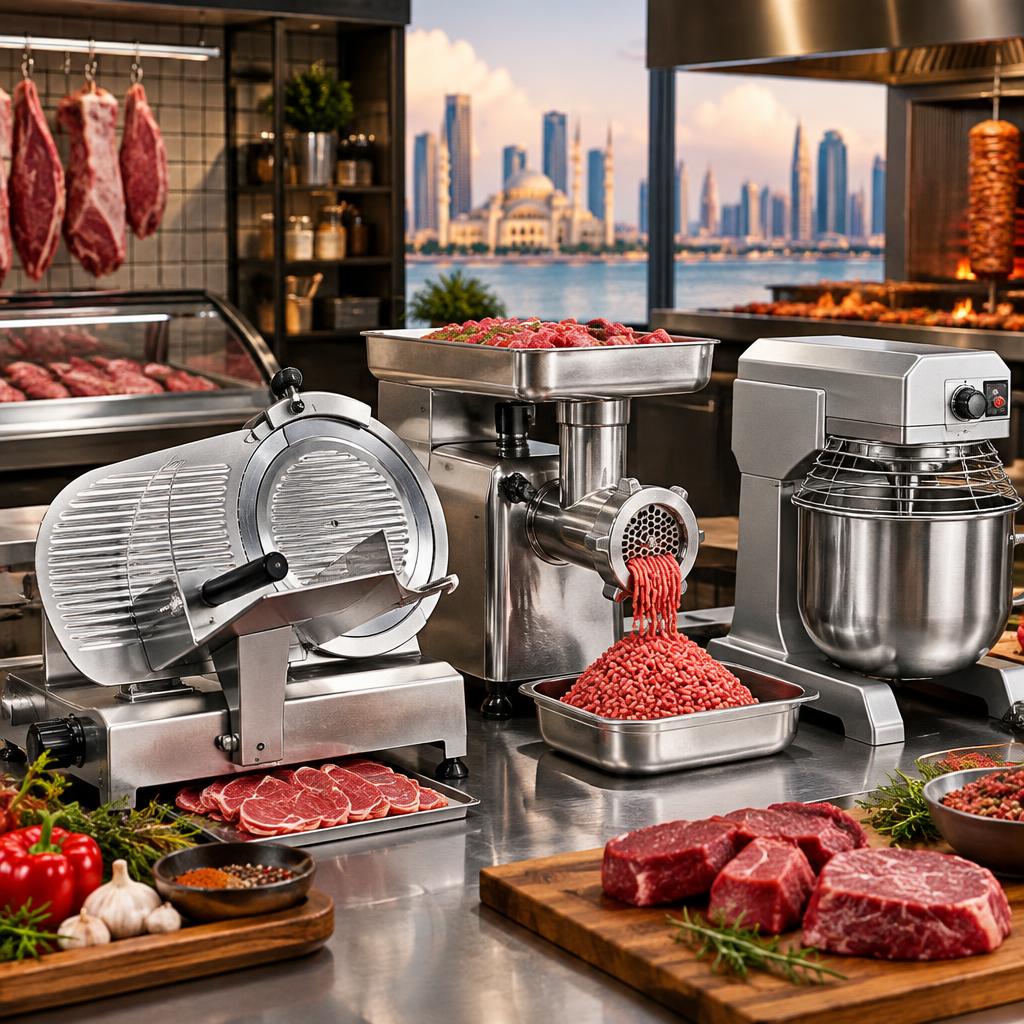
Why the right meat processing equipment matters
For butcher counters and restaurants specialising in kebab, grill, mandi or other meat-heavy menus, the right slicers, mincers and mixers affect more than speed. Proper equipment improves portion consistency, reduces waste, protects staff from injury, and helps maintain hygiene during busy service. Choosing machines built for commercial use also lowers long‑term operating costs through durability and easier maintenance.
Start with a clear operational brief
Before comparing models, document your typical and peak daily throughput (kg of meat processed per day), product types (whole cuts, kebab mix, minced meat, burgers), and available space behind the counter or in the prep area. Note staff skill level and how often machines will be used continuously—this information helps match capacity, motor size and build to real needs rather than buying oversized or underspecified equipment.
Overview: slicers, mincers and mixers — roles and priorities
Slicers deliver consistent cut thickness for display counters and plated dishes. Mincers (grinders) are used for producing mince or kebab mixes with control over grind size and fat distribution. Mixers combine meat with spices, binders and water to create uniform blends. When evaluating each category, prioritise build material (stainless steel), ease of cleaning, throughput capacity, safety features and the availability of spare parts.
Choosing a commercial slicer
Look for a robust stainless steel construction and a suitably sized blade for the products you cut (larger blades for whole cuts, smaller for deli slices). Important features include adjustable thickness settings, a secure meat carriage, a stable base to prevent vibration, and guards that protect operators. Removable components or tool‑free disassembly make routine cleaning faster and safer—vital for meeting hygiene expectations in Sharjah’s busy kitchens.
Selecting mincers (grinders) for high throughput
Match the mincer’s hourly capacity to your peak demand rather than average use; this prevents bottlenecks during service. Consider plate and knife sizes for the grind textures you need, a powerful motor that can handle connective tissue and fat without overheating, and a generous hopper to reduce refill frequency. Stainless steel contact surfaces and easily removable plates are essential for thorough cleaning between batches.
Choosing mixers for meat blends
For kebab shops and restaurants making large batches, a commercial mixer built for meat—typically a horizontal paddle or hook design—gives even mixing without overworking proteins. Check the bowl capacity and the machine’s rated batch size so mixes are processed in one pass where possible. Controls that allow gentle to vigorous mixing and an easy‑opening discharge help with speed and consistency during busy production runs.
Hygiene, cleaning and material choices
Stainless steel remains the preferred material because it withstands cleaning chemicals and frequent washdown while resisting corrosion. Prioritise machines with smooth surfaces, rounded corners, and detachable parts to avoid food traps. Confirm which parts can be removed for cleaning and whether they are dishwasher-safe or require manual sanitising. Good cleaning access reduces downtime and supports food safety standards.
Maintenance, spare parts and service expectations
Commercial machines perform best with regular maintenance. Ask suppliers about spare parts availability for knives, plates, belts and motors, and typical lead times. Reviews of local suppliers often highlight fast delivery and helpful staff as important advantages; one customer specifically praised the company for quality equipment and support. At the same time, confirm service response terms in writing—response times, scheduled maintenance options and what the warranty covers—so you have realistic expectations.
Sizing equipment to match staff and space
Capacity should be considered alongside the number of operators and available prep area. A high-capacity mincer is useful only if you have staff to feed, unload and package continuously. In cramped backrooms, look for undercounter or compact models that still meet capacity needs. Also consider whether equipment will be installed near display counters (for butcher counters) or in a separate prep room, and plan ventilation and drainage accordingly.
Practical next steps and supplier checklist
When shortlisting machines: request technical specifications (motor power, kg/hr capacity, blade/plate sizes), ask to see materials and removable parts, confirm warranty and spare parts policy, and check lead times for delivery and installation. If possible, arrange a site visit or demonstration so staff can trial operation. SAS Kitchens, based in Sharjah, supplies meat processing equipment and stainless steel fabrication; customers often note the company’s delivery speed, product durability and helpful staff. Use the following checklist when talking with any supplier: expected daily throughput, product types, floor/bench space, cleaning procedures, spare parts availability, warranty details, lead time and installation support.
Customer review


Article by
SAS Kitchens - Commercial Kitchen Equipment
SAS Kitchens is a trusted provider of high-quality stainless steel commercial kitchen equipment in the UAE. We specialize in designing, manufacturing, and installing durable, high-performance kitchen solutions for restaurants, cafés, hotels, and food service businesses. With a focus on precision craftsmanship, functionality, and hygiene, our equipment is built to withstand the demands of professional kitchens. Our experienced team is committed to delivering reliable service, timely project execution, and tailored solutions that meet each client’s operational needs. At SAS Kitchens, customer satisfaction, product durability, and professional support are at the core of everything we do.