Setting Up a Cloud Kitchen in the UAE: Essential Stainless‑Steel Equipment and Practical Layout Tips
A practical guide to the stainless‑steel equipment, ventilation, and workflow design choices that help delivery‑only kitchens in the UAE handle high online order volumes reliably and hygienically.

Why this guide matters for cloud kitchens
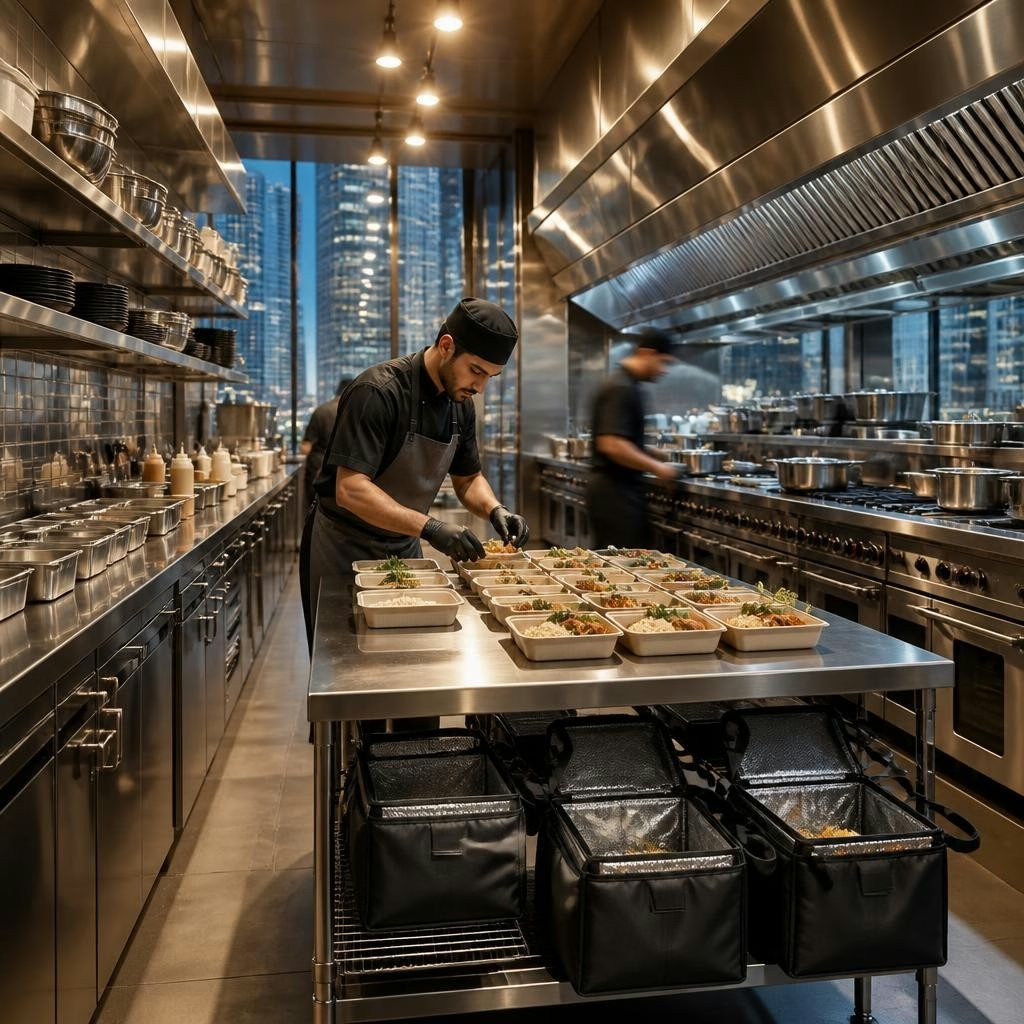
Cloud kitchens (delivery‑only operations) must balance speed, consistency, and hygiene within a compact footprint. This article outlines the essential stainless‑steel equipment categories and layout principles that support high‑volume online orders, and explains practical considerations for ventilation, workflow zoning, and handoff to delivery. Advice is framed for food service operators in the UAE and neighbouring markets planning a reliable, scalable kitchen build.
The case for stainless steel in professional kitchens
Stainless steel remains the preferred material for commercial kitchens because it is durable, non‑porous, and easy to clean—qualities that directly support food safety and long service life in busy cloud‑kitchen environments. Customers of local suppliers frequently praise stainless steel for its robustness and low maintenance, which reduces downtime for repairs and cleaning over the kitchen’s lifetime.
Core prep and production surfaces
Well‑planned prep stations are the backbone of throughput. Essential stainless‑steel elements include sturdy prep tables with raised edges, under‑bench shelving for organized storage, and dedicated cutting/prep zones to separate raw‑protein work from ready‑to‑eat tasks. Consider stainless‑steel splashbacks behind prepping and cooking lines for easy cleaning and to protect walls from heat and moisture.
Designing the cooking line for speed and flexibility
Cloud kitchens typically need a compact, modular cooking line that supports parallel preparation of multiple menu items. Specify stainless‑steel stands and frames for stoves, griddles, fryers, and ovens so equipment can be arranged in an efficient sequence and serviced easily. Allow clear service access at the rear of the line for maintenance and safe removal of hot pans and oil.
Cold storage and rapid access
Efficient refrigeration placement reduces wasted movement and keeps temperatures stable. Position reach‑in refrigerators and under‑counter chillers close to prep stations, with ambient storage shelves nearby for dry goods. Stainless‑steel shelving and mobile racks support quick stock rotation and hygienic handling during peak dispatch periods.
Dishwashing, sanitation and waste flow
A dedicated dishwashing and sanitation zone preserves hygiene and prevents cross‑contamination. Include stainless‑steel sinks sized for prep, handwashing stations at accessible points, and a segregation plan for clean and dirty items. Plan waste routing so bins and grease containers are reachable by staff but do not interrupt preparation or packing lines.
Ventilation and grease management
Proper ventilation is essential for safety, comfort, and compliance. A suitable exhaust hood and ductwork remove heat, steam and cooking odors while controlling grease accumulation; consider stainless‑steel hoods for durability and ease of cleaning. Integrate grease traps and a clear maintenance schedule to reduce fire risk and maintain extraction performance during sustained service periods.
Packaging, hot holding and dispatch station layout
The final stages of the workflow should be designed for speed and accuracy. Dedicate a stainless‑steel packing counter where orders are checked, labeled and sealed. Include hot‑holding cabinets or thermal units close to the packing area for items that must remain warm, and a clear staging area for delivery handoff so riders can collect orders without entering prep zones.
Practical workflow and zoning tips
Adopt a linear or U‑shaped flow that moves ingredients from storage to prep, cooking, plating and dispatch with minimal backtracking. Use physical separation (benches, shelving, marked floor zones) to prevent cross‑contamination between raw and ready‑to‑eat areas. Map staff roles to stations to avoid bottlenecks—one person focused on prep, another on the cooking line, and a dedicated packer for orders during peak windows.
Working with a design and fabrication partner
When choosing a local partner for design, fabrication and installation, prioritise experience with stainless‑steel builds, clear project timelines, and practical after‑sales support. Many customers value timely delivery, competitive pricing and warranty support when selecting suppliers; one recent customer specifically noted quick delivery and better prices compared with other vendors. For operators in the UAE, working with a Sharjah‑based fabricator that offers design and onsite installation can streamline project coordination and reduce lead times. SAS Kitchens, for example, is based in Sharjah (Shop no 1‑3, Dar Al Khan Building) and provides stainless‑steel commercial kitchen design and installation across the UAE and neighbouring countries—use such local expertise to align equipment, ventilation and workflow to your menu and throughput targets.
Customer review


Article by
SAS Kitchens - Commercial Kitchen Equipment
SAS Kitchens is a trusted provider of high-quality stainless steel commercial kitchen equipment in the UAE. We specialize in designing, manufacturing, and installing durable, high-performance kitchen solutions for restaurants, cafés, hotels, and food service businesses. With a focus on precision craftsmanship, functionality, and hygiene, our equipment is built to withstand the demands of professional kitchens. Our experienced team is committed to delivering reliable service, timely project execution, and tailored solutions that meet each client’s operational needs. At SAS Kitchens, customer satisfaction, product durability, and professional support are at the core of everything we do.